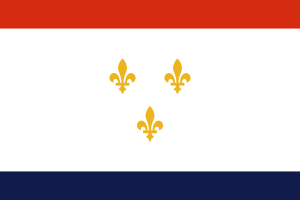
The three gold fleurs-de-lis on a white field — adopted as the city flag in 1918 — mark French, Spanish, and American rule. But after Katrina flooded 80% of New Orleans in 2005, the symbol stopped being history and became proof you stayed. Survivors tattooed it. Painters marked houses with it. The fleur-de-lis moved from lampposts and manhole covers into the skin, claiming what the water couldn't take.
The Saints had been using the fleur-de-lis on their helmets since 1967, but the storm turned a football logo into a sigil. It appears on street markers, in ironwork, in storefront windows — a visible shorthand for belonging. The flag's three lilies meant one thing in 1918; they mean something else now. They mark who rebuilt.
Look for it everywhere. It's the city's founding symbol, yes, but it's also the mark people chose to carry forward when they came back.
- ·The city flag features three gold fleurs-de-lis on a white field with red and blue stripes — adopted in 1918.
- ·The three fleurs-de-lis represent the French, Spanish, and American periods of the city's history.
- ·After Katrina, the fleur-de-lis became a marker of resilience and belonging — tattooed, painted, and displayed citywide.
- ·The symbol appears on lampposts, manhole covers, football helmets, and the arms of survivors.
- ·The Saints' fleur-de-lis logo, adopted in 1967, is the most visible modern use of the city's founding symbol.
- ·Look for the fleur-de-lis everywhere — it is the unofficial sigil of New Orleans identity.
Memories
Editorial content compiled with AI assistance. Place details verified against public records.