The ground beneath Champions Square has a history the tailgate crowd doesn't know about.
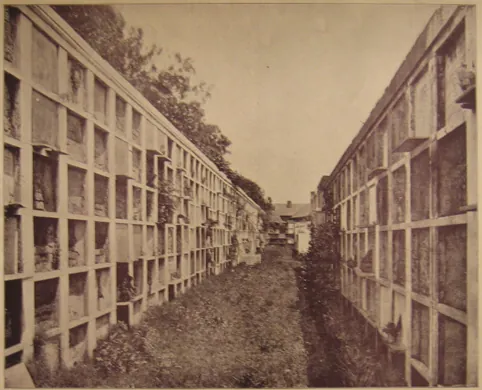
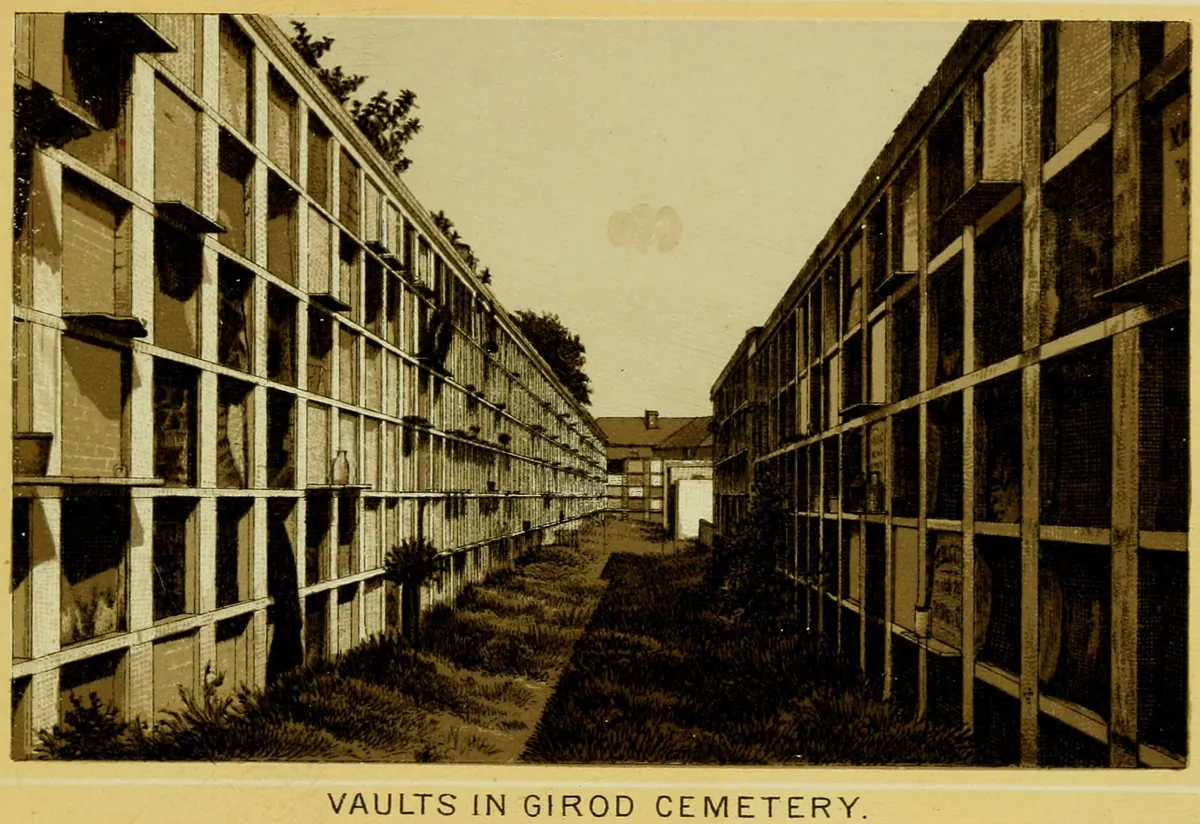
Established in 1822 to serve Protestant residents of the Faubourg St. Mary, the Girod Street Cemetery held 2,319 wall vaults and approximately 1,100 tombs, laid out along a central artery with side aisles. The society tombs rose seven or eight tiers above ground — owned by organizations including the First African Baptist Association, the Home Missionary Benevolent Society, and the Male and Female Lutheran Benevolent Society. The largest belonged to the New Lusitanos Benevolent Association, designed by J.N.B. de Pouilly in 1859.
During the 1833 cholera epidemic, bodies accumulated at the cemetery entrance in such numbers that the gate became impassable. The site eventually acquired the name "yellow fever mound," though the dead buried there in those crisis years were cholera victims. By 1880, a Louisiana commissioner inspecting the city's cemeteries found this one flooded in rain and emitting persistent odors of decay. His recommendation that it be shut down was ignored.
The cemetery closed in the 1940s and was officially torn down on January 4, 1957. The removal of remains was conducted on a segregated basis — white deceased moved to one facility, Black deceased to another. By the early 1960s the footprint was gone.
Local tradition holds that the New Orleans Saints' long history of losing was tied to the displaced dead beneath the Superdome — a curse, as the story goes, that wasn't satisfied until the Saints won Super Bowl XLIV in 2010. The Wikipedia article on the cemetery notes that multiple historical sources place the Superdome itself on the former site of an Illinois Central Railroad roundhouse, not the cemetery — but Champions Square, where Saints fans gather before games, sits directly above the old grounds.
The dead are still there, after a fashion. Nobody put up a marker.
Memories
Editorial content compiled with AI assistance. Place details verified against public records.