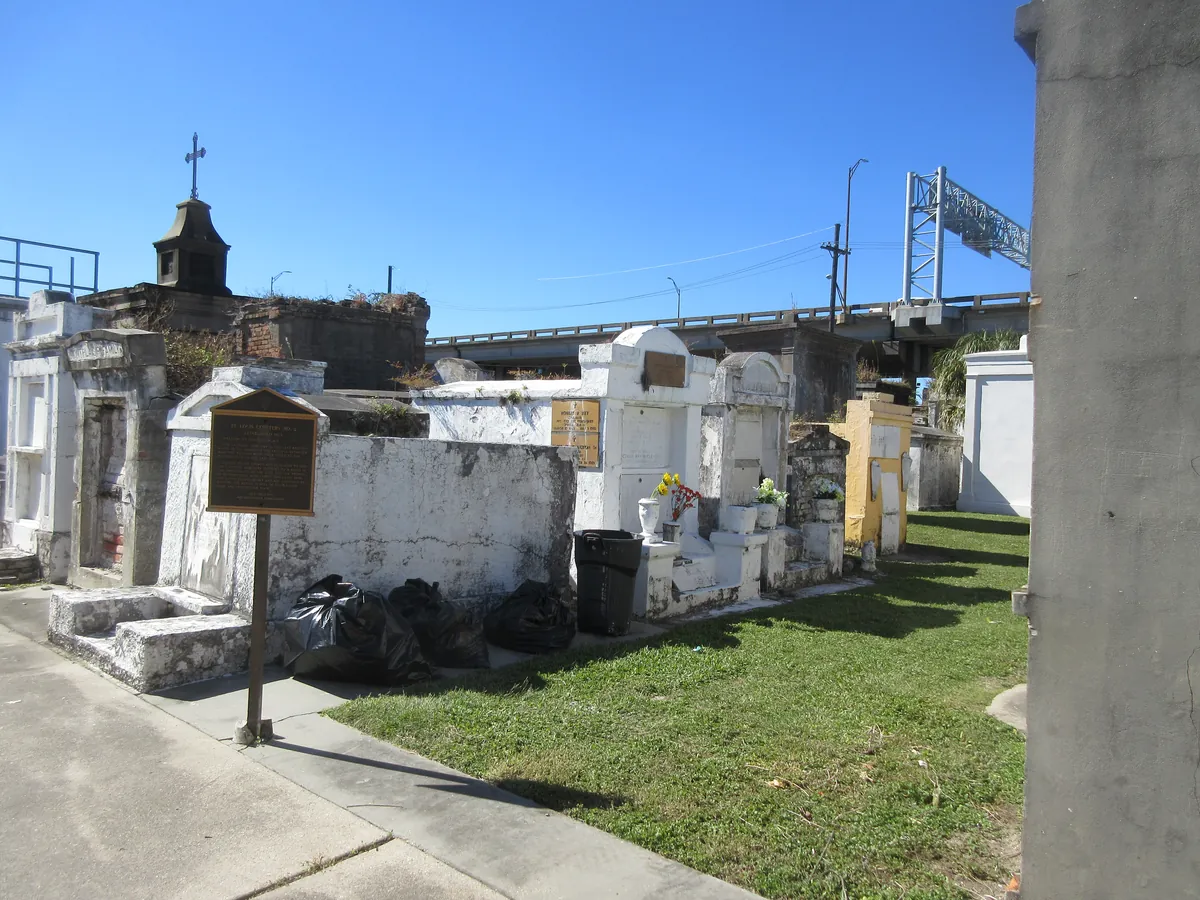
St. Louis Cemetery No. 2 opened in 1823 to serve the growing Tremé and Faubourg Marigny neighborhoods, three blocks back from the older Basin Street burial ground. It is less visited than St. Louis Cemetery No. 1 but architecturally richer — the society tombs here are among the most elaborate funerary structures in the city.
The mutual aid societies formed by free Black New Orleanians built monuments in this cemetery. These benevolent society tombs are monumental. The burial ground holds the remains of many prominent free people of color, Creole families, and benevolent society members.
Oscar Dunn, emancipated from slavery as a child, became the first elected Black lieutenant governor of a U.S. state and is entombed here. Andre Cailloux, African-American Union hero and martyr of the Civil War, rests here. So does the Venerable Mother Henriette DeLille, a candidate for sainthood by the Catholic Church. Jacques Villeré, second governor of Louisiana after statehood and commander of the 1st Division at the Battle of New Orleans, is interred here.
Jazz and rhythm and blues musicians rest alongside: Danny Barker and Ernie K-Doe among them.
The cemetery borders Claiborne Avenue and was listed on the National Register of Historic Places in 1975. Hurricane Katrina brought minor flooding in the aftermath; when the water went down, the tombs seemed virtually untouched aside from the brownish waterline visible on the structures that flooded.
Unlike St. Louis Cemetery No. 1, self-guided visits are currently permitted. The Archdiocese recommends visiting with a guide for safety and context.
- ·Opened in 1823 to serve the growing Tremé and Faubourg Marigny neighborhoods.
- ·Less visited than St. Louis Cemetery No. 1 but architecturally richer — the society tombs are among the most elaborate in the city.
- ·Holds the remains of many prominent free people of color, Creole families, and benevolent society members.
- ·The tombs of mutual aid societies formed by free Black New Orleanians are monumental.
- ·Unlike No. 1, self-guided visits are currently permitted.
- ·The Archdiocese recommends visiting with a guide for safety and context.
Memories
Editorial content compiled with AI assistance. Place details verified against public records.