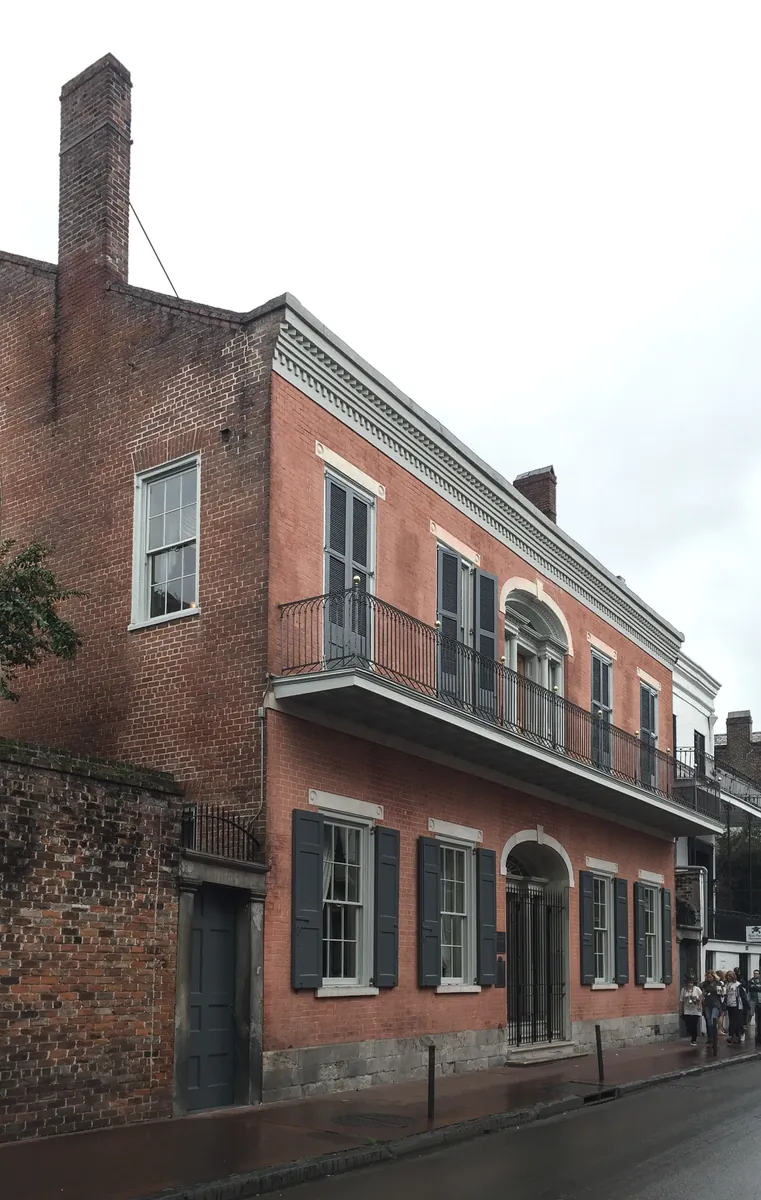
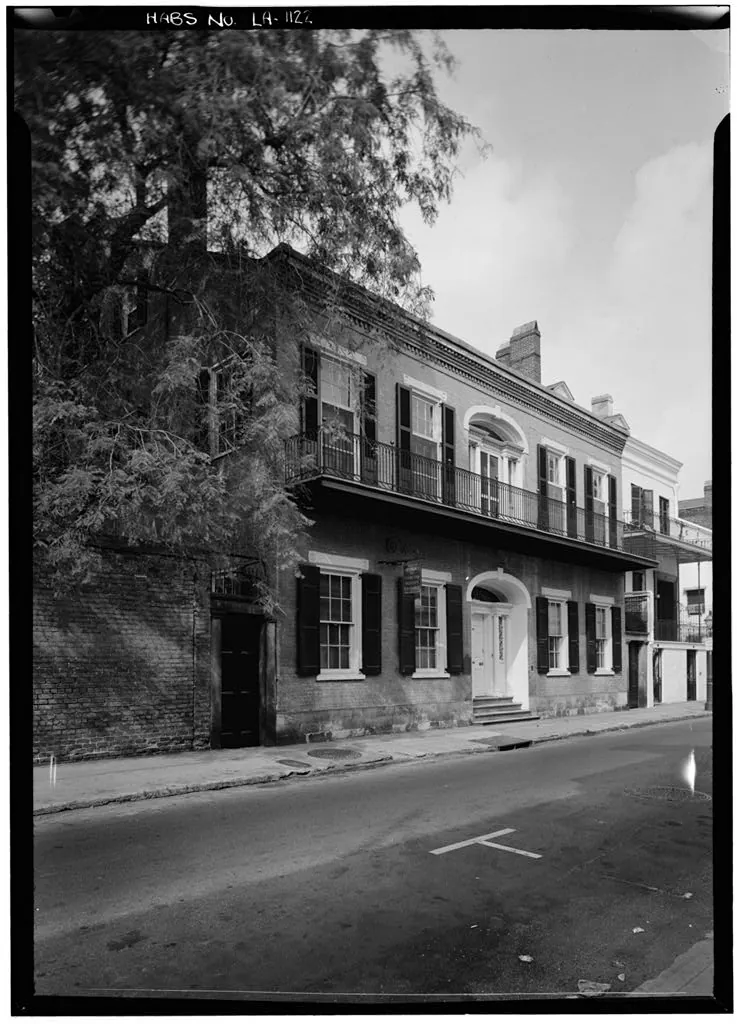
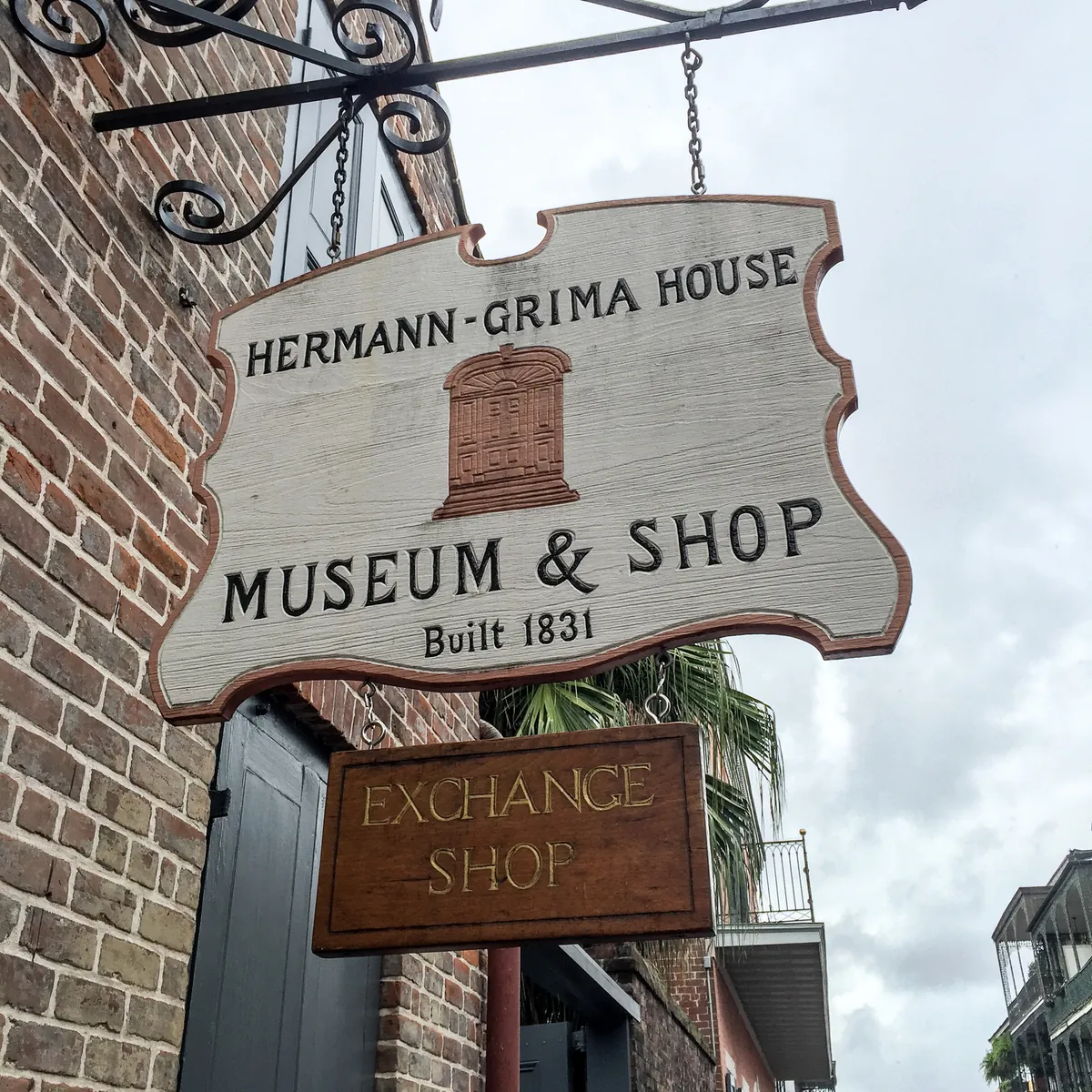
Samuel Hermann immigrated from Rödelheim, Germany, to Louisiana in 1804, settling first on the German Coast upriver from New Orleans. He worked as an agent and broker for plantation owners and merchants, expanding into mortgages, stocks, and real estate. By 1831 he had purchased a lot on St. Louis Street and hired architect William Brand to build a new residence — the only example of American Federal-style architecture in the French Quarter.
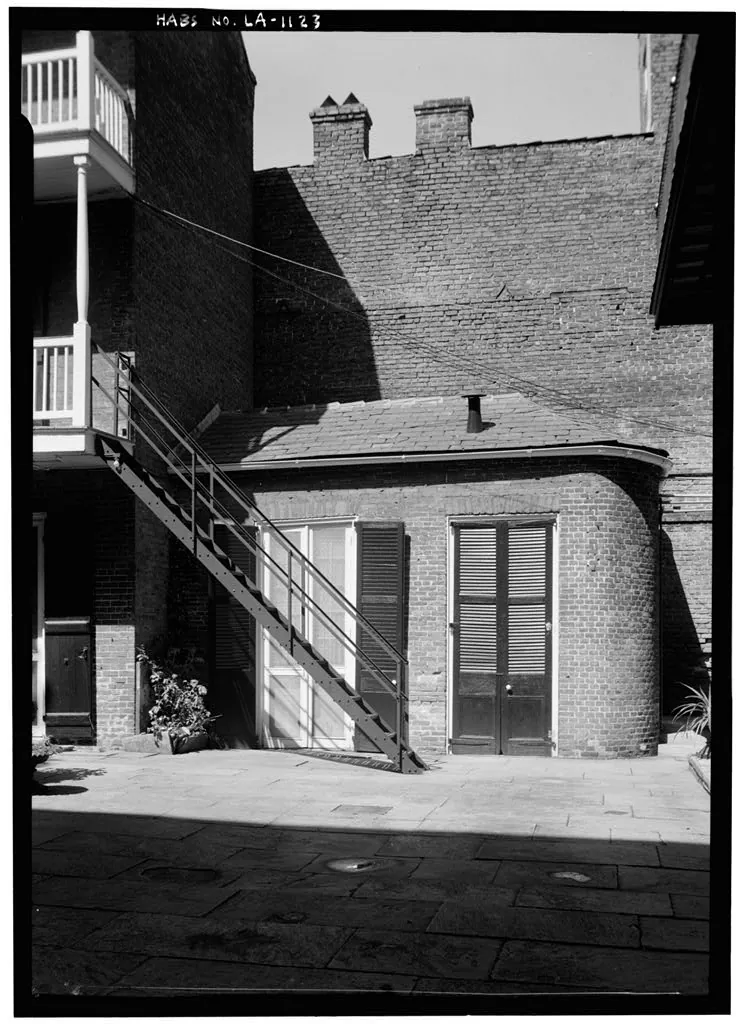
Brand took the basic Federal form, with its symmetrical facade and wide central hall, and adapted it to the climate. He added balconies and galleries in the French Louisiana style, connecting rooms without interior hallways. The slave quarters were built in the characteristic New Orleans style. When the English cotton market crashed in 1837, triggering a worldwide financial panic, Hermann's fortune was eventually lost. He sold the house to Felix Grima.
Grima was a New Orleans-born lawyer, the youngest son of a Maltese immigrant, educated at the Collège d'Orléans. He and his wife Marie Sophie had been living at Bourbon and Toulouse — the future site of the French Opera House — where five of their children were born. They moved into the St. Louis Street house in 1844 with Felix's widowed mother and unmarried sister. Four more children were born here. The Grimas were well-read and cultured; the museum now owns over two thousand books that belonged to them. Mrs. Grima sponsored a St. Louis Cathedral sewing group. Their youngest daughter sang in the choirs at both the Cathedral and St. Augustine Church. The last Grima living in the house sold it in 1921 and moved uptown.
The Christian Woman's Exchange purchased the property in 1924 and ran it as a boarding house for single women until 1975. That year it was restored and reopened as a museum. The Woman's Exchange still owns and operates it today. The house was declared a National Historic Landmark in 1974.
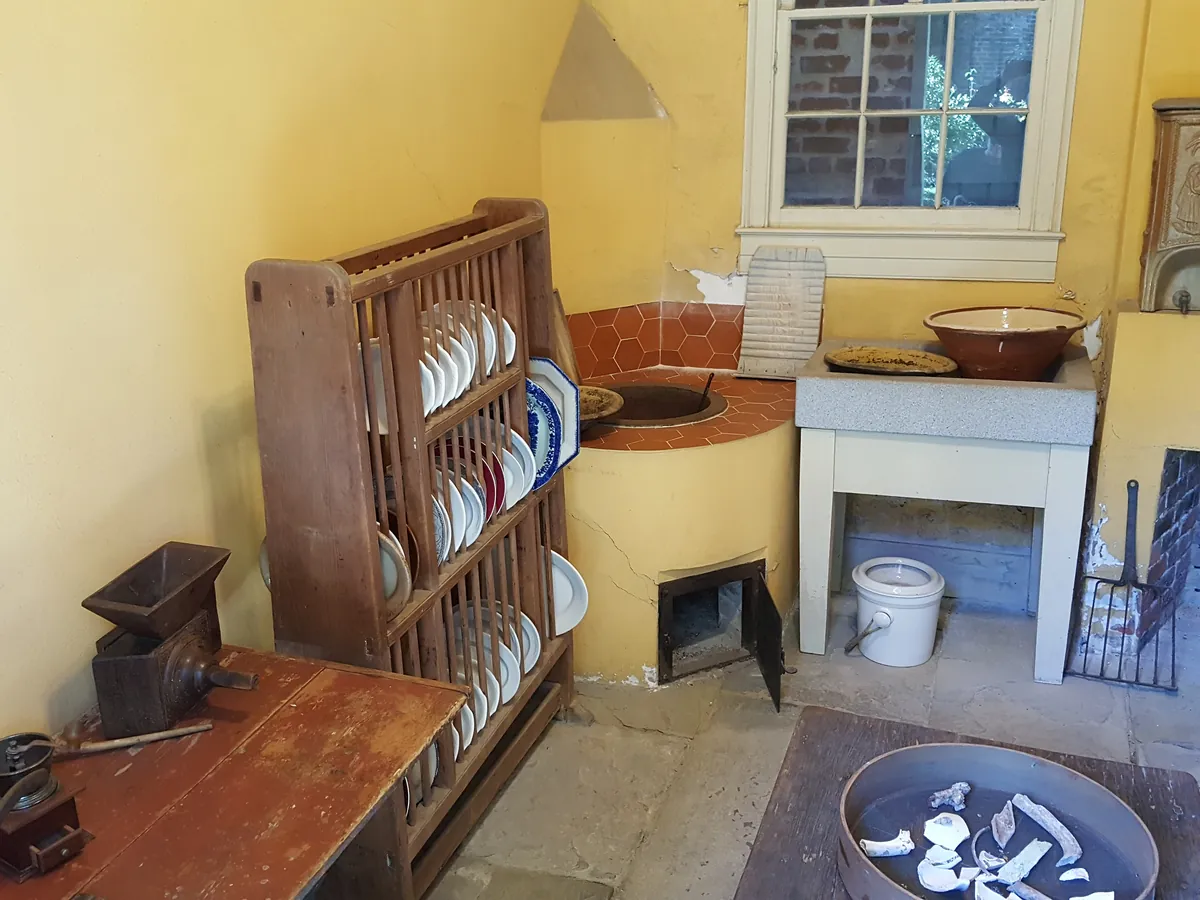
The open-hearth kitchen — the only extant 1830s open-hearth kitchen in the French Quarter — is the only one in New Orleans where Creole cooking demonstrations using period recipes are still held. The original slave quarters are preserved and interpreted directly on the guided tour. One of the oldest functioning cisterns in the Quarter stands in the courtyard. Tours run hourly.
- ·Built in 1831 for Samuel Hermann, a German-Jewish merchant and one of the wealthiest men in antebellum New Orleans.
- ·The only example of American Federal-style architecture in the French Quarter.
- ·The open-hearth kitchen is the only one in the city where Creole cooking demonstrations using period recipes are still held.
- ·Original slave quarters are preserved and interpreted directly as part of the guided tour.
- ·The courtyard contains one of the oldest functioning cisterns in the Quarter.
- ·Guided tours run hourly. Admission charged.
More archive
Memories
Editorial content compiled with AI assistance. Place details verified against public records.