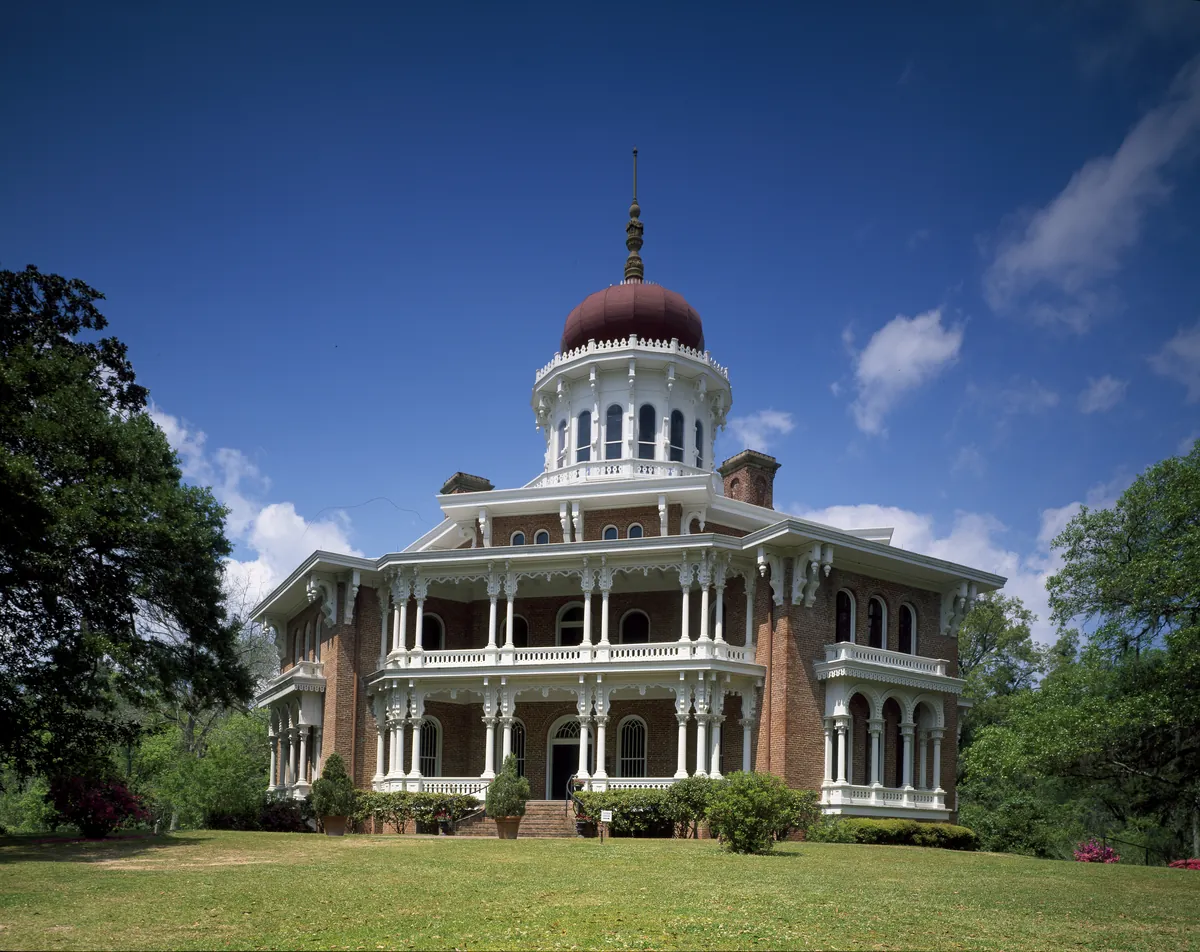
Philadelphia architect Samuel Sloan designed Longwood in 1859 for cotton planter Haller Nutt. The mansion is the largest octagonal house in the United States. The house was built in part by enslaved people. Work was halted in 1861 at the start of the American Civil War. Nutt died of pneumonia in 1864, leaving the work incomplete.
Of the 32 rooms planned for the house, only nine rooms on the basement floor were completed. The mansion is known for its octagonal plan, byzantine onion-shaped dome, and the contrast between its ornately finished first floor and the unfinished upper floors. Longwood was the last burst of Southern opulence before war and the abolition of slavery brought the cotton barons' dominance to an end.
Longwood survived decades of neglect and near-abandonment. The mansion is on the U.S. National Register of Historic Places, and is a National Historic Landmark. Longwood is owned and operated as a historic house museum by the Pilgrimage Garden Club.
- ·Largest octagonal house in America — six stories, 30,000 square feet, 32 planned rooms.
- ·Designed by Philadelphia architect Samuel Sloan in 1860 for cotton planter Haller Nutt.
- ·Northern workers abandoned the project when the Civil War began in 1861; they never returned.
- ·Haller Nutt died bankrupt in 1864. His family lived in the finished basement until the 1960s.
- ·Upper floors remain exactly as the workers left them — raw brick, exposed framing, pencil marks on wood.
- ·National Historic Landmark. Open daily for tours, $25 adults. Operated by the Pilgrimage Garden Club.
More archive

Memories
Editorial content compiled with AI assistance. Place details verified against public records.