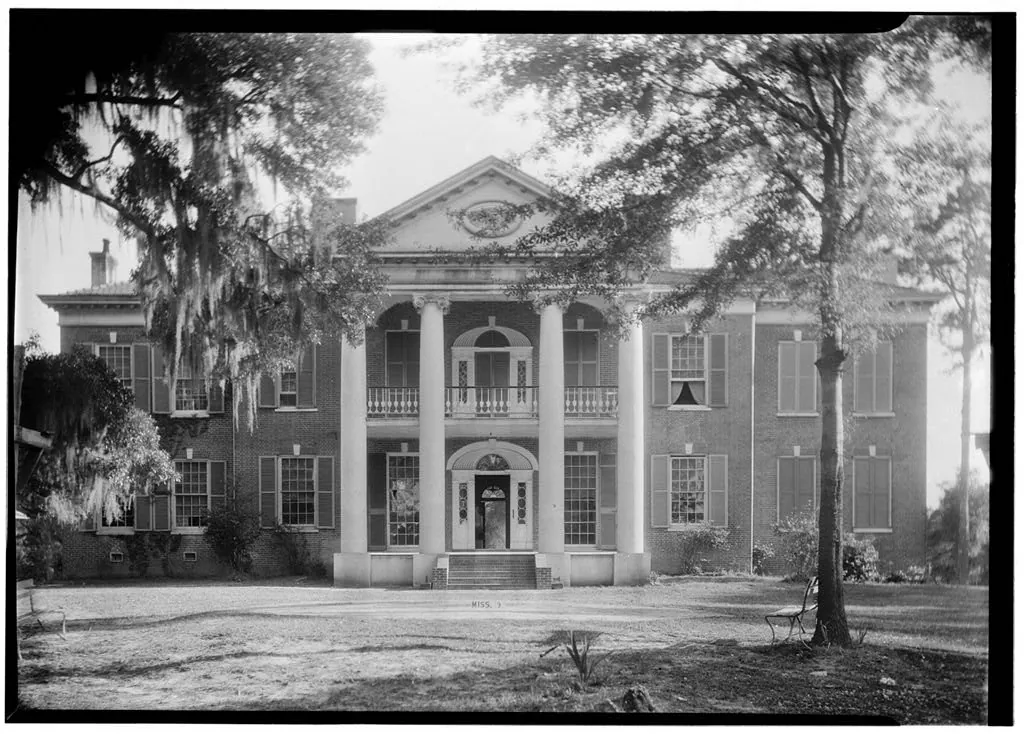
Lyman Harding built this house in 1812, and it set the template. Mississippi's first Attorney General commissioned what became the first grand mansion in Natchez—the architectural prototype for those that followed. A freestanding spiral staircase rises two stories without center support, engineering that still draws visitors two centuries later.
The site matters. By the late seventeenth century, the Natchez people occupied this area as their major ceremonial center, adding to mounds their Plaquemine ancestors had begun building around 1200. French colonists founded Fort Rosalie in 1716 to protect a trading post, settling too close to Natchez land. In November 1729, the Natchez and their allies killed 229 French colonists—138 men, 35 women, and 56 children—and took most of the women and children captive. It remains the largest death toll by an Indian attack in Mississippi's history. The French and their Indian allies retaliated over two years, and by 1731 most of the Natchez had been killed, enslaved, or driven out as refugees. Survivors were sold as slaves and shipped to Saint-Domingue.
Harding built Auburn on land that had seen all of that. The house now sits inside Duncan Park, the oldest public park in Mississippi. It is a National Historic Landmark, open for seasonal tours—check with the Natchez Convention & Visitors Bureau for hours.
- ·Built 1812 — the first grand mansion in Natchez and the architectural prototype for those that followed.
- ·Features a freestanding spiral staircase that rises two stories without center support.
- ·Built for Lyman Harding, Mississippi's first Attorney General.
- ·Sits inside Duncan Park, the oldest public park in Mississippi.
- ·National Historic Landmark.
- ·Open for tours seasonally. Check with the Natchez Convention & Visitors Bureau for hours.
Memories
Editorial content compiled with AI assistance. Place details verified against public records.