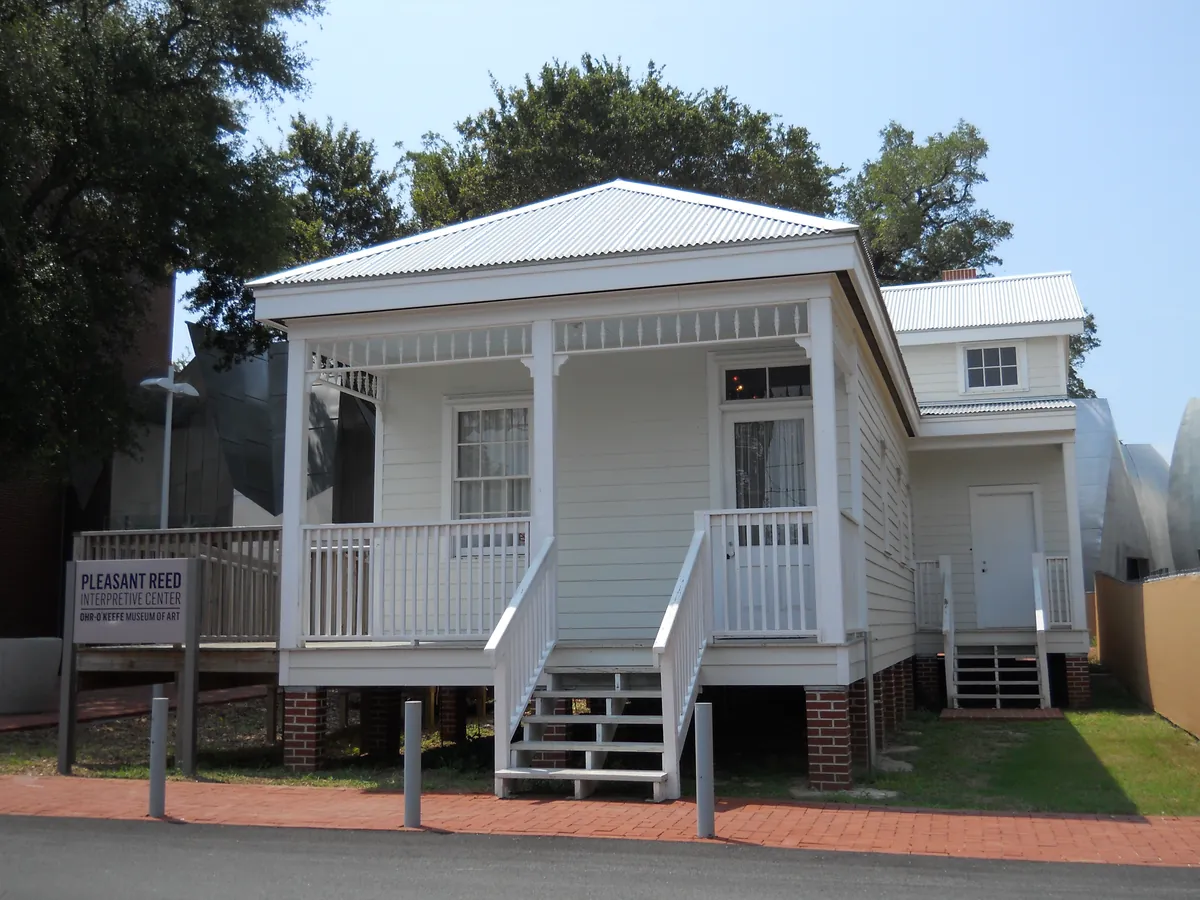
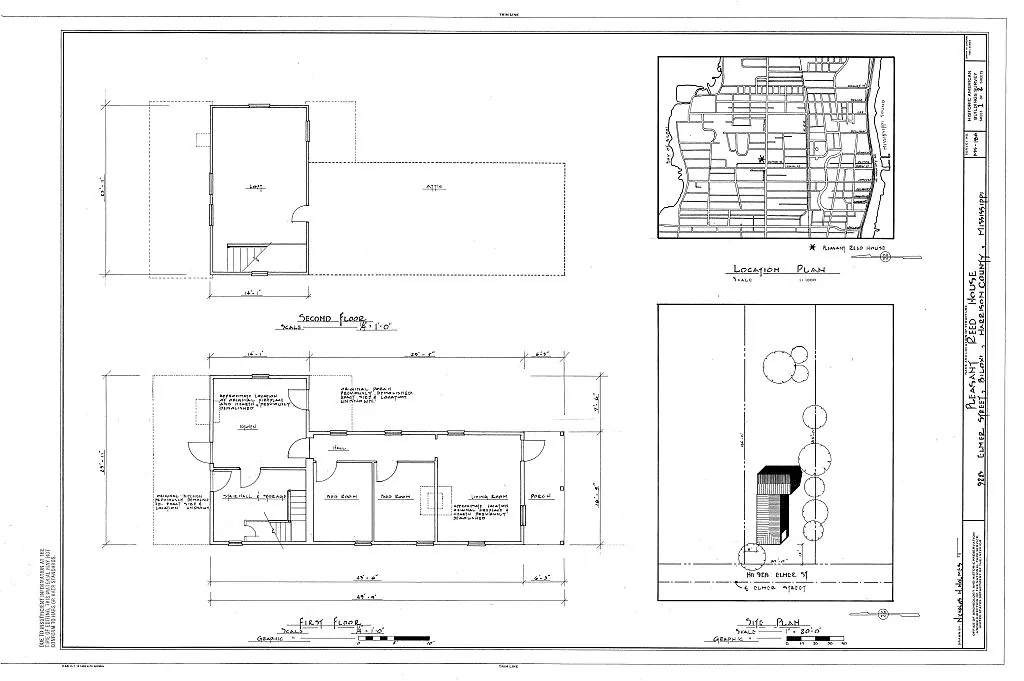
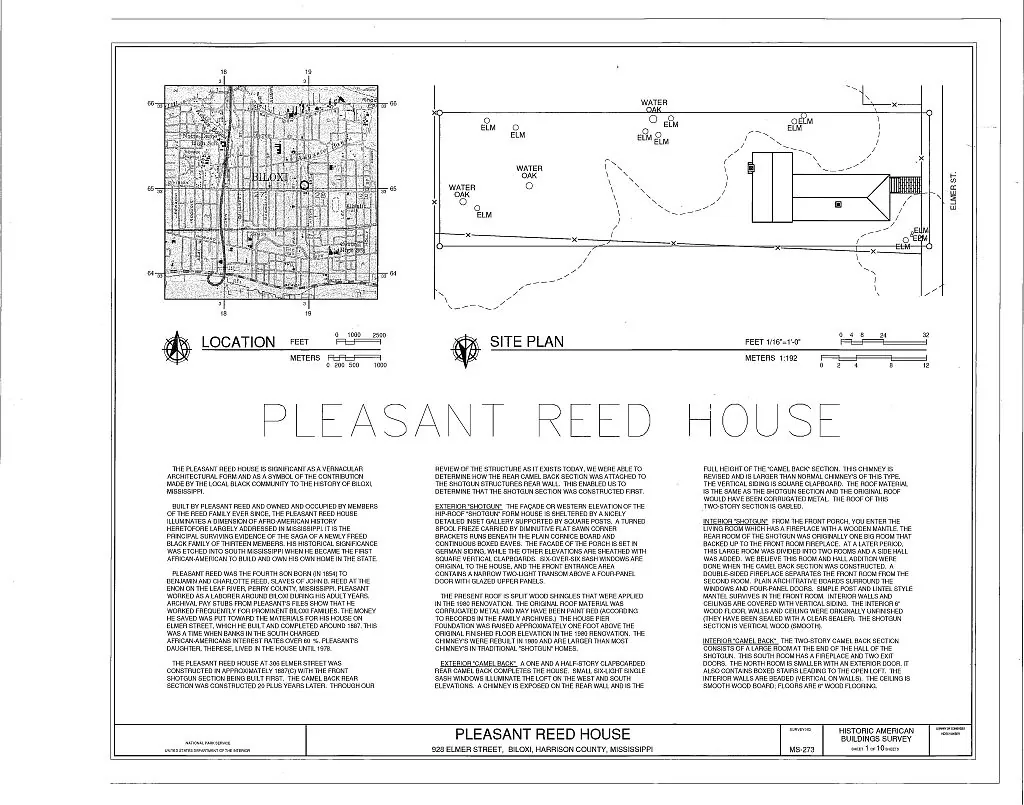
Pleasant Reed was born into slavery on a Mississippi farm in 1854. After the Civil War, he moved with his family to coastal Biloxi, worked as a laborer and carpenter, and by the 1880s had earned enough to build a house for his rapidly growing family. He built it himself — a sidehall shotgun on Elmer Street. It was one of the few documented African American-built homes from Reconstruction still standing on the Gulf Coast when the Biloxi chapter of Delta Sigma Theta saved it and got it listed on the National Register in 1979.
In 2003, the house was moved to the new Frank Gehry-designed campus of the Ohr-O'Keefe Museum of Art, restored, and opened for tours. On August 29, 2005, Hurricane Katrina destroyed it. The museum saved the archival materials and photographs. The board voted to rebuild. A replica, the Pleasant Reed Interpretive Center, opened in 2008 with exhibits on local African American history.
Reed died in 1932 and is buried in the Old Biloxi Cemetery. The house he built with his own hands is gone. His name is still on the record.
- ·Pleasant Reed was born into slavery and built this house on Elmer Street in the 1880s with his own hands.
- ·One of the few documented African American-built homes from Reconstruction on the Gulf Coast.
- ·Listed on the National Register of Historic Places.
- ·Katrina destroyed it completely on August 29, 2005 — one of 18 NRHP properties lost on the coast that night.
- ·Reed is buried in the Old Biloxi Cemetery.
- ·The house is gone. This entry is evidence that Pleasant Reed was here.
More archive
Memories
Editorial content compiled with AI assistance. Place details verified against public records.