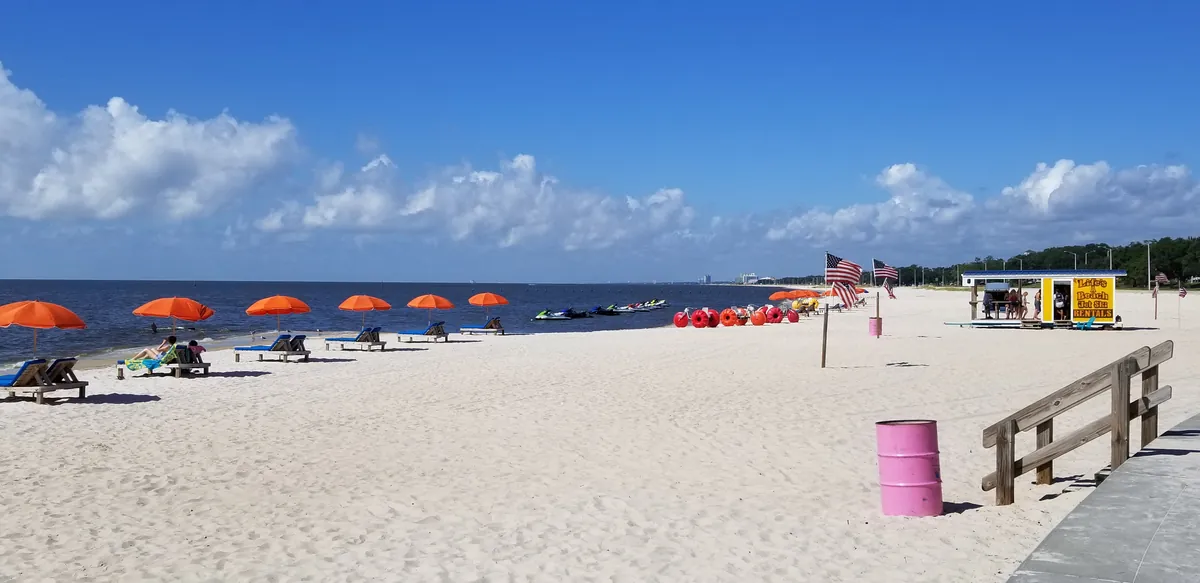
In 1959, Dr. Gilbert Mason stepped into the Gulf of Mexico off Biloxi and was ordered out by a city policeman. The officer told him "Negroes don't come to the sand beach." Mason went to the police station to ask what law he had broken. The next day, the mayor told him, "If you go back down there we're going to arrest you. That's all there is to it."
The beach — 26 miles of sand built by the Army Corps of Engineers in 1953 with federal taxpayer funds — was claimed as private property by adjacent homeowners. Mason and others believed public money had built a public beach. When Mason and Dr. Felix Dunn petitioned the Harrison County Board of Supervisors for access, a supervisor offered a segregated portion. Mason said they would be happy only with access to "every damn inch of it."
The Mississippi State Sovereignty Commission investigated the petitioners, checking their jobs, credit histories, and associates to see how they could be pressured to withdraw. One signer was fired from his job with the city of Gulfport. Another man and his wife were fired by the local white family they worked for. Both withdrew from the petition. Dunn, documents later revealed, worked with the sheriff and reported on his activities with Mason, receiving business opportunities in return. Mason, a physician, continued alone.
On April 17, 1960, Mason returned to the beach and was arrested as a "repeat offender." A week later, on April 24, 1960, he led 125 black men, women, and children onto the sand. Biloxi police recruited a white mob and took no action to prevent their violence. Shots were fired. Rocks were thrown. Two white men and eight black men suffered gunshot wounds. The New York Times called it "the worst racial riot in Mississippi history." Ten times as many blacks were arrested as whites. Mason was convicted of disturbing the peace.
The U.S. Justice Department sued the city of Biloxi on May 17, 1960. The city delayed the court hearing for years. On June 23, 1963, two weeks after the assassination of Medgar Evers — who had written to Mason, "If we are to receive a beating, let's receive it because we have done something, not because we have done nothing" — protesters returned. They placed black flags in the sand in Evers's memory. Dozens of blacks were assaulted. Wilmer McDaniel, owner of a local funeral home, was beaten with chains while his wife shielded his body with hers. Blood stained the sand. Police arrested 71 protesters, 68 of them black. More than 2,000 white residents held a counterprotest and vandalized Mason's car.
In 1967, the federal court of appeals ruled that the beaches were public. In 1968, the entire 26-mile beachfront was opened to all races for the first time.
A Mississippi historical marker along Beach Boulevard tells the story. Every person on this beach today is standing on ground that was fought for.
- ·From 1959 through 1960, Dr. Gilbert Mason led wade-ins on Biloxi's whites-only beach.
- ·On April 24, 1960, a mob attacked demonstrators with chains, pipes, and guns. Police arrested the protesters, not the attackers.
- ·The wade-ins predated the Greensboro sit-ins by months.
- ·The beach was desegregated by federal court order in 1968.
- ·A Mississippi historical marker along Beach Boulevard tells the story.
- ·Every person on this beach today is standing on ground that was fought for.
Memories
Editorial content compiled with AI assistance. Place details verified against public records.