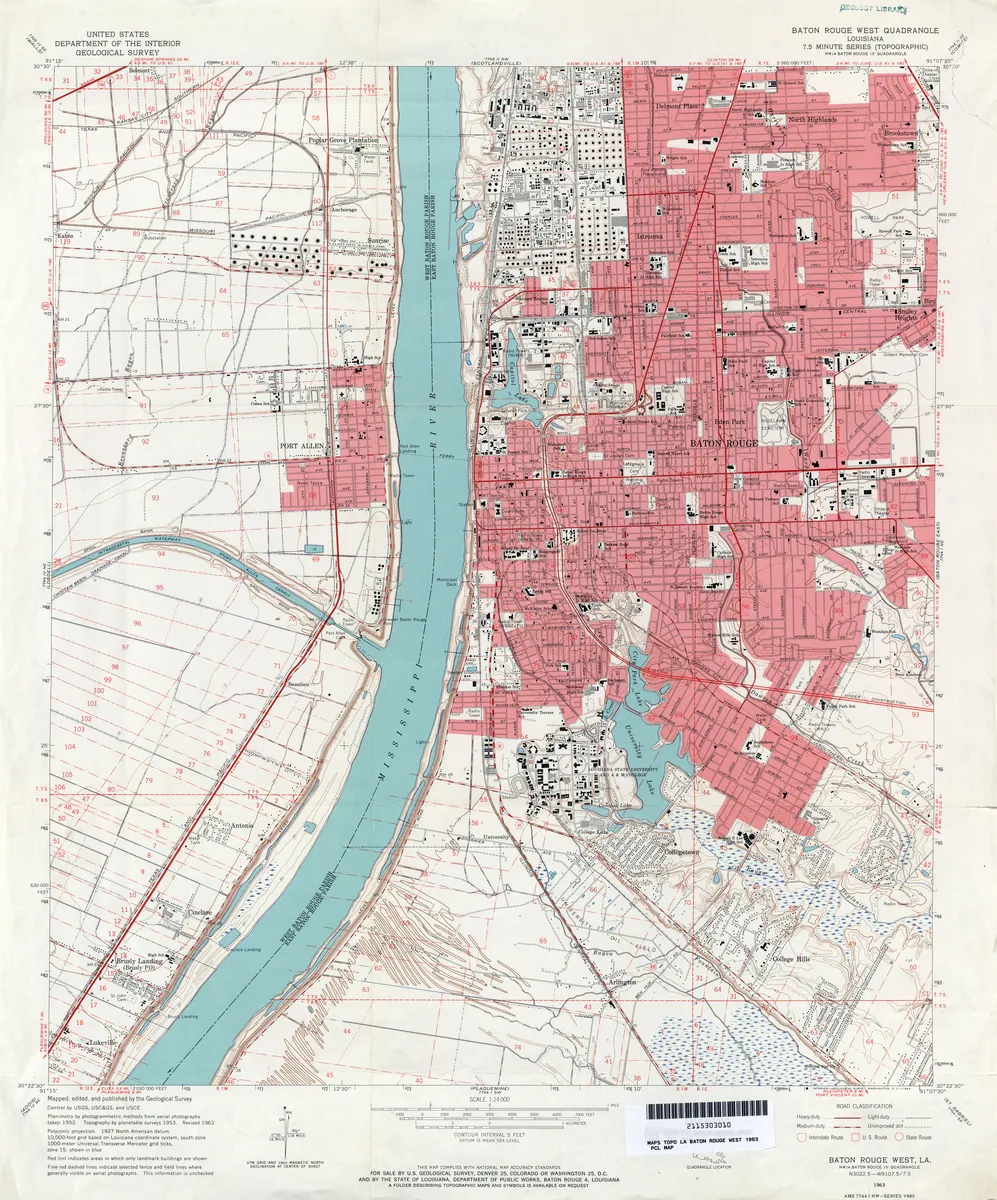
The Mississippi shapes everything here — the city exists because of the bluff, but it endures because of the port. This is the farthest inland deepwater port in the United States, 228 miles from the Gulf of Mexico, a geographic fact that made Baton Rouge indispensable before anyone knew what petrochemicals were. Ocean-going vessels from more than forty countries navigate upriver to dock beside the refineries lining the north bank, transferring cargo onto rails, pipelines, and barges before the river shallows and the Old Huey Long Bridge blocks passage for deep-draft ships.
The port handles more tonnage than the ports of Los Angeles and Long Beach combined. It is the ninth-largest port in the United States by tonnage shipped and the farthest upstream Mississippi River port capable of handling Panamax ships. The city developed on the Istrouma Bluff — the first natural bluff upriver from the Mississippi River Delta — allowing a business quarter safe from seasonal flooding. That elevation made settlement possible in 1721; the depth of the channel made industry inevitable two centuries later.
Baton Rouge's largest industry is petrochemical production and manufacturing. ExxonMobil's Baton Rouge Refinery complex is the fifth-largest oil refinery in the country and the tenth largest in the world. The refineries, the port, the river — this is why the city stays economically significant after the capital could have moved anywhere.
The port is an active industrial facility, not a visitor attraction. The best vantage is from the River Road levee, where you can watch ships that crossed an ocean offload grain and chemicals onto a working waterway that has never stopped being the reason this place exists.
- ·The farthest inland deepwater port in the United States — 228 miles from the Gulf of Mexico.
- ·Handles more tonnage than the ports of Los Angeles and Long Beach combined.
- ·Ocean-going vessels from 40+ countries dock beside the petrochemical plants lining the north bank.
- ·The river is the reason the city exists; the port is the reason it stays economically significant.
- ·The port is an active industrial facility, not a visitor attraction — best viewed from the River Road levee.
Memories
Editorial content compiled with AI assistance. Place details verified against public records.