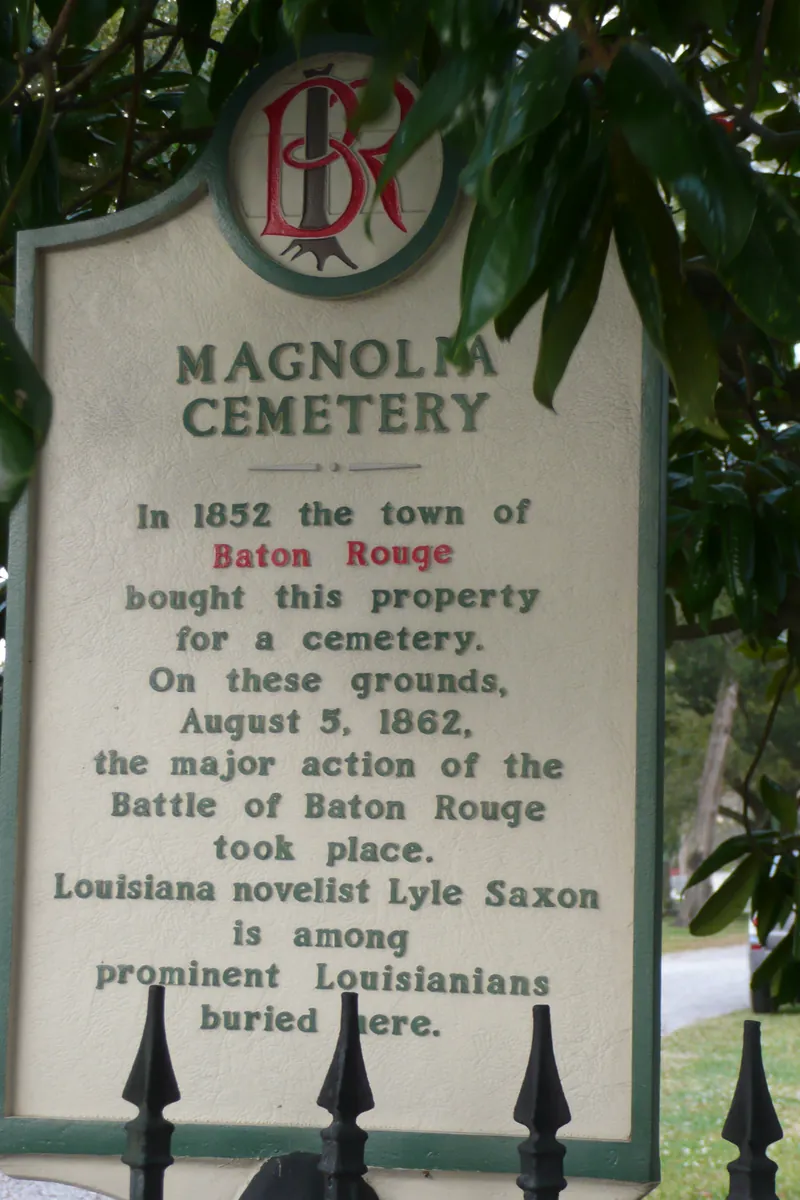
Ten acres of marble and iron hold the names that built antebellum Baton Rouge. Established in the 1850s, Magnolia Cemetery is the city's oldest surviving burial ground — French surnames beside Spanish beside English beside Creole, the headstones reading like a ledger of who held power, who held land, and who worked it. Planters and politicians rest here. So do Confederate soldiers, and enslaved people whose graves mostly carry no markers at all.
The cemetery sits adjacent to the National Cemetery on North 19th Street, between Capitol Lake and the rows of military dead. Its proximity to the battlefield meant it received the dead from both sides of the Battle of Baton Rouge on August 5, 1862. The fighting came close enough that the cemetery became common ground — Union and Confederate buried in the same ten acres.
What survives is a catalog of who the city was before the war. The gates stay open daily. No formal hours. Walk the rows and you're reading the census of a place shaped by layered claims: French colonists established a military post here in 1721, at the site of the red stick boundary marker between the Houma and Bayagoula nations. The British took it after 1763. Acadian exiles settled the surrounding parishes, maintaining their Catholic faith and separate culture. By the time Baton Rouge became state capital in 1849, it had already been three different colonial possessions. The people who made it that way — the planters and politicians, the soldiers and the enslaved — are here, their names carved in stone or lost entirely, sorted by the same hierarchies that sorted them in life.
- ·Baton Rouge's oldest extant cemetery, established in the 1850s, covers ten acres adjacent to the National Cemetery.
- ·Received dead from both sides of the Battle of Baton Rouge (August 5, 1862) due to its proximity to the battlefield.
- ·Holds the graves of antebellum planters, politicians, Confederate soldiers, and enslaved people — most of the latter without individual markers.
- ·The cemetery's headstones read like a census of 19th-century Baton Rouge: French, Spanish, English, and Creole names carved in marble and iron.
- ·Open daily. No formal visiting hours. Located on North 19th Street between the National Cemetery and the Capitol Lake.
Memories
Editorial content compiled with AI assistance. Place details verified against public records.