Gretna assembled itself from three settlements that grew toward each other: McDonoghville (1815, named for the planter whose will funded New Orleans public education), Mechanikham (1836, German immigrants), and Gretna proper (1840, around the railroad). The free ferry still runs from Canal Street to its foot. The David Crockett Steam Fire Company No. 1, founded 1841, is the oldest continuously active volunteer fire company in the United States. Mel Ott left here at sixteen for the New York Giants and hit 511 home runs without ever signing with anyone else.
The route
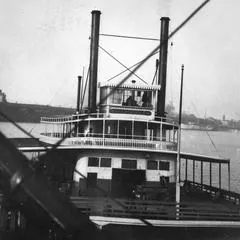 1Historic Site·1800s–presentGretna-Jackson Ferry
The Jackson Avenue–Gretna ferry carried U.S. Highway 90 across the Mississippi during 1926–1928 and 1930–1937, until the Huey P. Long Bridge and subsequent improvements to Jefferson Highway were completed. After that, it kept running as a local crossing — automobiles for a dollar, bicycles and pedestrians free — operated by the Crescent City Connection Division of the Louisiana Department of Transportation and Development on weekdays from six in the morning to quarter to nine at night. The historic ferry route ended on September 28, 2009, replaced by the Gretna–Canal Street route carrying only pedestrians and bicycles. That service was soon terminated. As of 2017, the Gretna ferry terminal was being converted into a river cruise ship terminal, intended as the home port for the French America Line's MV Louisiane — a paddle-wheel steamboat built in 2000 by Vigor Works of Portland, Oregon as the MV Columbia Queen, purchased from the U.S. Maritime Administration in 2016 for a complete refit in drydock and renaming, inaugurated that August with plans to cruise the Mississippi and Ohio rivers.
- 2Historic Site·1815McDonoghville
John McDonogh founded this settlement in 1815, making it the oldest neighborhood in Jefferson Parish. It carried other names — Freetown and Gouldsboro — before the philanthropist's name stuck. McDonogh is the man who funded New Orleans public schools, a fact that outlasted whatever else he did with land and money. Gretna absorbed the neighborhood in 1913, but it remained distinct. In 2005, 727 buildings were surveyed for historic designation. That number is the point: not one church or one mansion, but 727 structures built, repaired, occupied, and kept standing across generations. The neighborhood became a locally designated historic district. A National Register nomination is in progress. The oldest neighborhood in the parish didn't become a parking lot. It became 727 reasons to walk streets where wood and brick have outlasted their builders.
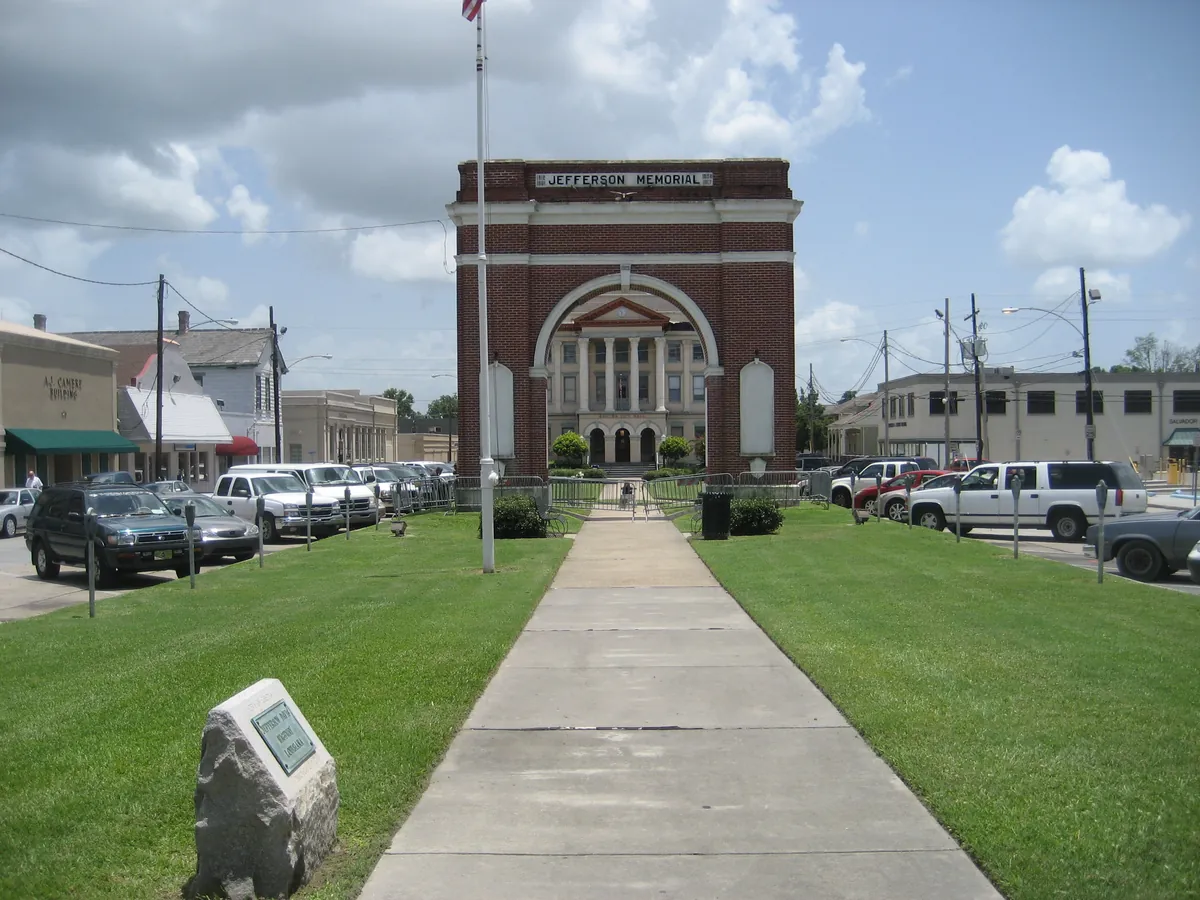 3Historic Site·1840s–1930s·NRHPGretna Historic District
German immigrants founded Mechanikham in 1836 on the west bank of the Mississippi. The settlement grew into Gretna, and by the 1840s builders were raising creole cottages and Greek Revival houses that still anchor what became a 130-acre historic district — 553 contributing structures from a total of 737 buildings, spanning nearly a century of construction from around 1845 to 1935. The architecture reads like a chronicle of building fashions. Greek Revival and Italianate structures date to 1845–1879. Italianate, Eastlake, and Colonial Revival work appeared between 1880 and 1910. Colonial Revival, twentieth-century eclectic, and bungalow styles came after. Shotgun houses and corner commercial buildings fill in the streetscape. Four properties earned individual National Register listings on top of the district's collective designation, which came May 2, 1985. The landmarks the district counts among its fourteen best include an 1859 fire hall named for David Crockett, an 1899 college building, a 1907 courthouse now housing city hall, two early-twentieth-century railroad depots, and a 1926 Catholic church. A house at 216 Lafayette Street dates to around 1850. The Jefferson Memorial Arch went up in 1923. Start at the Gretna Historical Society on Lavoisier Street for a walking route. The free Gretna-Jackson ferry will carry you back across to New Orleans when you're done.
- 4Historic Site·1880s–presentGretna Green Blacksmith Shop
Gretna borrowed its name from the Scottish village famous for runaway marriages, and in the 1800s this side of the river served the same purpose — couples who couldn't marry in New Orleans crossed to Gretna, where the parish clerk wasn't picky. The blacksmith shop at 209 Lafayette Street was the informal chapel: the smith performed the ceremony over his anvil. It operates today as a working museum, forge fired, live demonstrations most Saturdays.
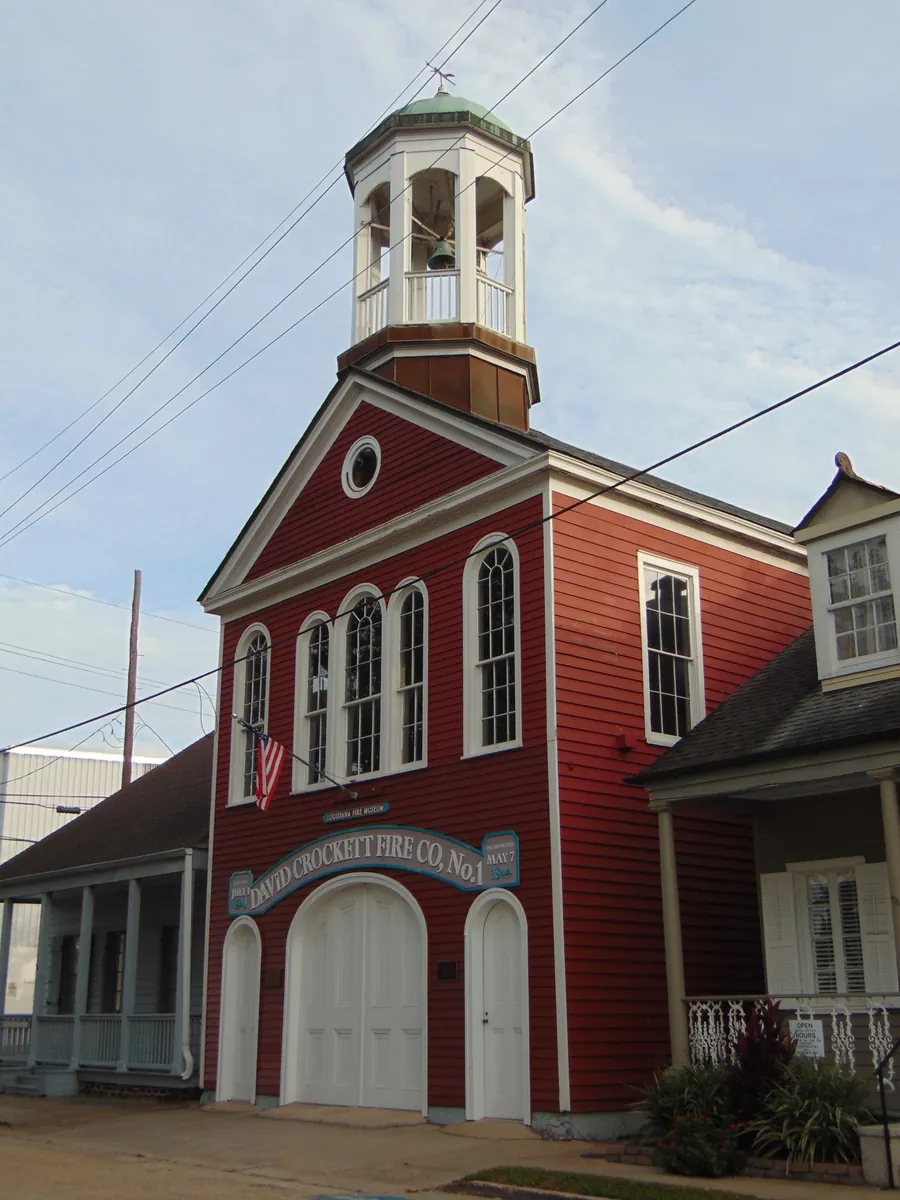 5Historic Site·1841–present·NRHPDavid Crockett Steam Fire Company No. 1
Five years after the Alamo, Gretna's volunteer firefighters named their company for Davy Crockett — a choice that sounds like frontier mythmaking until you remember 1841 was still the frontier, and volunteer fire companies were how you kept your town from burning flat. This is the oldest active volunteer company in the country. Not a museum posing as one. Active. The firehouse at 201 Lafayette Street still runs calls. Between them, the Louisiana Fire Museum keeps the antique apparatus — hand pumpers, hose carts, leather buckets, the physical record of what it took to fight fire before internal combustion. The tools are specific. The stakes were mortal. A volunteer company in a river town meant you showed up or watched it all go. The building earned its place on the National Register, but the real credential is simpler: Gretna still trusts these volunteers with its burning buildings. Walk in and you're looking at both ends of that trust — the museum cases holding what they used to carry, the modern gear hanging where they'll grab it next.
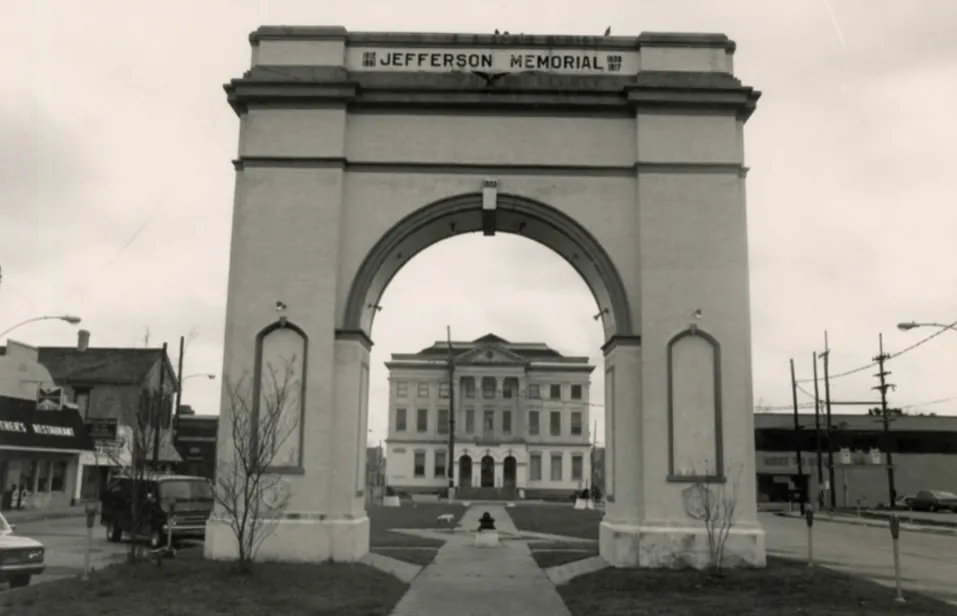 6Architecture·1907–present·NRHPOld Jefferson Parish Courthouse
R.S. Soule drew the three-story Renaissance Revival courthouse that rose on Second Street in Gretna in 1907. The parish seat had been here since 1884, and the building was scaled for that work — courtrooms, clerk offices, the record books that tracked land and probate across Jefferson Parish. It held that function until 1956, though Gretna stayed the seat until 1961. The courts left, the building stayed, and now it's city hall. The Jefferson Memorial Arch went up on the grounds in 1923. The courthouse made the National Register in 1983. Walk in during business hours and you'll see what happens when function changes but the rooms don't — the bones are still civic, the desks and door labels have shifted to match the new tenant. The structure itself hasn't revised.
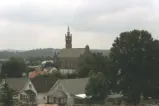 7Religious Site·1856–presentSt. Joseph Church & Cemetery
St. Joseph Church went up in 1856, five years before the Civil War reached Louisiana, making it the oldest Catholic parish on Jefferson's West Bank. It has held services ever since. The congregation that built it included both German immigrants and Creole families, and the burial ground behind the church still shows how those two traditions handled death — some families built above-ground tombs, others dug graves in the earth. The cemetery holds Gretna's founding families. Walk the rows and you're reading the tax rolls and merchant directories of a river town that needed both the German shipwrights and the Creole traders to function. The church itself anchors the Gretna Historic District's walking tour, which means you can see it as part of a longer afternoon that includes the ferry landing and the blocks where those founding families kept their houses and shops. This is a working parish. Mass is still said. The doors open for weddings and funerals. If you visit on a weekday morning you may find someone kneeling in a pew or tending graves out back, carrying forward what began here before the war came.
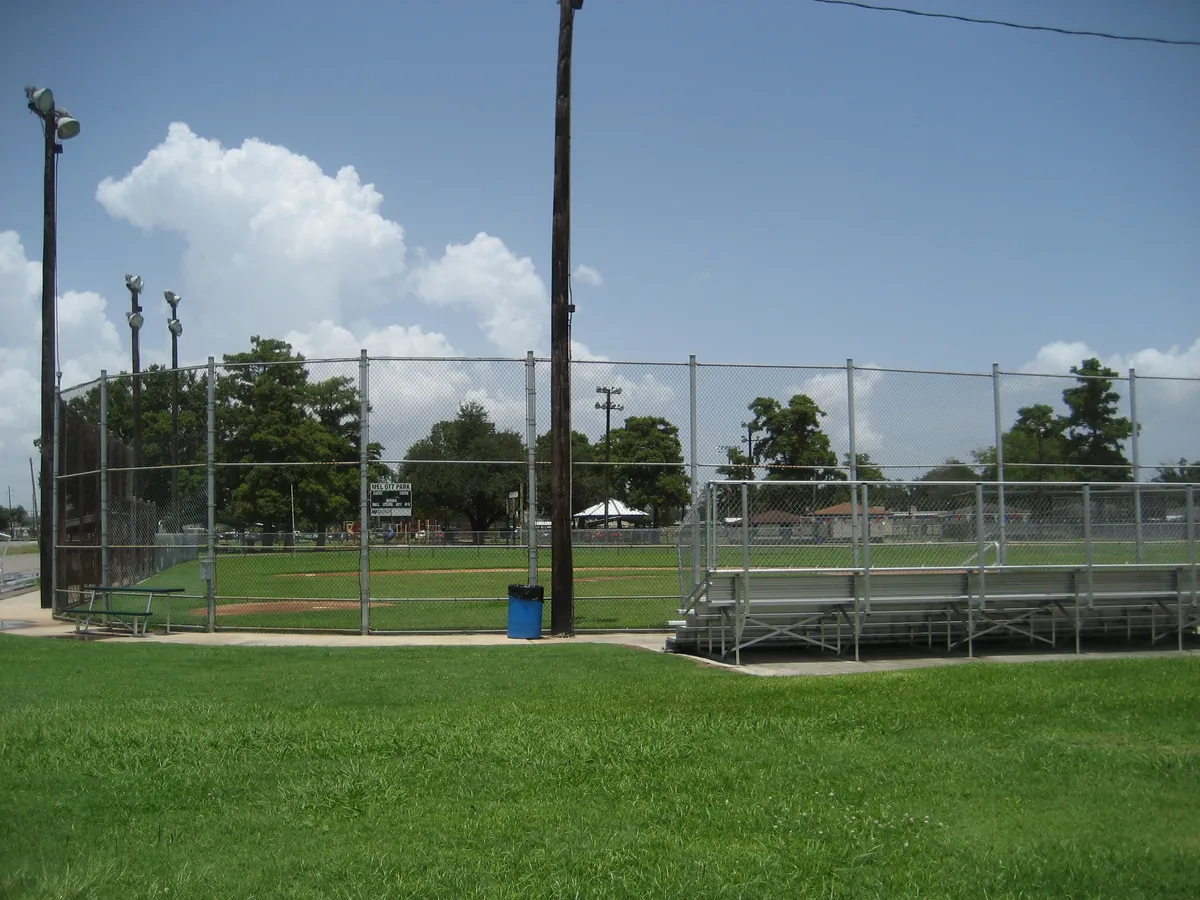 8Historic Site·1909Mel Ott Park
A kid from Gretna signed with the New York Giants at sixteen and hit 511 home runs, a National League record that held for decades. Mel Ott was born here March 2, 1909, left for the Polo Grounds in 1925, and never looked back — except he did, in the way ballplayers carry their first field with them. He managed the Giants from 1942 to 1948. The Hall of Fame took him in 1951. Seven years later, at forty-nine, he died in a car accident. The park sits in his childhood neighborhood, a neighborhood that knew him before the leg kick, before the records, before the plaque. This is where the body learned to move, where the arm first threw. You come here because Gretna sent a sixteen-year-old north and got back a name that lasted.