German immigrants founded Mechanikham in 1836 on the west bank of the Mississippi. The settlement grew into Gretna, and by the 1840s builders were raising creole cottages and Greek Revival houses that still anchor what became a 130-acre historic district — 553 contributing structures from a total of 737 buildings, spanning nearly a century of construction from around 1845 to 1935.
The architecture reads like a chronicle of building fashions. Greek Revival and Italianate structures date to 1845–1879. Italianate, Eastlake, and Colonial Revival work appeared between 1880 and 1910. Colonial Revival, twentieth-century eclectic, and bungalow styles came after. Shotgun houses and corner commercial buildings fill in the streetscape. Four properties earned individual National Register listings on top of the district's collective designation, which came May 2, 1985.
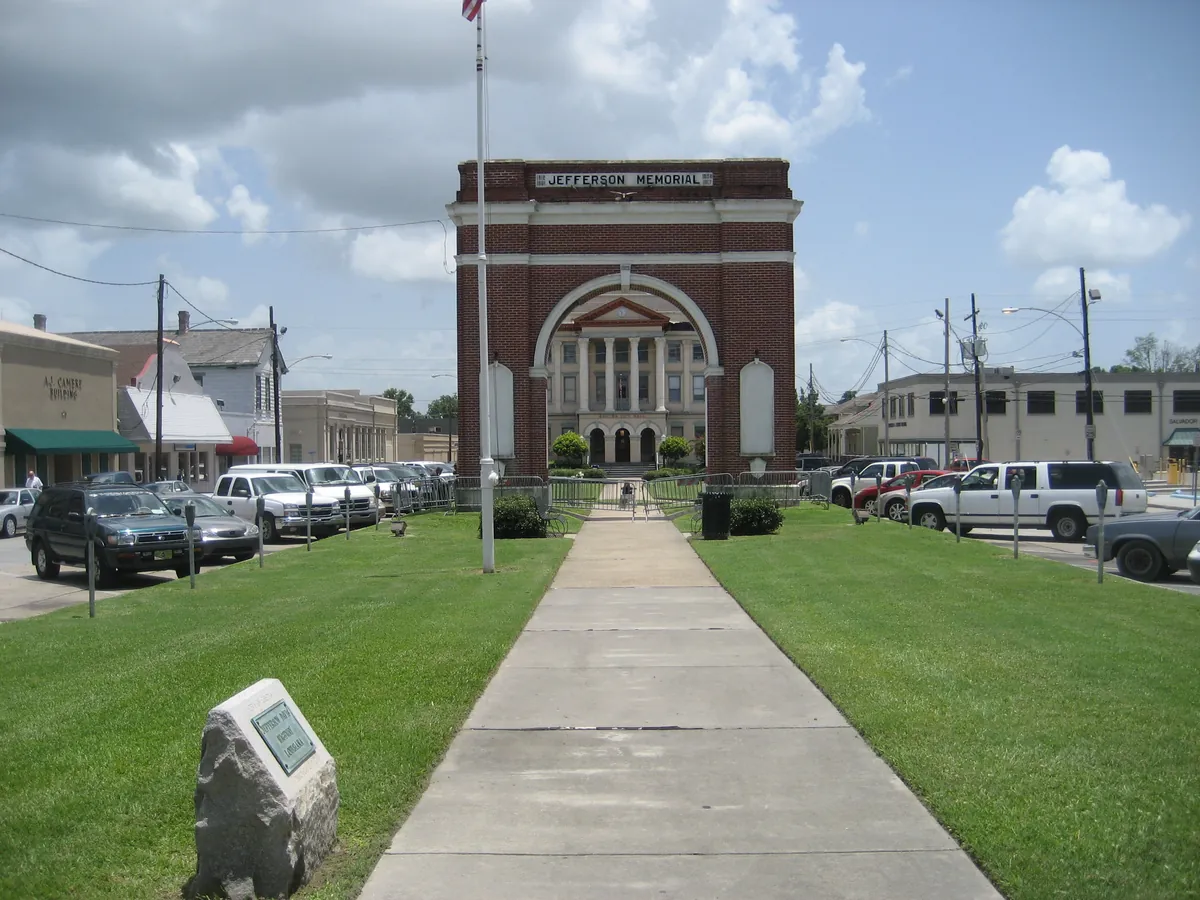
The landmarks the district counts among its fourteen best include an 1859 fire hall named for David Crockett, an 1899 college building, a 1907 courthouse now housing city hall, two early-twentieth-century railroad depots, and a 1926 Catholic church. A house at 216 Lafayette Street dates to around 1850. The Jefferson Memorial Arch went up in 1923.
Start at the Gretna Historical Society on Lavoisier Street for a walking route. The free Gretna-Jackson ferry will carry you back across to New Orleans when you're done.
- ·Listed on the NRHP on May 2, 1985.
- ·130 acres with 737 buildings, 553 of which are contributing historic structures.
- ·Building dates range from c.1845 to 1935.
- ·Styles include Greek Revival, Italianate, Eastlake, and Colonial Revival.
- ·Four individually NRHP-listed properties sit within the district.
- ·Founded in 1836 as Mechanikham by German immigrants.
- ·The free Gretna-Jackson ferry connects to New Orleans.
- ·Start a walking tour at the Gretna Historical Society on Lavoisier Street.
Memories
Editorial content compiled with AI assistance. Place details verified against public records.