Poverty Point is the largest pre-contact earthwork complex in North America, and hunter-gatherers were not supposed to have built it. Three thousand four hundred years ago, a people whose name is lost moved 1.5 million cubic yards of soil by basket into six concentric ridges and a 72-foot bird-shaped mound, contemporary with the earliest Olmec pyramids and 2,000 years before the Maya classic. UNESCO recognized it in 2014. The day starts in Monroe, where Joseph Biedenharn moved his Coca-Cola bottling operation in 1907; his investment helped C.E. Woolman found what became Delta Air Lines in 1924, then runs north past Black Bayou Lake to the ridges. Industrial Monroe is 120 years old. The mounds are 3,400.
The route
 1Museum·Industrial·NRHPBiedenharn Museum & Gardens
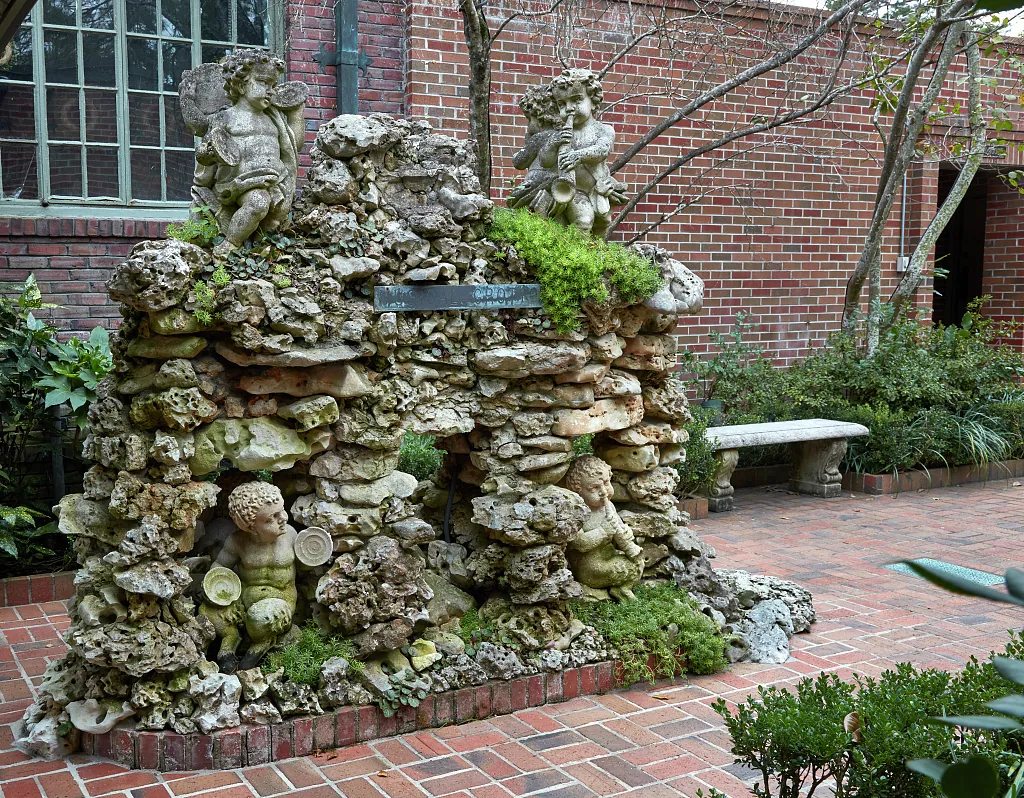
Joseph Biedenharn bottled Coca-Cola in Monroe in 1894, three years before the Coca-Cola Company opened its own bottling operation. The original equipment that made it happen—the machinery that first transferred the soda fountain drink into glass bottles for transport and resale—is on display in a 1914 Colonial Revival home at 2000 Riverside Drive. The house is furnished as it would have been when the Biedenharn family lived in it. Four acres of formal gardens designed in the 1920s surround the property. A Bible Museum wing holds rare editions. The site is listed on the National Register of Historic Places. What you're standing in front of is the proof that a regional bottler, working out of Monroe, figured out the logistics of portability before the parent company did—and the equipment that did the work is still here.
 2Nature & Parks·ModernBlack Bayou Lake National Wildlife Refuge
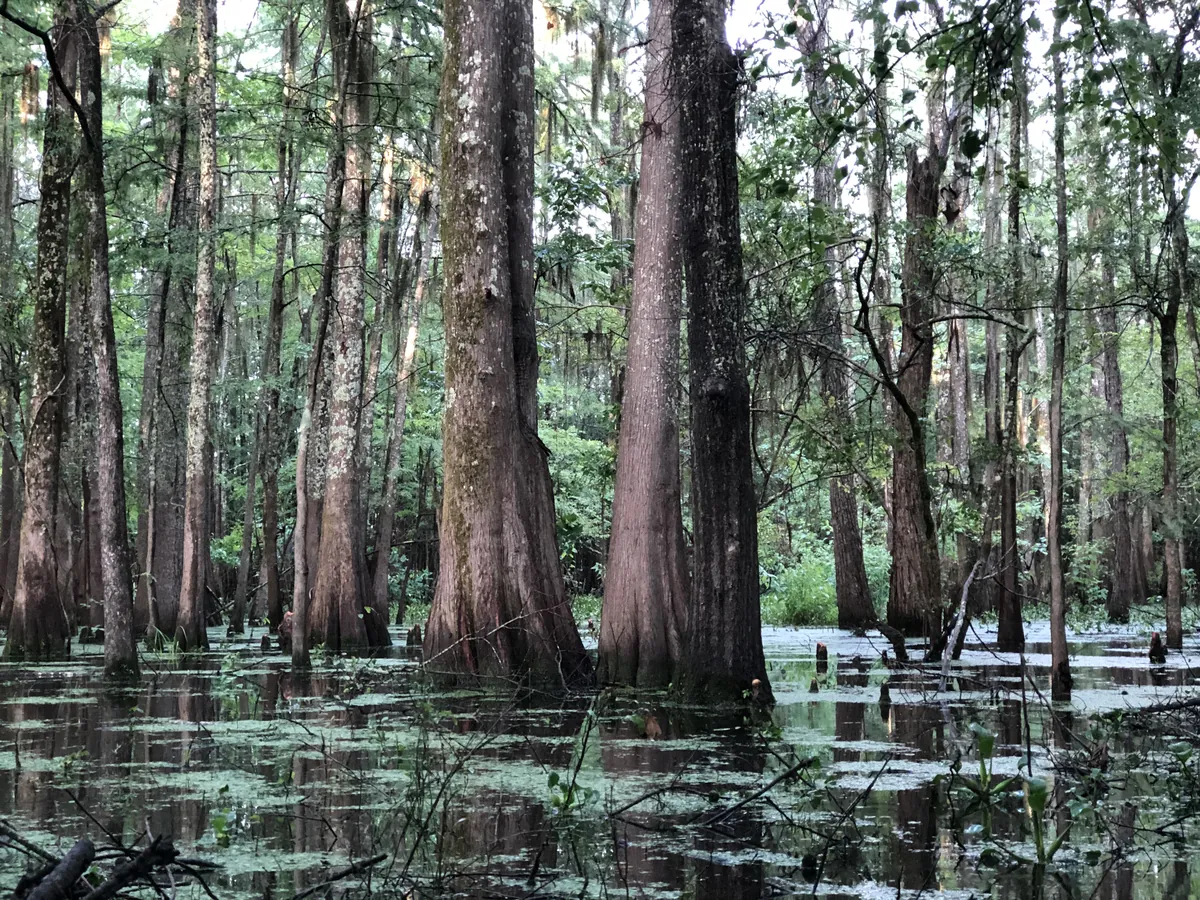
The U.S. Fish and Wildlife Service manages Black Bayou Lake under a free 99-year lease from the city of Monroe, a unique partnership struck in 1997 that gave federal refuge status to a city-owned lake studded with cypress and tupelo. The arrangement made this one of five refuges in the North Louisiana Complex, a patch of bottomland hardwoods and swamp where alligator snapping turtles—a species that has declined drastically across most of the South—still nest along the shoreline. The lake graduates outward in ecological rings: swamps to bottomland hardwoods to upland mixed pine. Cherrybark oak, cedar elm, ash, hickories, and willow oak anchor the lower zones. Shortleaf pine, loblolly pine, mockernut hickory, and post oak hold the upland sites. Eight hundred acres of former agricultural fields have been reforested with eleven bottomland hardwood species. The refuge supports migratory waterfowl, neotropical migratory songbirds, and resident wildlife including alligators, wood ducks, bird-voiced treefrogs, banded water snakes, red-eared sliders, green herons, coyotes, skunks, and white-tailed deer. Biology professors and students from the University of Louisiana at Monroe partner with the refuge on research projects tracking fishes, reptiles, and amphibians. Annual nest surveys monitor alligator snapping turtle nesting, while reducing the raccoon population helps prevent destruction of turtle nests. A large nest box program serves prothonotary warblers and wood ducks, with wood ducks banded each year. A remnant red-cockaded woodpecker cluster lives in the small upland area on the east side. Managing for this endangered species has meant removing some hardwoods to create preferred habitat. The visitor center occupies a restored planter's house on the 40-acre Black Bayou Lake Environmental Education Center. Adjacent to it, an arboretum displays over 100 native Louisiana woody plants, and a prairie demonstration area holds native grasses and wildflowers—maintained through annual mowing or burning. A mile-long raised asphalt and boardwalk nature trail includes a 400-foot wildlife pier. The refuge offers a boat launch, amphitheater, pavilion, raised observation deck with spotting scope, and interactive visitor center exhibits. Control of exotic species is a major activity: herbicide spraying prevents water hyacinths from covering the lake, and staff work to control Chinese tallow trees invading the reforested areas. Fishing and kayaking are open year-round. The refuge sits just north of Monroe off US-165.
 3Cultural Heritage·Pre-Colonial·NHLPoverty Point National Monument
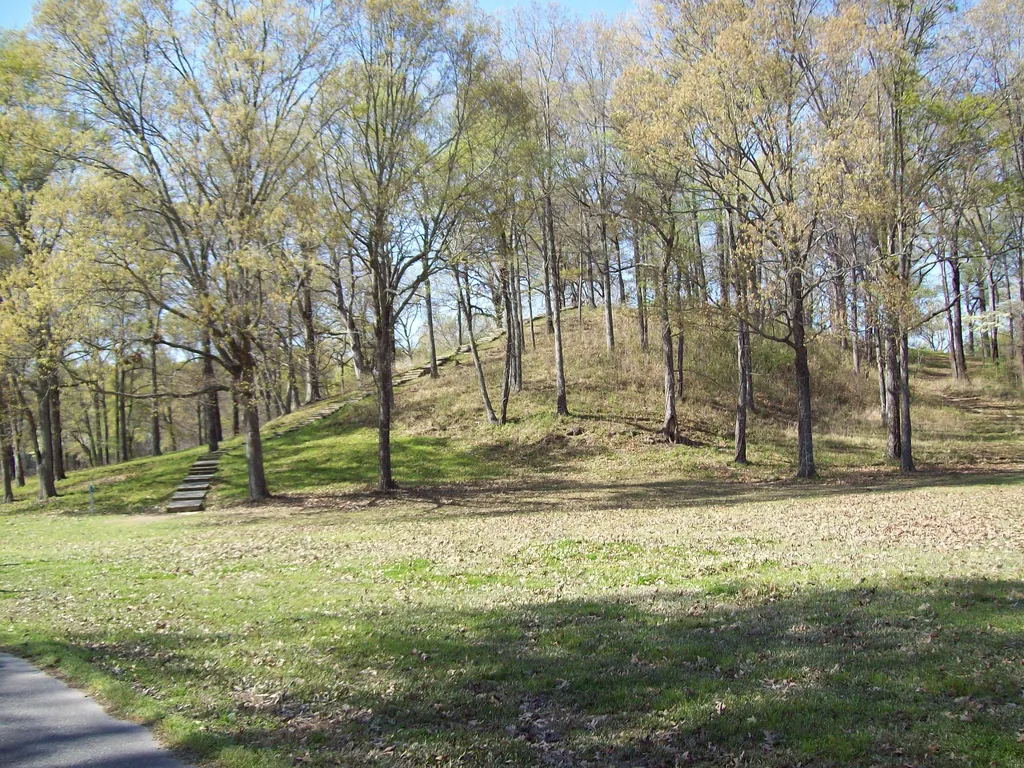
Before the Parthenon, before Rome, before pyramids rose in Mesoamerica, hunter-gatherers on a Mississippi River terrace were engineering earthworks that required moving 750,000 cubic yards of soil—basket by basket, without metal tools, without draft animals, without wheels. Poverty Point is 3,400 years old, and it breaks the script archaeologists once assumed about who builds monuments at scale. The people who raised these ridges didn't farm. They fished the bayous, gathered nuts and berries, hunted deer, and somehow coordinated a multi-generational construction project that shaped a landscape still visible from aerial photographs today. The site's core is six concentric C-shaped ridges, their arcs opening east toward the Mississippi floodplain. Each ridge is separated by a shallow swale; the outermost ring measures three-quarters of a mile in diameter. Radiocarbon dates place most construction between 1600 and 1300 BCE. Researchers believe the ridges were higher once—agricultural plowing wore them down over 150 years—but even now they stretch across 345 acres, divided by four aisles that carve the earthwork into sectors. Within the innermost ridge lies a 37.5-acre plaza, not naturally flat but engineered: soil was added in places to raise the ground surface by more than three feet, and geophysical surveys revealed rings of wooden posts up to 206 feet in diameter embedded in the southern half. Mound A anchors the western edge—a T-shaped platform 72 feet tall and roughly 705 by 660 feet at its base, making it the second-largest earthen mound by volume in eastern North America. Only Monks Mound at Cahokia, built nearly two millennia later by the Mississippian culture, exceeds it. Researchers determined Mound A went up fast: the vegetation covering its footprint was burned, then immediately sealed with silt, then buried under 8.4 million cubic feet of loess in a single massive push lasting less than three months. No construction phases, no weathering layers—just an unbroken effort that required coordination on a scale hunter-gatherer societies weren't supposed to achieve. Five more mounds dot the complex, each with its own construction story. Mound B, the earliest, dates to sometime after 1700 BCE and was built in stages—charcoal, fire pits, and basket impressions preserved in the fill. Mound C sits inside the plaza near the edge of Macon Ridge, composed of thin layers added over time. Mound E, a flat-topped rectangle with a ramp extending from its northeast corner, yielded novaculite and other nonlocal chert in its fill—stones traded from the Ouachita and Ozark mountains, from the Ohio and Tennessee river valleys, evidence of a network that stretched across the Eastern Woodlands. A sixth mound was discovered in 2013; radiocarbon dates indicate it was the last Archaic-period addition, built sometime after 1280 BCE. The people who built Poverty Point left no writing, so their purposes remain speculative. Postholes, hearths, and earth ovens on the ridges suggest habitation—though whether year-round settlement or periodic gathering remains unresolved. Most artifacts are small baked loess objects, found in a wide variety of forms and used, based on experimental archaeology, in earth ovens for cooking. Stone tools were manufactured on-site—debris from the process scatters across the ridges—but the raw materials came from elsewhere: steatite from the Appalachian foothills, copper from the southern Appalachians, galena from Missouri and Iowa. Analysis of artifact distribution shows the earthwork's sectors were used for specialized activities: the north sector favored tool manufacturing, the south sectors tool use, the west sector lapidary work. Clay figurines appear evenly distributed, but cylindrical grooved objects—the earliest form of Poverty Point Objects—give way to biconical forms in later strata. The culture that built Poverty Point vanished. Changes in temperature, precipitation, and increased flooding may have caused an ecological imbalance that led to abandonment. By the time European explorers arrived in the 1500s, the site had been quiet for more than a millennium. In the 1830s, Jacob Walter, searching for lead ore, wrote in his diary about stumbling onto "an old Indian town" with a "mound of colossal size." By 1851, the property was known as Poverty Point Plantation—a 19th-century slave operation whose name stuck to the earthworks it occupied. The first published account appeared in 1873. Systematic excavation began in 1952 with James A. Ford and Clarence Webb, and research has continued into the 21st century: geophysical surveys, soil cores, magnetic susceptibility analyses, targeted excavations of the post circles revealed in the plaza. In 1972, Louisiana purchased 400 acres of the site and opened it to the public four years later. Congress designated it a national monument in 1988. In 2014, UNESCO inscribed Poverty Point as a World Heritage Site—the first in Louisiana, the 22nd in the United States, and the only pre-Columbian earthwork complex in North America to earn the designation. A museum interprets the artifacts and construction sequences. An observation tower offers a vantage on the ridges' geometry—the scale so massive that the C-shaped design wasn't recognized until researchers examined aerial photographs. Tram tours cross the plaza and climb Mound A, open daily except Thanksgiving, Christmas, and New Year's Day.