In 1882, a village of 500 people renamed itself and became a city of 25,000 inside a decade — because the Norfolk & Western Railway chose it as a junction. This walk connects the headquarters where the decision was made, the photographer who captured the last steam era in haunting black-and-white, the museum that holds the surviving locomotives, and the hotel the railroad built for its executives.
The route
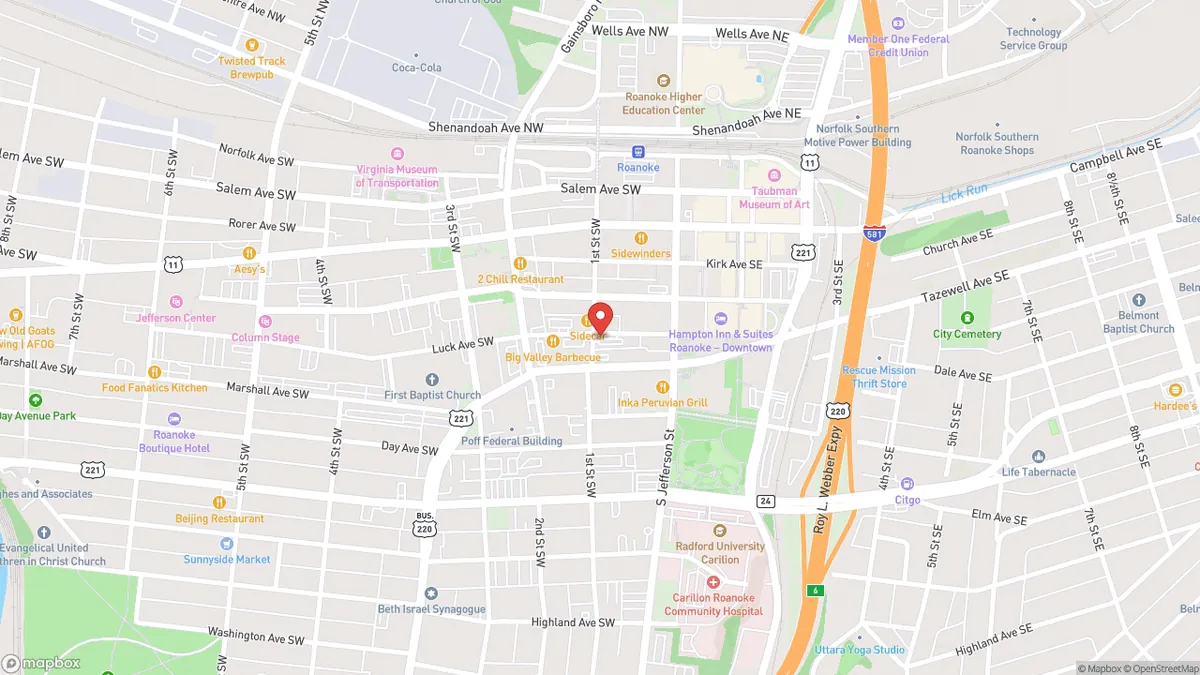 1Architecture·1931·NRHPNorfolk & Western Railway Headquarters
In 1882, the Norfolk and Western Railway chose Big Lick—a Virginia village of fewer than a thousand residents—as the site for its headquarters and shops, and the settlement became the city of Roanoke. The railroad built an industrial empire on Pocahontas coal, manufacturing its own steam locomotives at the Roanoke Shops and employing more people than any other company in the region for over a century. By 1931, that prosperity was visible: the N&W erected a 12-story Art Deco headquarters tower that became the tallest building in southwestern Virginia. The railroad was formed by more than 200 mergers between 1838 and 1982, and it operated profitably through both World Wars and the Depression, paying regular dividends when other carriers failed. The N&W became famous for its commitment to steam—refusing to abandon the technology while the rest of the industry moved to diesels. In 1960, the N&W became the last major railroad in the United States to make the switch. The Roanoke Shops, which had employed thousands of craftsmen, continued building and repairing rolling stock until Norfolk Southern closed them in 2020, ending 139 years of operations. The building now houses private condominiums, but the exterior and lobby remain accessible. The original murals depicting N&W operations survive. From the Blue Ridge Parkway overlooks, the tower's profile still defines the Roanoke skyline—a 12-story reminder of the railroad that turned a village into a city.
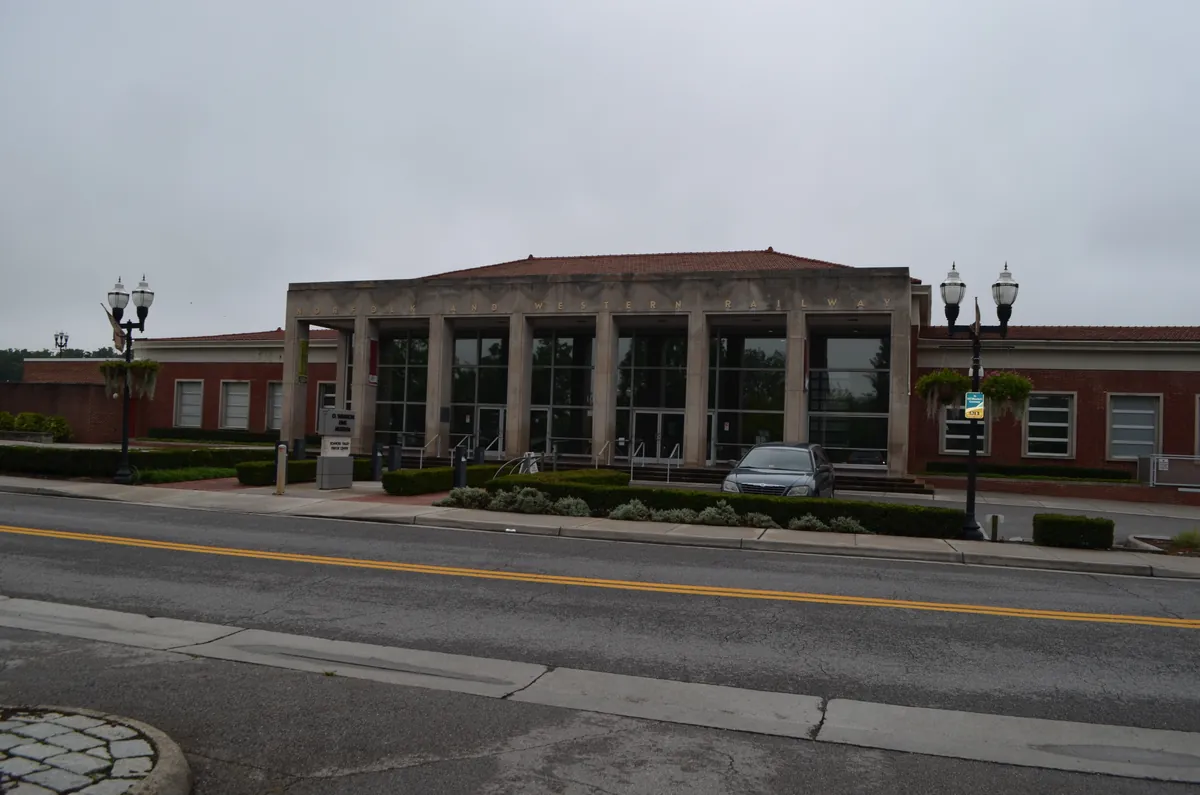 2Museum·2004O. Winston Link Museum
In 1882, the Norfolk & Western Railway chose a town called Big Lick for its headquarters and shops. Within two years, the town became the City of Roanoke. The railroad built N&W into Southwest Virginia's economic hub — and in downtown, it built a passenger station. Originally constructed in 1905, the building was renovated in 1949 by industrial designer Raymond Loewy. It is now one of three contributing structures to the Norfolk and Western Railway Company Historic District, listed on the National Register of Historic Places in 1999. Between 1955 and 1960, O. Winston Link photographed the last days of steam on the Norfolk & Western. He shot at night, using synchronized flash setups that turned locomotives into sculpture. He carefully planned the lighting and staging, placing human subjects in many photographs. Link is widely considered the master of the juxtaposition of steam railroading and rural culture. The photographs are among the most valuable railroad photos ever made. In January 2004, the museum opened in that former passenger station. Hundreds of Link's photographic prints hang in the galleries. Interactive displays include audio that provides information on his photographic subjects. The equipment he used to create the nighttime photographs is displayed. The collection is the definitive archive of Link's railroad work. The station sits on the downtown tracks where Link's subjects once ran. The 1982 decision by N&W to move its headquarters out of Roanoke marked the end of one era; this museum preserves the record of another ending — the last years of steam. Open daily. Admission charged. Combined tickets available with the Virginia Museum of Transportation.
 3Museum·1963Virginia Museum of Transportation
The city that was Big Lick — population 500 — exploded to 25,000 in the decade after the Norfolk & Western Railway arrived in 1882. What the railroad made, this museum explains. It occupies the old N&W freight station downtown, a two-section building completed in 1918 that once housed the offices of the Shenandoah and Radford divisions. The station closed for freight business in 1964. The museum opened in 1963 in Wasena Park, moved here after a 1985 flood, and was designated the Official Transportation Museum of Virginia by the General Assembly in 1983. The collection is the largest assemblage of Norfolk & Western rolling stock in existence — more than 50 pieces. The star is the Class J 611, the most famous steam locomotive ever built in the South, operational since May 9, 2015. The Class A #1218, built at the Roanoke Shops in 1943, is the last remaining 2-6-6-4; it ran excursions from 1987 to 1991. The Virginian Railway SA class #4, built by Baldwin in 1910, is the last remaining steam engine from the Virginian Railway. The Norfolk & Western Class G-1 #6, built by Baldwin in 1897, is the museum's oldest piece and one of the oldest N&W locomotives still in existence. "From Cotton to Silk" documents African American railroad workers on the N&W and Norfolk Southern through photographs, artifacts, and recorded interviews. "Big Lick" recreates a 1930s rural depot with freight scales, a telegrapher's office, timetables, and a velocipede handcar. An O scale model railroad layout represents the rail networks of Roanoke, Salem, and Lynchburg. The automobile gallery displays cars from the early 20th century forward, with an oral history display titled "Driving Lessons." The aviation gallery includes an oral history project called "Flight Talk." The outdoor rail yard is worth the admission alone. Open daily.
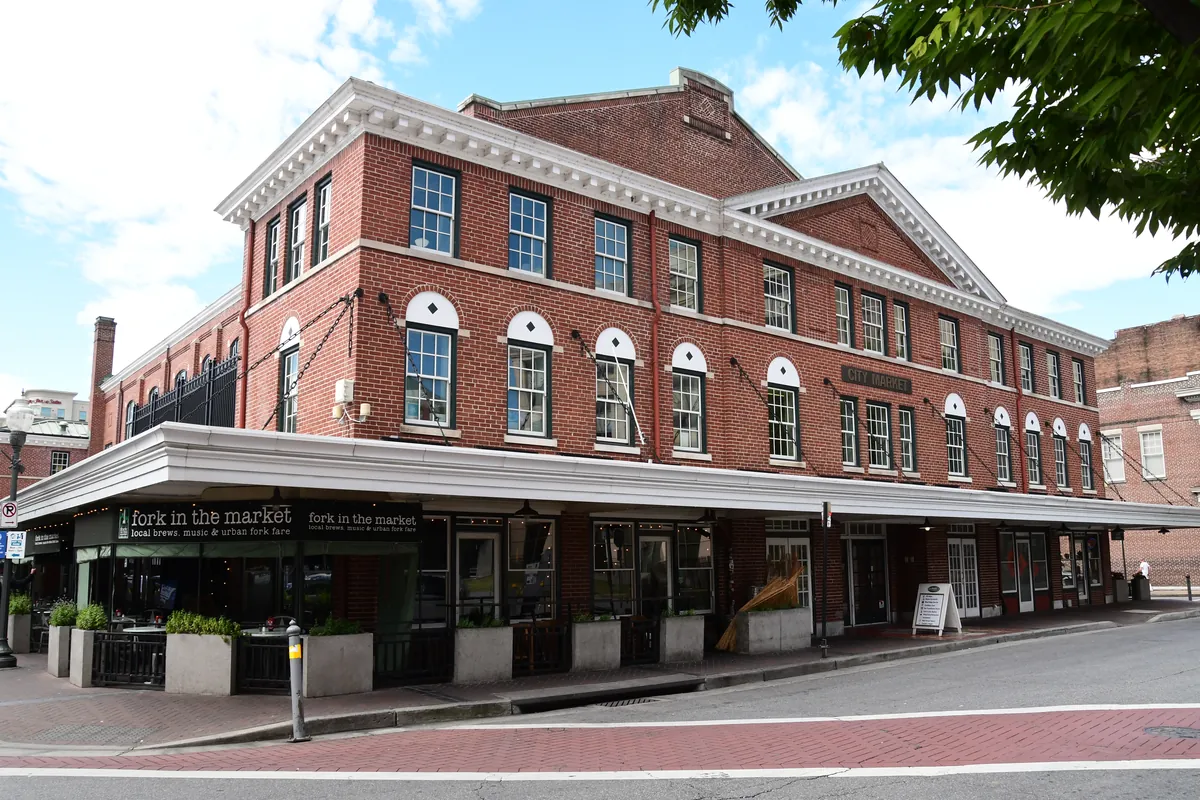 4Historic Site·1882·NRHPRoanoke City Market
The Norfolk and Western Railway chose the small town of Big Lick as its headquarters in 1882, and within two years the population had exploded — from under 700 to over 5,000 — earning Roanoke its early nickname, "The Magic City." The farmers' market dates to that same year, 1882, and still operates from its original location, making it the oldest continuously running open-air market in Virginia. The covered market building anchors what became the Market Square district, now the center of Roanoke's dining and nightlife scene. A pedestrian bridge connects the market to the Hotel Roanoke, the Tudor Revival structure the railroad also built in 1882. The hotel started as a 69-room Queen Anne building before numerous rebuilds and expansions gave it its current 330-room form. Both landmarks arrived when the railroad companies set out to build much of the town from scratch — railroad shops, offices, a hotel, and suitable housing for their employees. On Saturdays, the market shows what it was built to do. Stalls spill onto the sidewalk with local produce, baked goods, and crafts. Weekday hours are shorter, but the market runs year-round. The surrounding block has cycled through the city's transformations: the boomtown chaos of the 1880s, the railroad's 1982 departure for Norfolk, the manufacturing closures that followed, and the healthcare-driven economy that eventually reversed decades of population decline. The market outlasted all of it. Same location, same purpose — farmers and vendors selling to the city the railroad made.