Many of the enslaved people on these bluffs freed themselves by walking to Union lines during the 47-day siege, and the National Cemetery here holds more African American Civil War soldiers than any other in the country. This trail follows what came after. The African American Monument marks where the United States Colored Troops fought. The Jacqueline House holds 20,000 artifacts. Myrlie Evers-Williams was born on March 17, 1933, in a house that still stands. Kuhn Memorial Park names the Freedom Summer 1964 organizers Vicksburg almost forgot.
The route
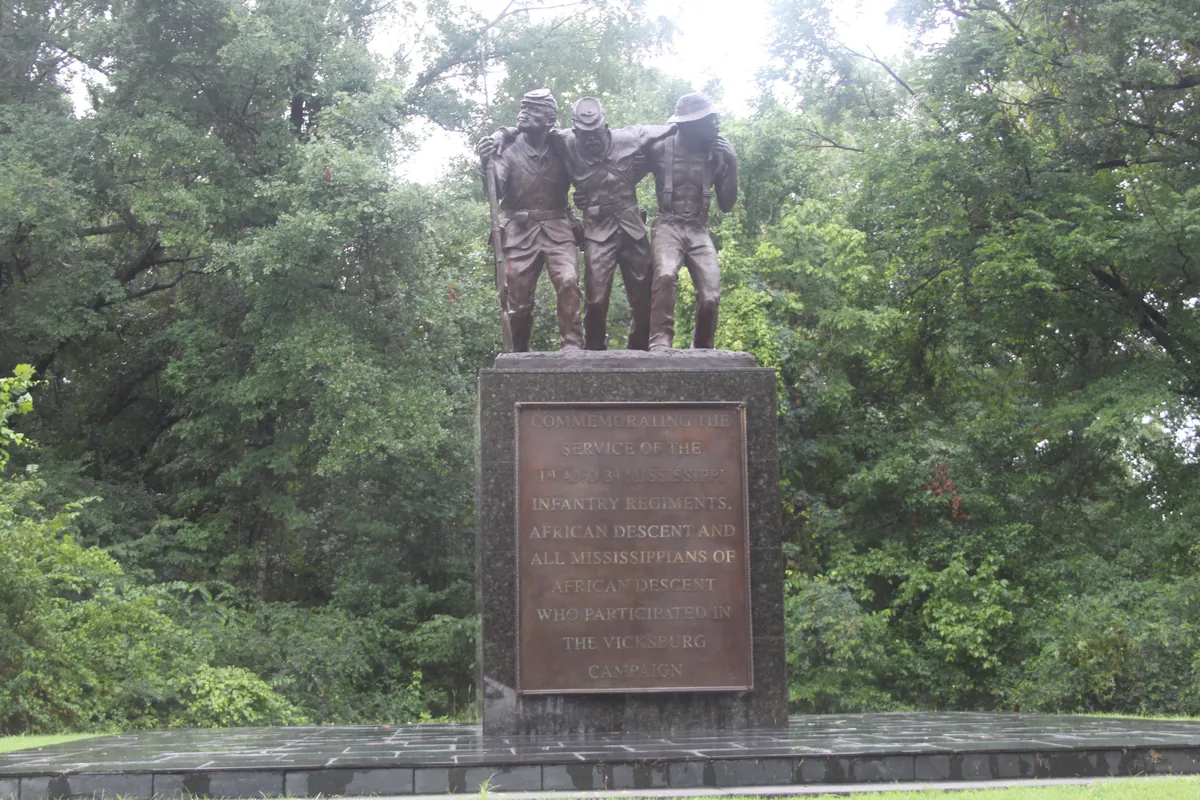 1Historic Site·2004African American Monument
A fortress city built on a high bluff where the Mississippi bends, Vicksburg spent 47 days under siege in 1863 before its surrender split the Confederacy and turned the war. The African American Monument — three bronze figures on black African granite — was dedicated in 2004, 141 years later, the first monument in any national military park to honor African American contributions in the Civil War. Approximately 1,300 United States Colored Troops served in the Vicksburg campaign. The inscription reads: "Serving in a double capacity, that of citizen and soldier." Dr. Shirley Whitfield Lucas, a Mississippi native, sculpted the figures. The monument stands along the park tour road, open during park hours. Admission is free.
- 2Museum·Collection spans slavery–presentJacqueline House African American Museum
Most museums in Vicksburg center the Civil War. The Jacqueline House African American Museum doesn't—it holds more than 20,000 artifacts spanning slavery through the present day, one of the most comprehensive African American history collections in Mississippi. Personal objects, photographs, documents, and oral histories that tell a different story of this river city. Vicksburg sits on a high bluff above the Mississippi, built on ground the Natchez held for centuries before French colonists arrived in 1719. The French started plantations. The Choctaw took the land by right of conquest after the Natchez War. The United States pressed the Choctaw to cede the territory in 1801, then forcibly removed most of them west in 1830. By 1863 the city was a Confederate river-port whose surrender to Grant marked the war's turning point. After Reconstruction came a violent return to power by white supremacists in 1874 and 1875, including the Vicksburg massacre. Today the city's population is majority African American. The museum exists in that gap—the lived experience across two centuries that monuments and battlefields cannot tell. The collection holds what was kept, what was made, what endured. It's downtown. Check visitvicksburg.com for current hours and admission before you go.
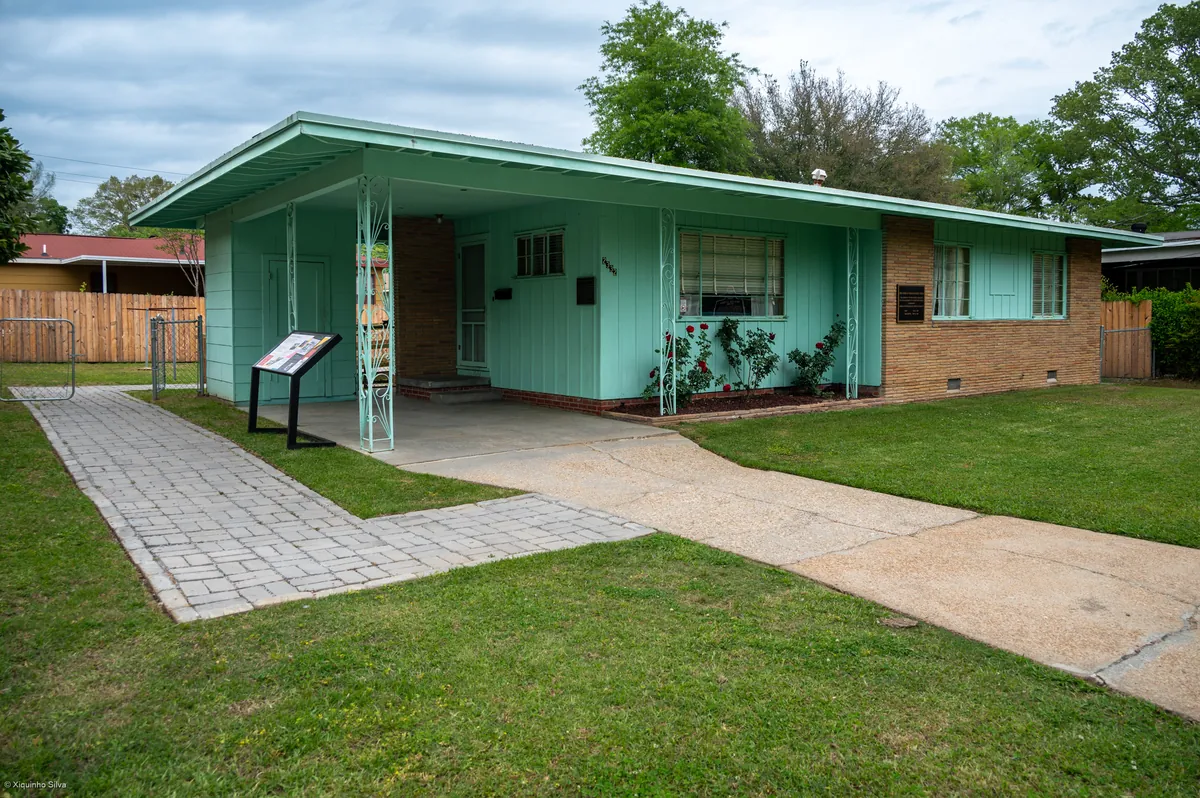 3Architecture·1933Myrlie Evers-Williams Birth Home
Myrlie Evers-Williams was born here on March 17, 1933. She grew up in Vicksburg and attended Magnolia High School. She became civil rights leader and NAACP chairman. She was the widow of Medgar Evers, assassinated in Jackson, Mississippi in 1963. She fought for 31 years to convict assassin Byron De La Beckwith, who was convicted in 1994. The house is part of Vicksburg's African American Heritage Tour. The exterior is viewable. It is private property.
- 4Historic Site·1960s / park dedicated laterKuhn Memorial Civil Rights Park
The park sits where Kuhn Memorial Hospital once stood. Vicksburg was a center of voter registration drives, freedom schools, and direct action during Freedom Summer in 1964. The Old Baptist Association nearby was bombed on October 4, 1964 for hosting civil rights meetings. This park honors the local civil rights trailblazers from that era and beyond—people who organized under threat, who taught when schools were closed to them, who registered voters in a city where power had been violently reclaimed by white supremacists in 1874 and 1875. The city's population is now majority African American. The park is part of Vicksburg's African American Heritage Tour, free and open to the public. Come to stand where a hospital once stood, now ground given to memory.
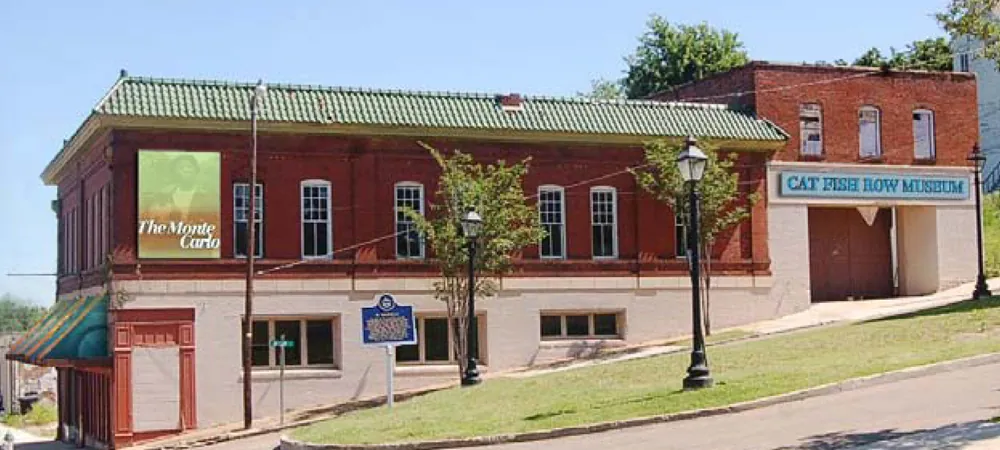 5Museum·Building 1905·NRHPCatfish Row Museum
The Christian and Brough Building went up in 1905 on Washington Street in downtown Vicksburg. It spent decades as the Monte Carlo Club, a blues and R&B venue that ran through the 1970s and 1980s. Now it houses a museum that takes on the part of the city's story most other institutions skip. Vicksburg's museum landscape tilts heavily toward the Civil War — the 1863 siege that became a turning point in the conflict. The Catfish Row Museum doesn't. It focuses on Vicksburg's artistic, literary, and culinary history, and it highlights African American and minority contributions to the city's culture. In a city where the population is now majority African American and where the historical record has often centered on military catastrophe, the museum holds the thread of what people built, performed, and cooked. The building is listed on the National Register of Historic Places. It's open Monday through Saturday. Small admission fee. Current hours are posted at visitvicksburg.com.