A small town of 3,200 sent its National Guard company to Normandy and lost 19 men in ten minutes — the highest per-capita D-Day loss of any community in America. The memorial built on the hilltop is devastating and specific. Then drive 20 minutes to Virginia's largest man-made lake and spend the afternoon on 500 miles of shoreline that most people outside the valley don't know exists.
The route
 1Cultural Heritage·2001National D-Day Memorial
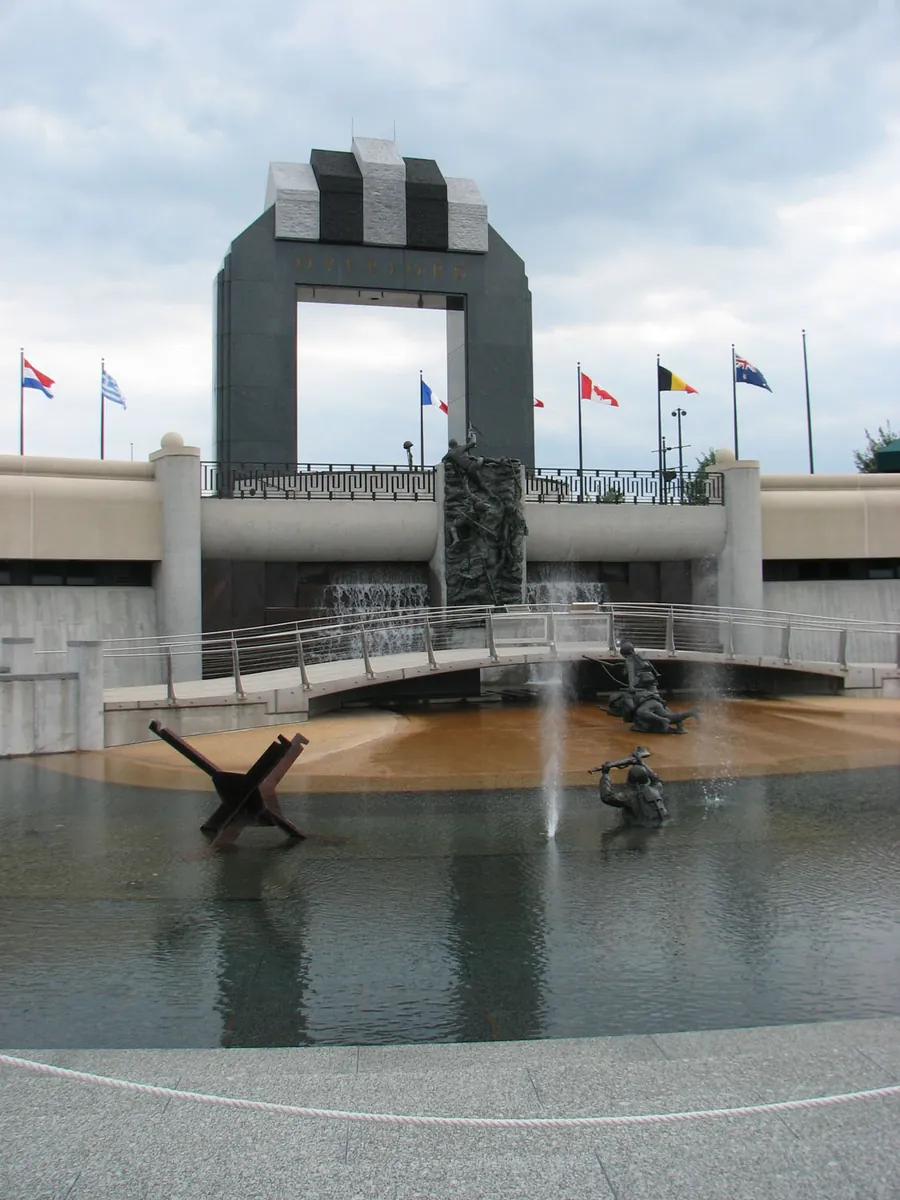
Bedford sent thirty-four National Guard soldiers to Normandy on June 6, 1944 — Company A, 116th Infantry Regiment, 29th Infantry Division. Nineteen were killed during the first day of the invasion. The town's population in 1944 was 3,200. No American community suffered greater proportional D-Day losses, and in 2001, Congress chose Bedford for the national memorial. Company A included three sets of brothers. Ray Stevens died in the landing; his twin Roy survived. Jack Powers was killed; his brother Clyde was wounded but survived. Bedford and Raymond Hoback were both killed. Alex Kershaw chronicled the losses in *The Bedford Boys*, and the story helped inspire *Saving Private Ryan*. Steven Spielberg funded portions of the memorial, including the Arnold M. Spielberg Theater, named for his father, a World War II veteran. The memorial opened June 6, 2001, with President George W. Bush present and 15,000 people in attendance. Fundraising and construction took approximately seven years and approximately $25 million. In 1994, Bedford donated 11 acres; the foundation purchased additional land, bringing the site to over 50 acres bordering the Blue Ridge Mountains. Three plazas follow a timeline. Reynolds Garden, shaped like the Supreme Headquarters Allied Expeditionary Force combat patch, represents planning and preparation. Gray Plaza includes an invasion pool with beach obstacles, sculptures of soldiers struggling ashore, and a representation of the Higgins craft. Intermittent jets of water spurt from the pool. The names of the 4,427 Allied soldiers who died in the invasion appear on necrology walls — the most complete list of its kind anywhere in the world. Estes Plaza includes the Overlord Arch, 44 feet 6 inches tall, marking the invasion date in its height. The memorial is open daily. The invasion pool drains for maintenance during January, February, and part of March. Bedford is 30 minutes east of Roanoke.
 2Cultural Heritage·1856·NRHPBooker T. Washington National Monument
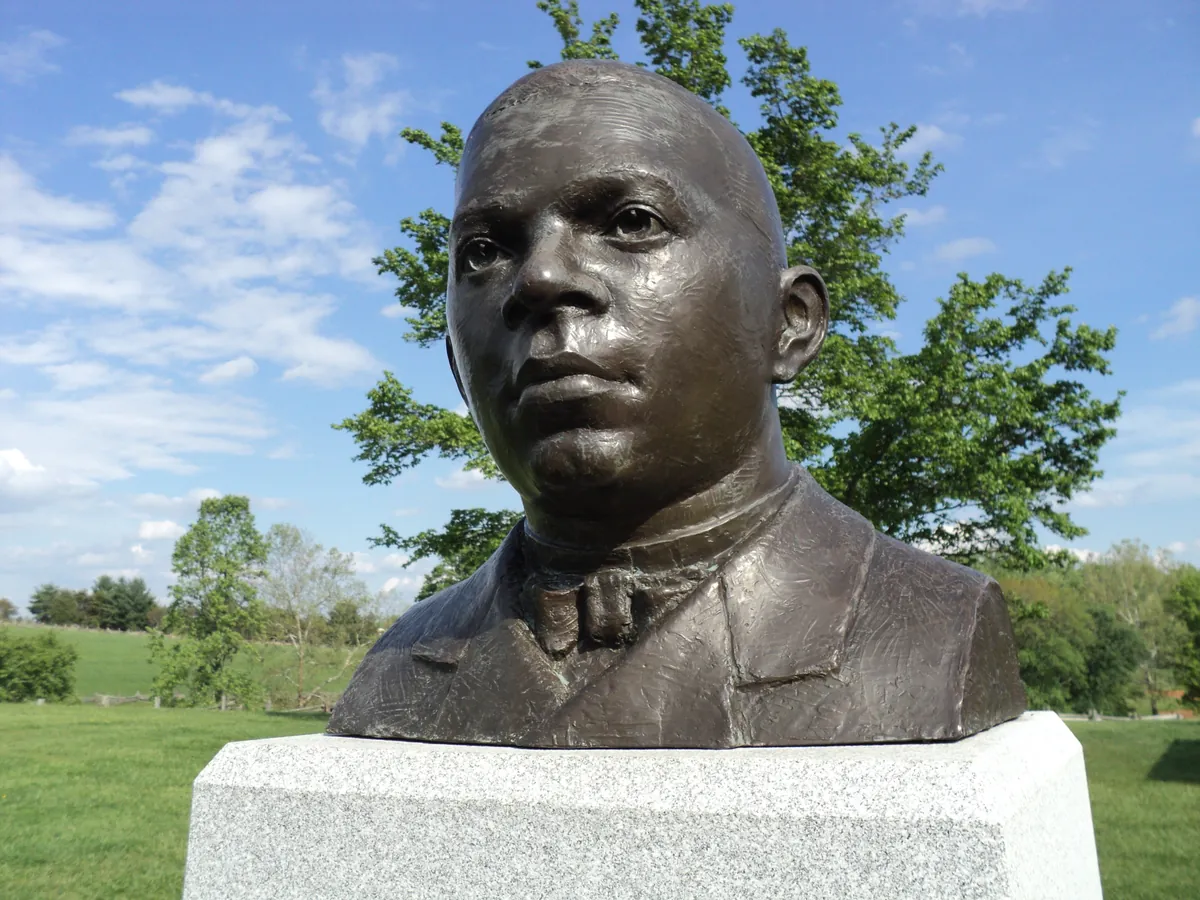
Booker T. Washington was born into slavery on this 239-acre tobacco farm 25 miles southeast of Roanoke on April 5, 1856. He walked to Hampton Institute at age 16, founded Tuskegee Institute in 1881, and recruited George Washington Carver in 1896. The national monument preserves the farm site with a reconstructed kitchen cabin and a quarter-mile trail through the tobacco fields where he worked as a child. Free admission. About 25 minutes from Roanoke.
 3Nature & Parks·1930sPeaks of Otter — Sharp Top and the Lodge
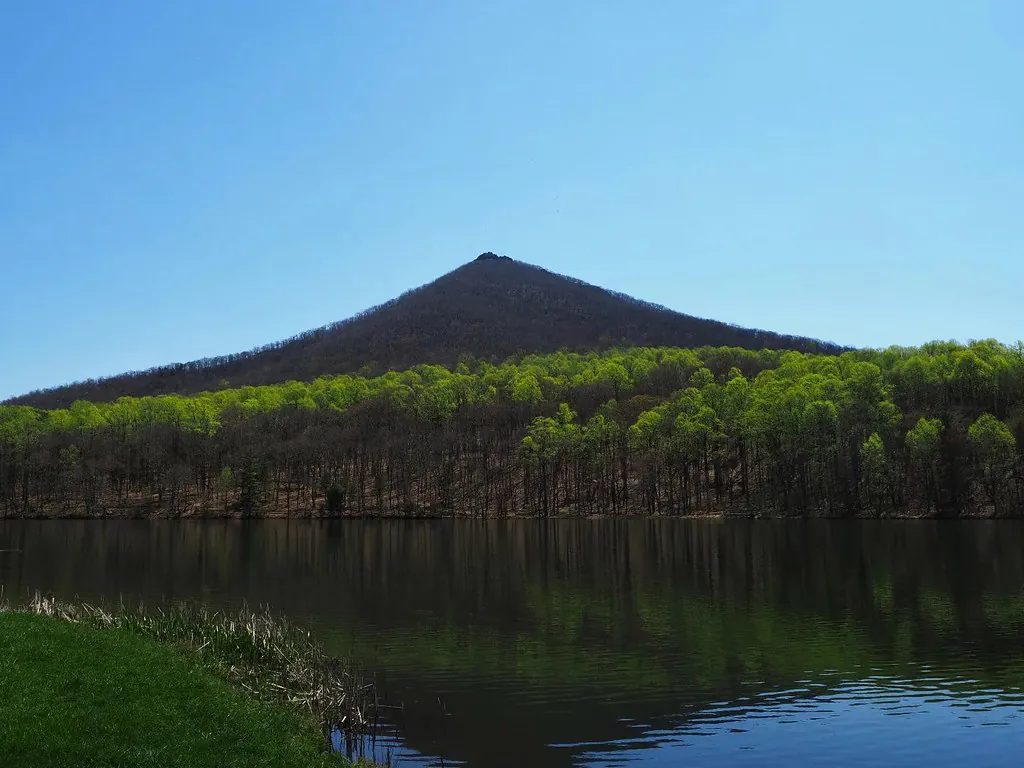
Thomas Jefferson thought Sharp Top was Virginia's highest mountain. He was wrong — but standing at the pointed summit visible from fifty miles out, you understand why he believed it. The 3,875-foot peak is one of the most recognizable silhouettes in the Blue Ridge, a hard geometry against the sky that has oriented travelers for centuries. The trail is 1.6 miles. Steep, but short. In season, a shuttle runs from the lodge to the trailhead at Milepost 86, sparing you the pre-hike climb. The summit itself delivers what Jefferson saw: an improbable sense of scale, the kind of vista that makes a man guess at elevation and get it wildly optimistic. Below, Peaks of Otter Lodge sits on Abbott Lake. It opened in the 1960s, one of only a handful of lodges on the entire Blue Ridge Parkway — which means you can sleep here, wake to mist on the water, and be on the trail before the heat arrives. Roanoke grew as a railroad boomtown in the 1880s, population multiplying twenty-two times in a decade as the Norfolk and Western Railway staked its headquarters in what had been a depot called Big Lick. The city's access to the mountains was always part of the bargain. Sharp Top was the bargain made visible.
 4Nature & Parks·1966Smith Mountain Lake
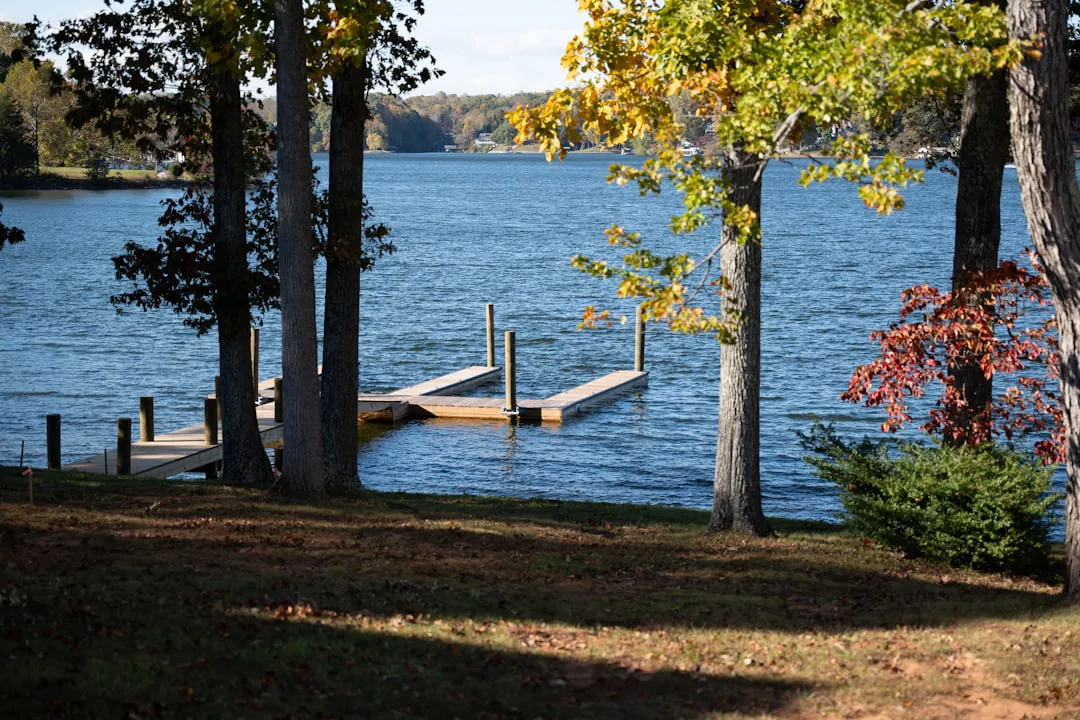
Smith Mountain Lake is a large reservoir in the Roanoke Region of Virginia, located southeast of the City of Roanoke and southwest of Lynchburg. Initial proposals were made in the late 1920s to dam the Roanoke River and the Blackwater River at the Smith Mountain gorge to generate electricity. Construction on the dam began in 1960 and was completed in 1963. The lake reached its normal water level in March 1966. It is the largest lake contained entirely within the Commonwealth of Virginia. The lake covers 20,600 acres and has over 500 miles of shoreline. The majority of the south shore lies in Franklin County, while Bedford County makes up the northern half, with the Roanoke River as the dividing line. The area lies in a broad valley nestled in the Blue Ridge Mountains of rural south-central Virginia. Before the lake's creation, farming and logging were the primary industries. Throughout the 1960s and 1970s, the area around the lake remained rural and remote with tobacco farms and other agriculture. Marinas provided the bulk of public access in the early years of the lake. Residential growth has been steady since the mid-1980s and increasingly upscale with large lakefront houses, condominiums, and communities centered on golf courses. The lake has attracted many who commute to Roanoke and Lynchburg and many retirees, many of whom have relocated from the Northeast. Boating, water skiing, wakeboarding, riding personal watercraft, and sailing are common activities. Fishing for striped bass is especially common. The lake has hosted several professional fishing tournaments. Striped bass are stocked into the reservoir using fingerlings grown out from the spawn of fish that have migrated from downstream Kerr Reservoir to the vicinity of Brookneal. The striped bass fishery produced multiple former state record striped bass caught during the 1980s and 1990s. Smith Mountain Lake State Park opened in 1983 and provided a beach and a section for swimming. About a dozen private marinas provide various public access opportunities. American Electric Power is licensed to operate the Smith Mountain Project by the Federal Energy Regulatory Commission. In 1998, FERC required AEP to devise and implement a shoreline management plan.