These aren't cemeteries. The French called them cités — cities of the dead where family vaults have addresses and the hierarchy of the living carries over intact. The water table gets the credit — New Orleans buries above ground because it has to — but Philadelphia had the same problem and built grass lawns. New Orleans, Catholic and Creole, refused the Protestant idea that death flattens you into a graveyard. St. Louis No. 1 (1789) was the first municipal cemetery. Six on this trip show the form perfected.
The route
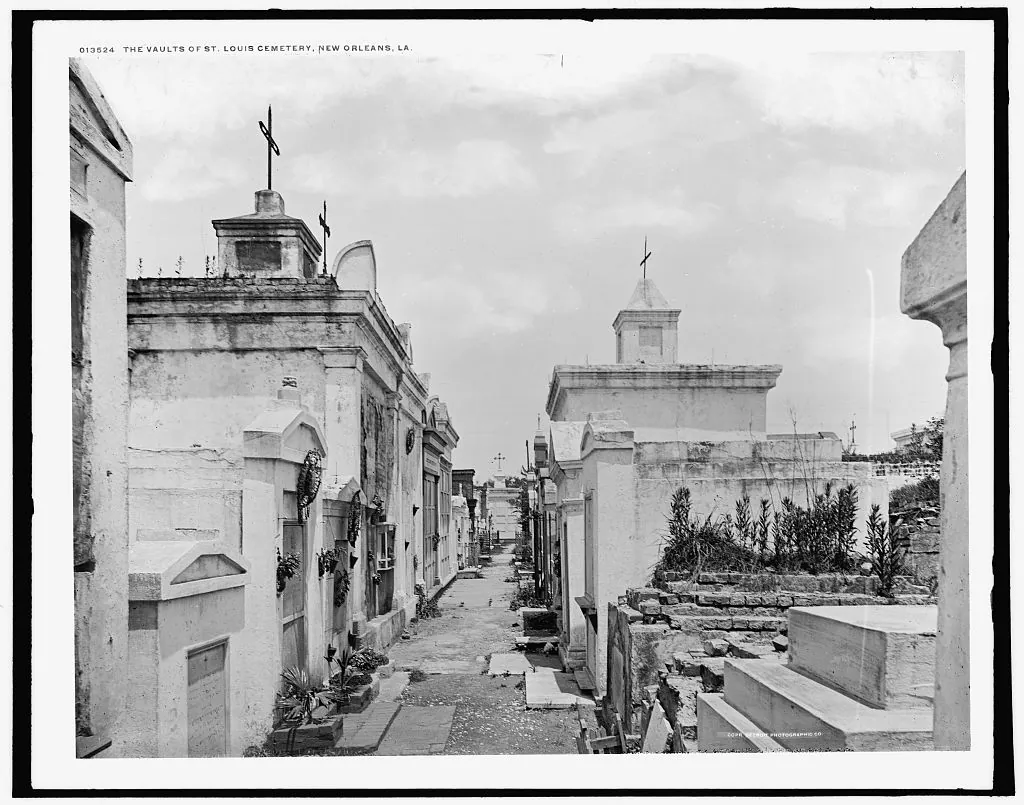 1Religious Site·1789·NRHPSt. Louis Cemetery No. 1
The ground here won't take a grave. The water table sits too high — dig six feet and you hit the swamp that made this port city possible. So when New Orleans opened this cemetery in 1789, replacing St. Peter Cemetery after the 1788 fire redesigned the city, builders stacked the dead above ground in whitewashed vaults. The result: row after row of crumbling plaster tombs packed into a single city block, eight blocks from the Mississippi, just beyond the French Quarter's inland border. The landscape earned the nickname "Cities of the Dead." The roster reads like a ledger of the city's formative centuries. Etienne de Boré, sugar industry pioneer and New Orleans' first mayor. Homer Plessy, whose name anchors the 1896 Supreme Court case that formalized segregation. Paul Morphy, early world chess champion. Bernard de Marigny, the French-Creole aristocrat who founded Faubourg Marigny. Delphine LaLaurie, the slave owner whose cruelty became legend. Benjamin Latrobe, the architect who died of yellow fever in 1820 while engineering the city's waterworks. Marie Laveau draws the most attention. The Voodoo priestess is believed to rest in the Glapion family crypt, and visitors still leave offerings at what they think is her tomb. In 2010, Nicolas Cage bought a pyramid-shaped vault for his own future use. The cemetery has been in continuous use since 1789. A Protestant section, generally not vaulted, occupies the northwest corner. The tombs are crumbling; preservation work continues. Since March 2015, the Roman Catholic Archdiocese — which owns and manages the cemetery — has required visitors to come with a tour guide, citing vandalism. Tour companies pay $4,500 annually for access. Families with tomb ownership can apply for passes.
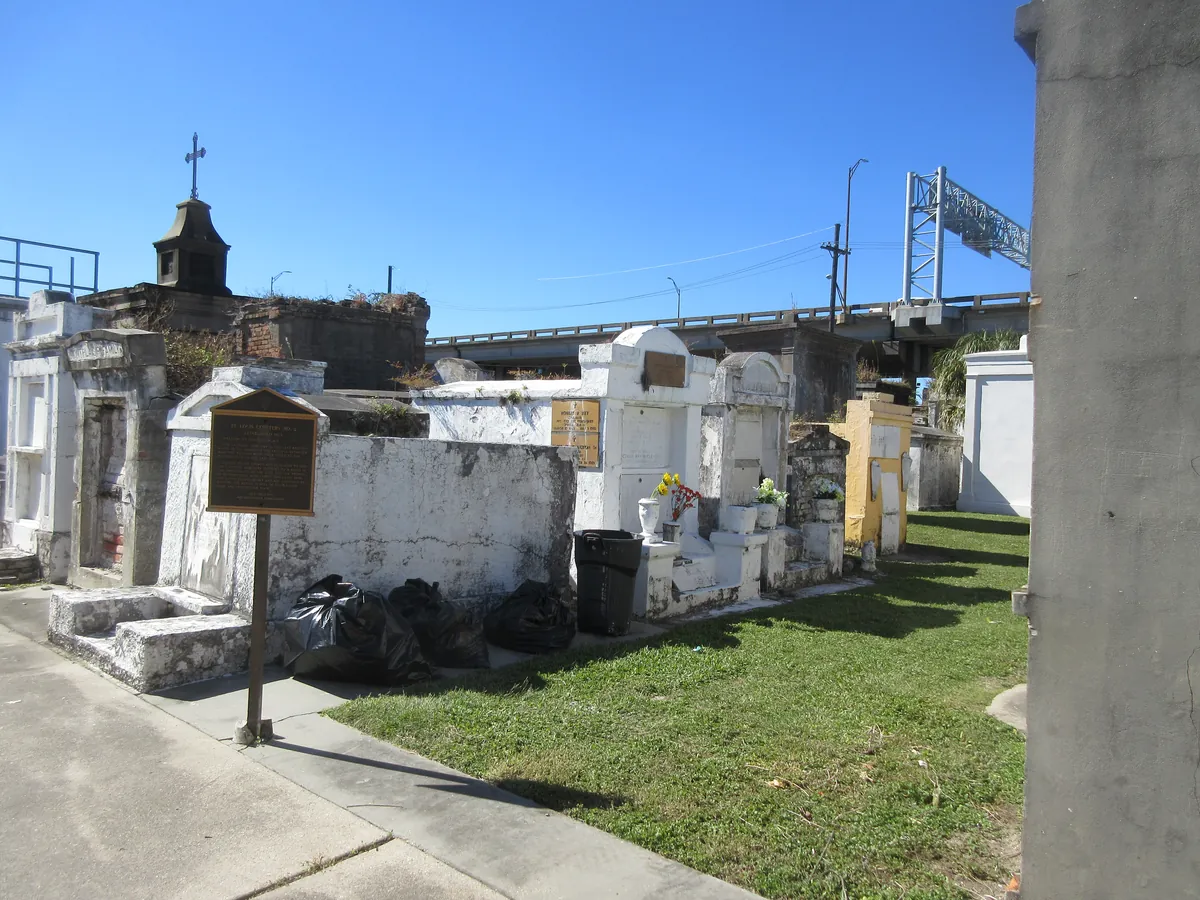 2Religious Site·1823·NRHPSt. Louis Cemetery No. 2
St. Louis Cemetery No. 2 opened in 1823 to serve the growing Tremé and Faubourg Marigny neighborhoods, three blocks back from the older Basin Street burial ground. It is less visited than St. Louis Cemetery No. 1 but architecturally richer — the society tombs here are among the most elaborate funerary structures in the city. The mutual aid societies formed by free Black New Orleanians built monuments in this cemetery. These benevolent society tombs are monumental. The burial ground holds the remains of many prominent free people of color, Creole families, and benevolent society members. Oscar Dunn, emancipated from slavery as a child, became the first elected Black lieutenant governor of a U.S. state and is entombed here. Andre Cailloux, African-American Union hero and martyr of the Civil War, rests here. So does the Venerable Mother Henriette DeLille, a candidate for sainthood by the Catholic Church. Jacques Villeré, second governor of Louisiana after statehood and commander of the 1st Division at the Battle of New Orleans, is interred here. Jazz and rhythm and blues musicians rest alongside: Danny Barker and Ernie K-Doe among them. The cemetery borders Claiborne Avenue and was listed on the National Register of Historic Places in 1975. Hurricane Katrina brought minor flooding in the aftermath; when the water went down, the tombs seemed virtually untouched aside from the brownish waterline visible on the structures that flooded. Unlike St. Louis Cemetery No. 1, self-guided visits are currently permitted. The Archdiocese recommends visiting with a guide for safety and context.
 3Religious Site·1854·NRHPSt. Louis Cemetery No. 3
The third St. Louis Cemetery opened in 1854 on Esplanade Avenue near Bayou St. John, approximately two miles from the French Quarter. It is the quietest and least visited of the three St. Louis Cemeteries, away from tourist circuits. The crypts are more elaborate on average than at the other St. Louis cemeteries, including a number of fine nineteenth-century marble tombs — the work of prosperous Creole and immigrant communities who built society tombs here. Ragtime composer Paul Sarebresole is entombed here. So is photographer E. J. Bellocq, painter Ralston Crawford, and Sweet Emma Barrett, a self-taught jazz piano player and singer. Ernest N. "Dutch" Morial, the first African-American mayor of New Orleans, was reinterred at St. Louis Cemetery No. 3 in a new tomb for the Morial family. The cemetery includes a Greek Orthodox section. Hurricane Katrina flooded the cemetery heavily in 2005. Its tombs escaped relatively unscathed. There was some plaster damage from debris. Mature trees shade the paths. Self-guided visits are permitted. The cemetery is within walking distance of City Park and the New Orleans Museum of Art.
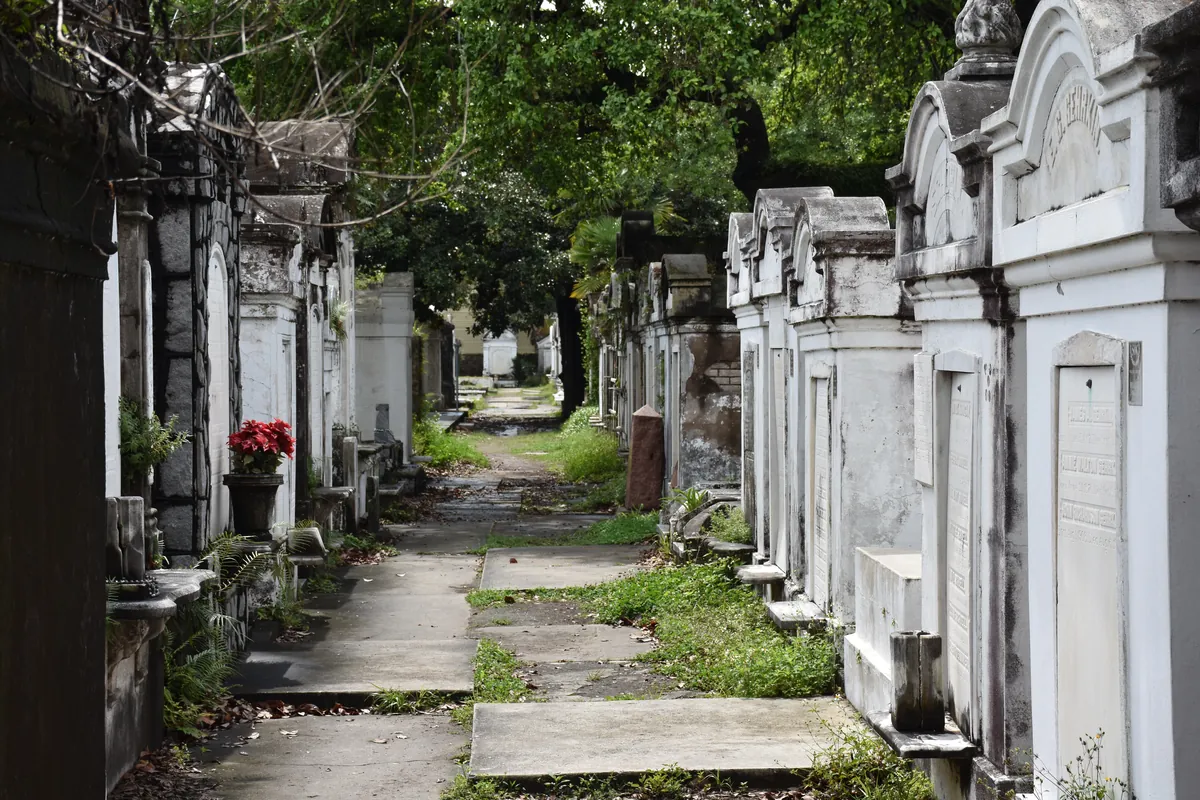 4Religious Site·1833·NRHPLafayette Cemetery No. 1
The cemetery that defines the Garden District — a walled city of the dead occupying a full city block at Washington Avenue and Prytania Street. Established in 1833 to serve the American settlers who were building their mansions upriver from the Creole French Quarter, Lafayette Cemetery No. 1 holds elaborate raised tombs built by immigrant German and Irish families alongside wealthy Anglo-American merchants. The yellow fever epidemics of the 1850s filled entire society vaults in weeks. Anne Rice set scenes from 'Interview with the Vampire' here. The cemetery reopened after a long restoration; guided tours are available through Save Our Cemeteries.
 5Religious Site·1872·NRHPMetairie Cemetery
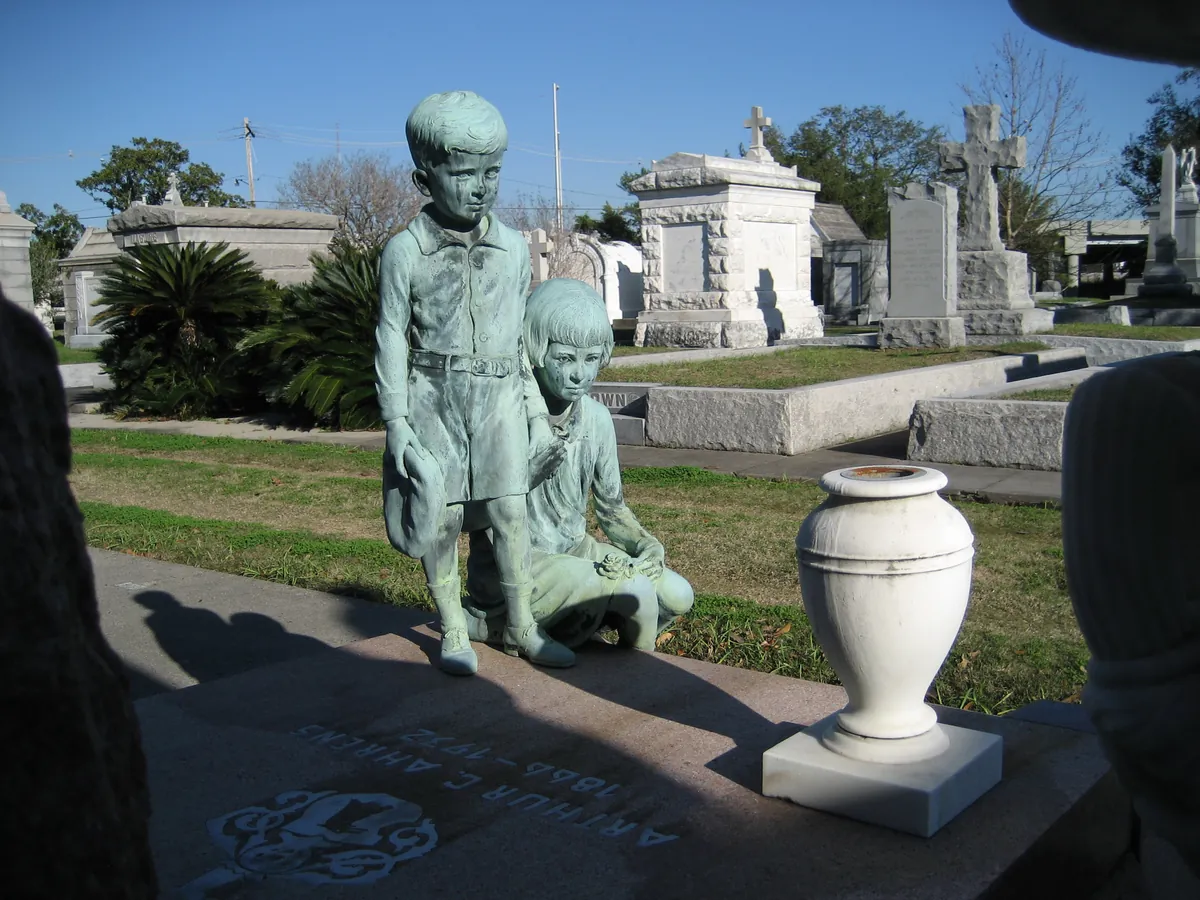
Charles T. Howard made his fortune running Louisiana's first state lottery. The Metairie Jockey Club — which operated a horse racing track founded in 1838 on a high ridge along Bayou Metairie — refused him membership. Howard vowed the track would become a cemetery. After the Civil War and Reconstruction, the course went bankrupt. In 1872, Metairie Cemetery opened on the oval footprint of the old racetrack. Howard is buried on Central Avenue. He died in 1885 in Dobbs Ferry, New York, when he fell from a newly purchased horse. The cemetery holds the largest collection of elaborate marble tombs and funeral statuary in the city. The Moriarty tomb rises 60 feet — the tallest privately owned monument in the United States. Construction required a temporary spur railroad line to haul materials to the site. A pseudo-Egyptian pyramid stands among the grounds. Laure Beauregard Larendon's tomb features Moorish details and stained glass. The Army of Tennessee, Louisiana Division monument is a Confederate soldiers' tomb with two works by sculptor Alexander Doyle. Atop the structure, an 1877 equestrian statue of General Albert Sidney Johnston on his horse Fire-eater, holding binoculars in his right hand. Johnston's remains were later moved to Texas. To the right of the entrance, an 1885 life-size statue represents a Confederate officer about to read the roll of the dead. The figure is said to be modeled after Sergeant William Brunet of the Louisiana Guard Battery but is intended to represent all Confederate soldiers. P. G. T. Beauregard, a Confederate general who started the American Civil War, is buried here. Jefferson Davis was buried at Metairie Cemetery but his remains were moved to Hollywood Cemetery in Richmond, Virginia in 1893. The cemetery also holds the former tomb of Storyville madam Josie Arlington and the memorial of 19th-century police chief David Hennessy, whose murder sparked a riot. Self-guided visits are permitted daily.
 6Religious Site·1847Odd Fellows Rest Cemetery
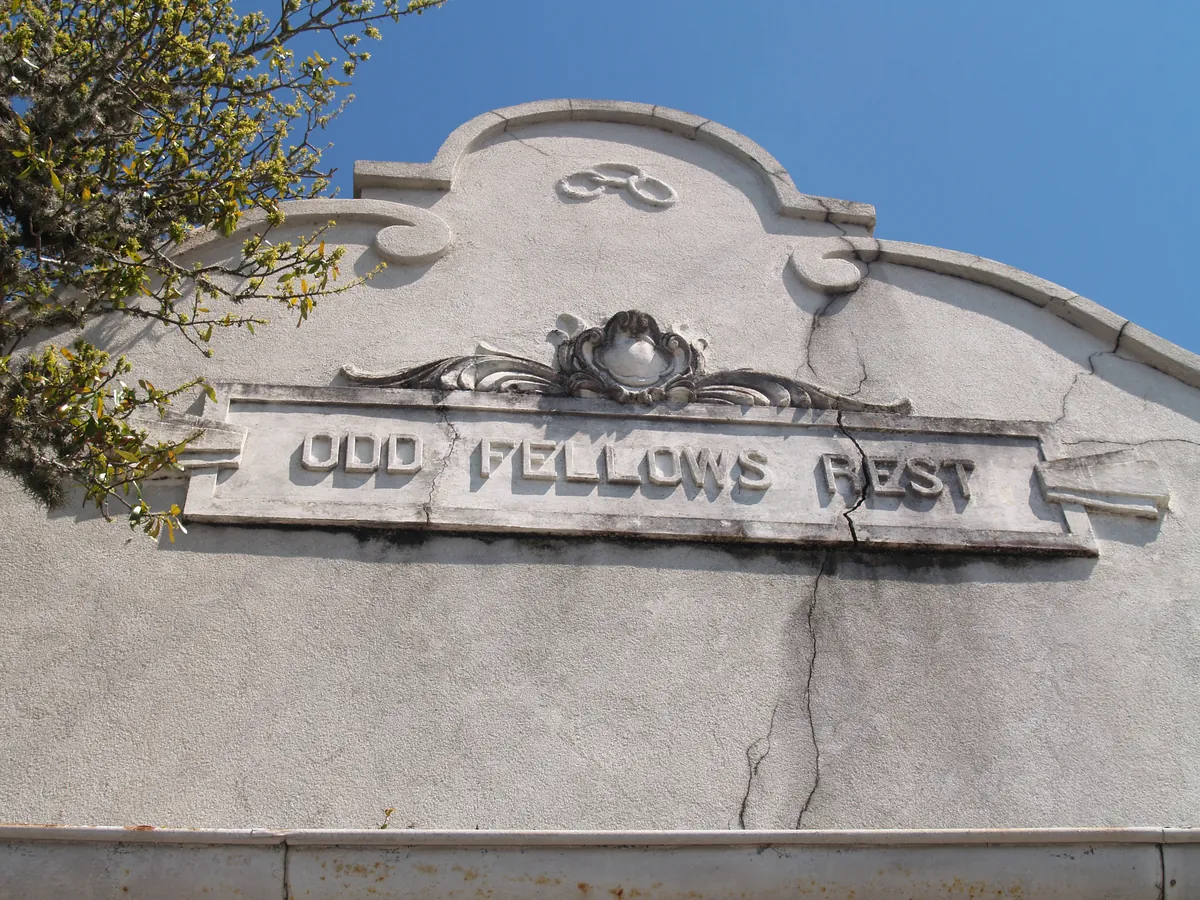
Established in 1847 by the Independent Order of Odd Fellows, a fraternal organization that provided burial plots to members whose families couldn’t afford them. The cemetery on Canal Street holds the remains of many working-class New Orleanians — dockworkers, laborers, immigrants — in modest above-ground tombs that contrast sharply with the architectural spectacles at Metairie and Greenwood across the street. Odd Fellows Rest is the honest face of the cemetery tradition: not grand, not forgotten, just quietly holding its dead.