Bayou Teche was the main street of Cajun Country for two centuries — the Chitimacha say a dying giant snake carved it. New Iberia holds the records and the Konriko Rice Mill, opened 1912 and still running. Avery Island sits on a salt dome that rises 163 feet above the surrounding marsh — the McIlhennys started making Tabasco there in 1868 because the salt was already coming up. St. Martinville is where Longfellow set Evangeline — he never visited — and the oak, the Acadian Memorial, and the cathedral cemetery sit within a hundred yards of each other.
The route
 1Cultural HeritageBayou Teche — The Snake That Became a River
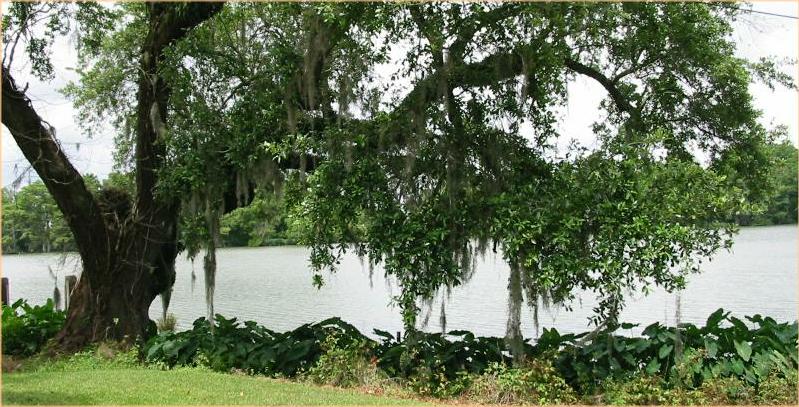
The Chitimacha creation legend says a giant snake carved Bayou Teche as it died—and geology confirms the bayou is an abandoned channel of the Mississippi. The word *teche* comes from the Chitimacha word for snake. The river that wasn't a river became the name that was. For two centuries, Bayou Teche was the primary transportation artery connecting New Iberia, St. Martinville, and Breaux Bridge to New Orleans. The bayou runs 125 miles from Port Barre in St. Landry Parish to Berwick in St. Mary Parish. It's now a designated Louisiana Scenic Byway and a National Water Trail. Best accessed by kayak or canoe. Multiple public launch points between Breaux Bridge and New Iberia. You go to see what a snake left behind, and what a river still does.
 2MuseumBayou Teche Museum
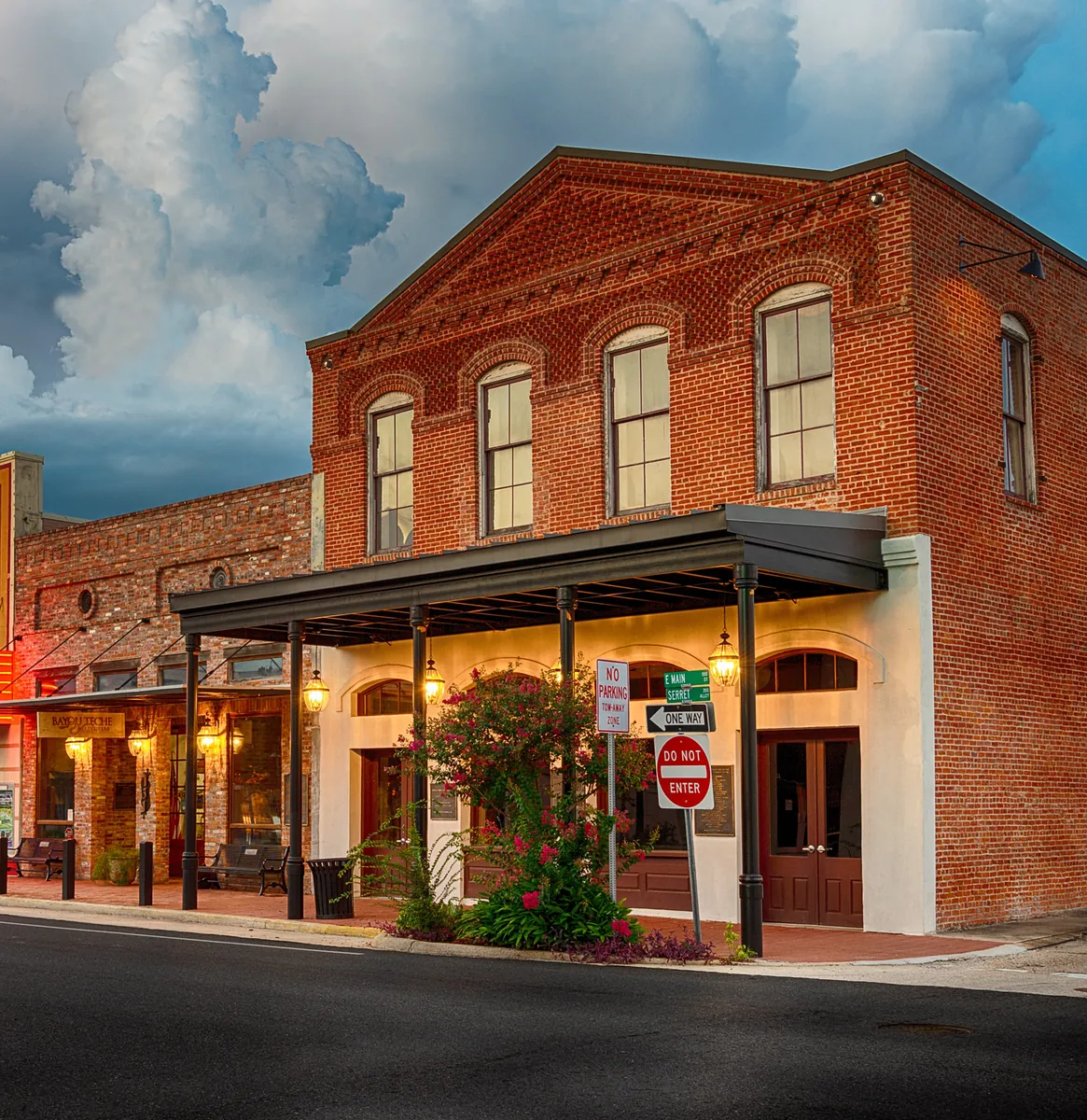
George Rodrigue's Blue Dog grins from the wall, but the real anchors here are older: native settlement patterns, oil booms, Mardi Gras krewes, the textures of a parish that's been layered and re-layered for centuries. The Bayou Teche Museum covers the full sweep of Iberia Parish history in a compact Main Street building — native settlers through oil and Mardi Gras — and does it without pretending a single room can hold everything. What it does instead is give you the frame. Rodrigue's work commands attention, but the curation is small and genuinely useful for orienting visitors to what they're about to walk into: the historic district stretches toward Shadows-on-the-Teche and Konriko, and you'll understand the names better after spending twenty minutes here. The museum sits on Main Street in downtown New Iberia, and a kayak launch steps away gives direct access to Bayou Teche. This is Acadiana — the region named for the French-speaking Acadian refugees who settled here after the British expelled them from Canada at the end of the Seven Years' War. Most Acadians trace their ancestry to approximately fifty families who lived in Port Royal, now Annapolis Royal, Nova Scotia. They intermarried with other settlers, forming what became known as Cajun culture. Iberia Parish is part of the twenty-two parishes the Louisiana State Legislature officially recognized in 1971 for their strong French Acadian cultural aspects. The museum is the natural first stop before walking the district, not because it's comprehensive, but because it's honest about what a visitor needs to know before the rest of the street makes sense.
 3Historic Site·1912·NRHPKonriko / Conrad Rice Mill
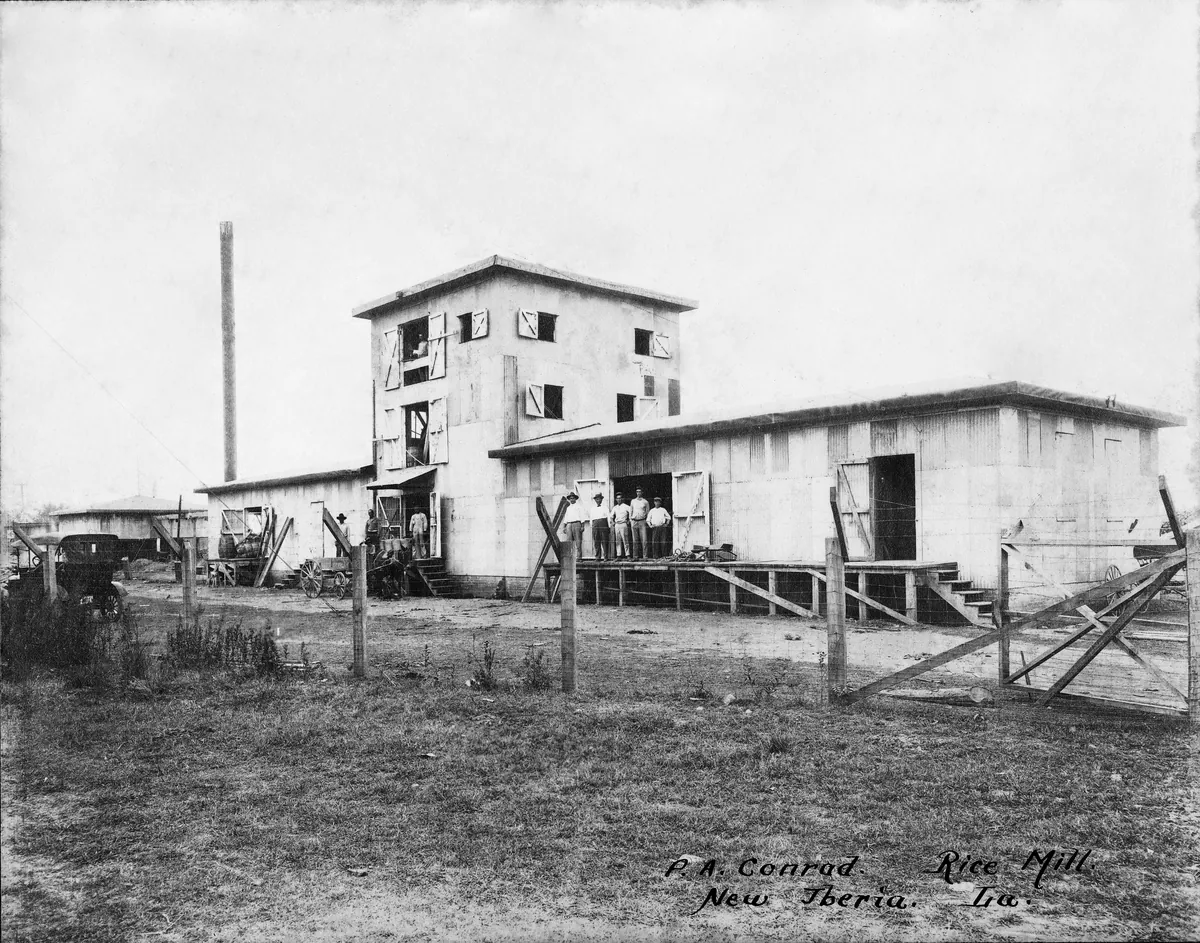
Philip Amelius Conrad was born in Pointe Coupee Parish in 1882 and started rice farming in Avoyelles Parish with his uncle Charles around the turn of the 20th century. After moving to New Iberia on the banks of Bayou Teche, he bought land on the north side and grew rice. The harvested rice was shipped approximately 125 miles by steamboat to New Orleans for milling, as no local rice mills existed. In 1910, he built a small rice mill on the property to avoid the need to ship to New Orleans. In 1912 he relocated, rebuilding the mill at its current location at 307 Ann Street and establishing the Conrad Rice Milling and Planting Company. He moved his rice fields to the south bank of the bayou — the location on Bayou Teche was crucial, since water was required for irrigation. The mill was built three stories high to take advantage of gravity in the flow of rice throughout its processing stages. Rice was brought by elevator into a storage bin on the third floor. The bin fed into the stone — two 5-foot-diameter stones separated enough to dehull the rice — then into the huller to remove the bran, then the brush for polishing. The hullers were Engelberg hullers manufactured in Germany. Before electric motors were introduced in 1951, the hullers were driven by Corliss 150 hp steam engines powered from Babcock & Wilcox boilers. PA Conrad retired in 1940, turning the business over to his three sons: Philip Odell, who had joined following high school in 1920; Allen, who started as a farm hand in 1925; and Julian, who graduated from Soule Business College in New Orleans and assumed the role of bookkeeper. The employee with the longest tenure was Leander "Gutchie" Viltz, who began working at the mill at age six and worked continuously for 72 years. The mill was bought from the Conrad family in 1975 by Michael Davis. He expanded the varieties produced, including brown and flavored rice, and introduced locally manufactured seasonings, spices, sauces, marinades, and snacks. The Konriko brand name is a contraction of Conrad Rice Company — an attempt to trademark "Conrico" was rejected in the 1950s due to similarity with a California Rice Cooperative trademark. Two of the buildings, dating to 1914–1917 and 1930, were listed on the National Register of Historic Places in 1982. The original industrial timber-frame building on Ann Street still houses the milling equipment. It's the oldest independently owned rice mill in the United States still in operation, continuously milling since 1912. Tours run hourly Monday through Saturday. The gift shop sells rice, seasonings, and Cajun pantry staples milled on-site.
 4Nature & Parks·1935Jungle Gardens & Bird City
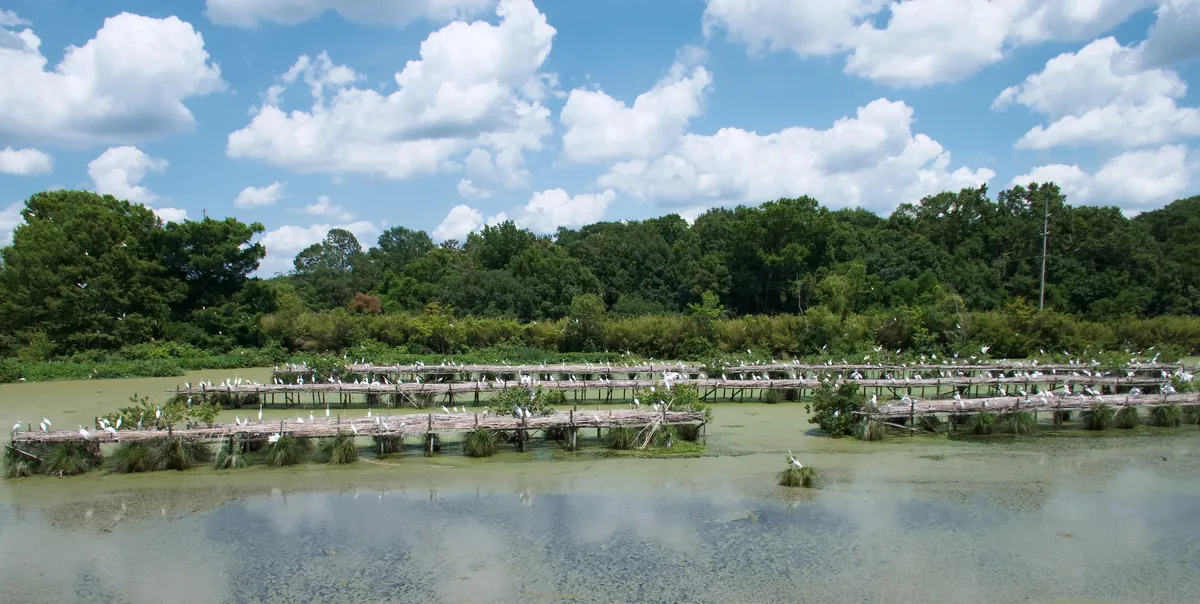
Edward Avery McIlhenny raised eight snowy egrets in 1895 — birds being hunted to near extinction for their plumes. He released them the following spring. They returned with dozens more. Bird City now hosts tens of thousands of nesting egrets and herons each spring. The 170-acre semitropical estate opened to the public in 1935. McIlhenny brought a 900-year-old Buddha statue from China and installed it in a sunken garden. The property's bamboo groves are among the largest outside Asia. Peak nesting season runs March through June. Arrive early morning for the most active rookery viewing. The full driving and walking loop takes one to two hours.
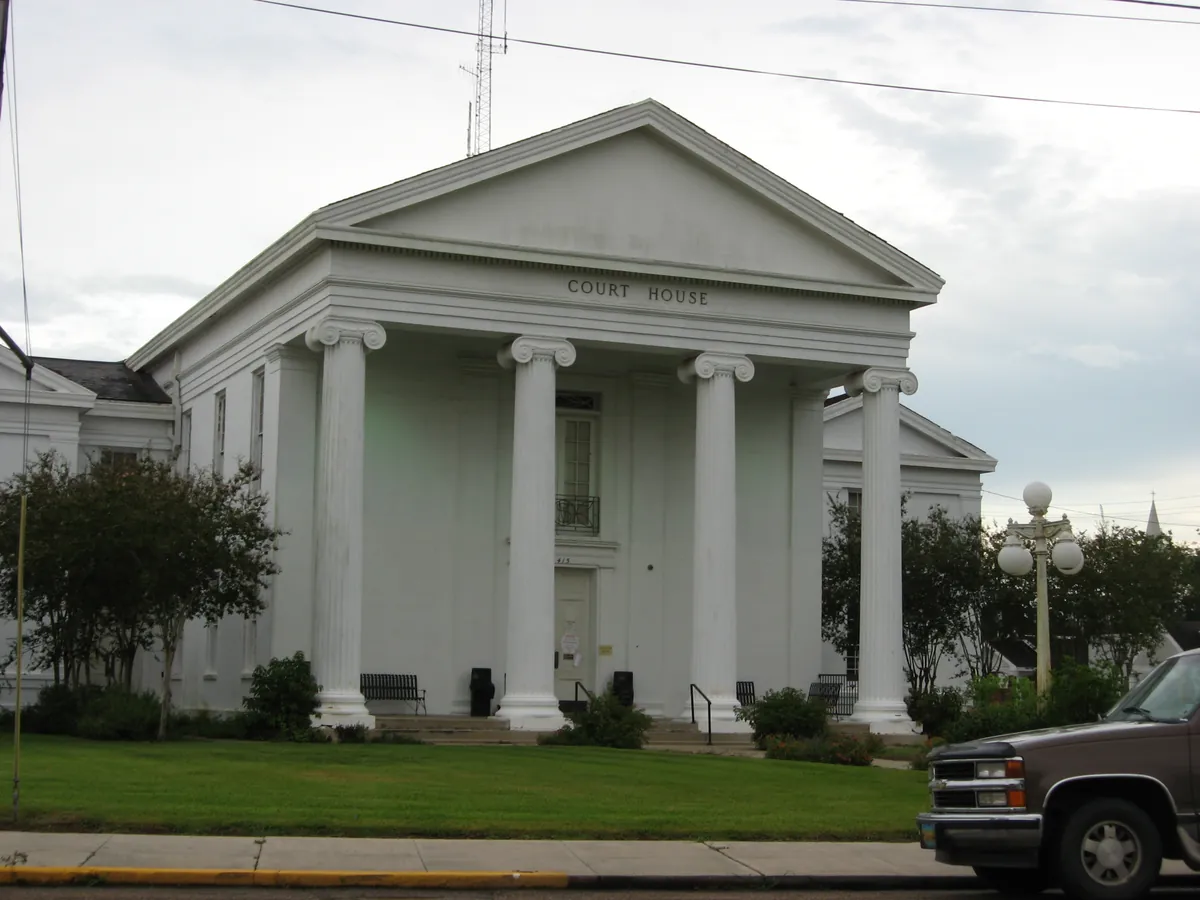 5Cultural Heritage·1765·NRHPSt. Martinville — Le Petit Paris
The French arrived in the mid-1700s and built on Attakapas land what would become one of Louisiana's oldest towns. After the Revolution sent Royalist refugees across the Atlantic — people who'd known opera houses and salons — St. Martinville earned a nickname it still carries: Le Petit Paris. The theaters are gone, but what stayed is rarer. St. Martin Parish has the highest percentage of French speakers of any county or parish in the United States. The descendants maintained what was brought. In 1867, Monroe Baker was appointed mayor, one of the earliest African American mayors to serve anywhere in the country. The fact sits in the record without fanfare, which doesn't make it smaller. The town is 6,000 people and a walkable historic core. St. Martin de Tours Church anchors Main Street. The Evangeline Oak, the Acadian Memorial, and the African American Museum all radiate from there. You can cover the landmarks on foot, which means you cover the whole argument the town makes about what lasted and what it cost to keep it.
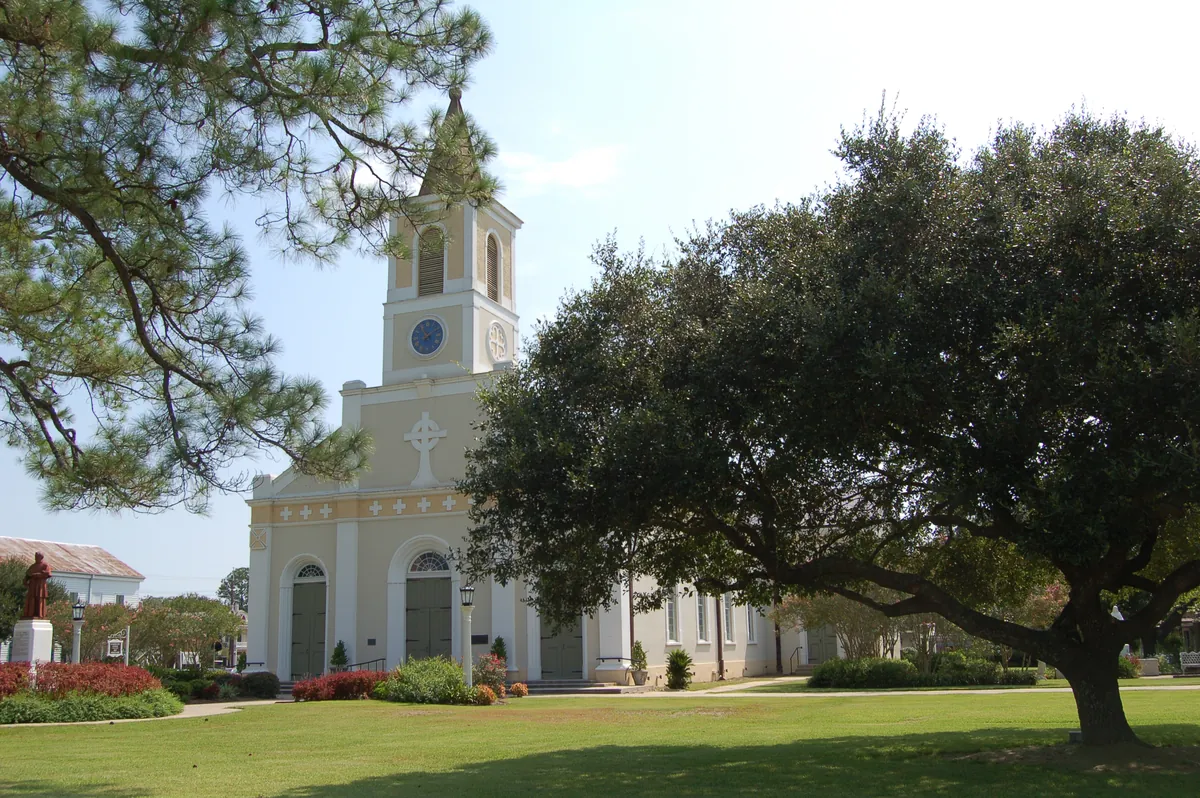 6Museum·1996The Grand Dérangement — Acadian Memorial
In 1755, the British expelled Acadians from Nova Scotia. Approximately 3,000 refugees eventually reached Louisiana. This memorial, dedicated in 1996 through a collaboration between Louisiana Cajun families and the Canadian province of New Brunswick, honors them by name. The Wall of Names lists every documented Acadian settler. Descendants still come to find and trace their family name. A 12-by-30-foot mural by Robert Dafford depicts the arrival, with figures based on actual documented refugees. Some were modeled by direct descendants of the refugees they portray. Acadiana — the 22 parishes and surrounding areas officially recognized by the Louisiana State Legislature for their strong French Acadian cultural aspects — exists because those refugees settled here and intermarried with other settlers, forming what became known as Cajun culture. The memorial stands adjacent to the church in St. Martinville, open daily, free. You're here to see if your name is on the wall, or to understand that someone else's is.
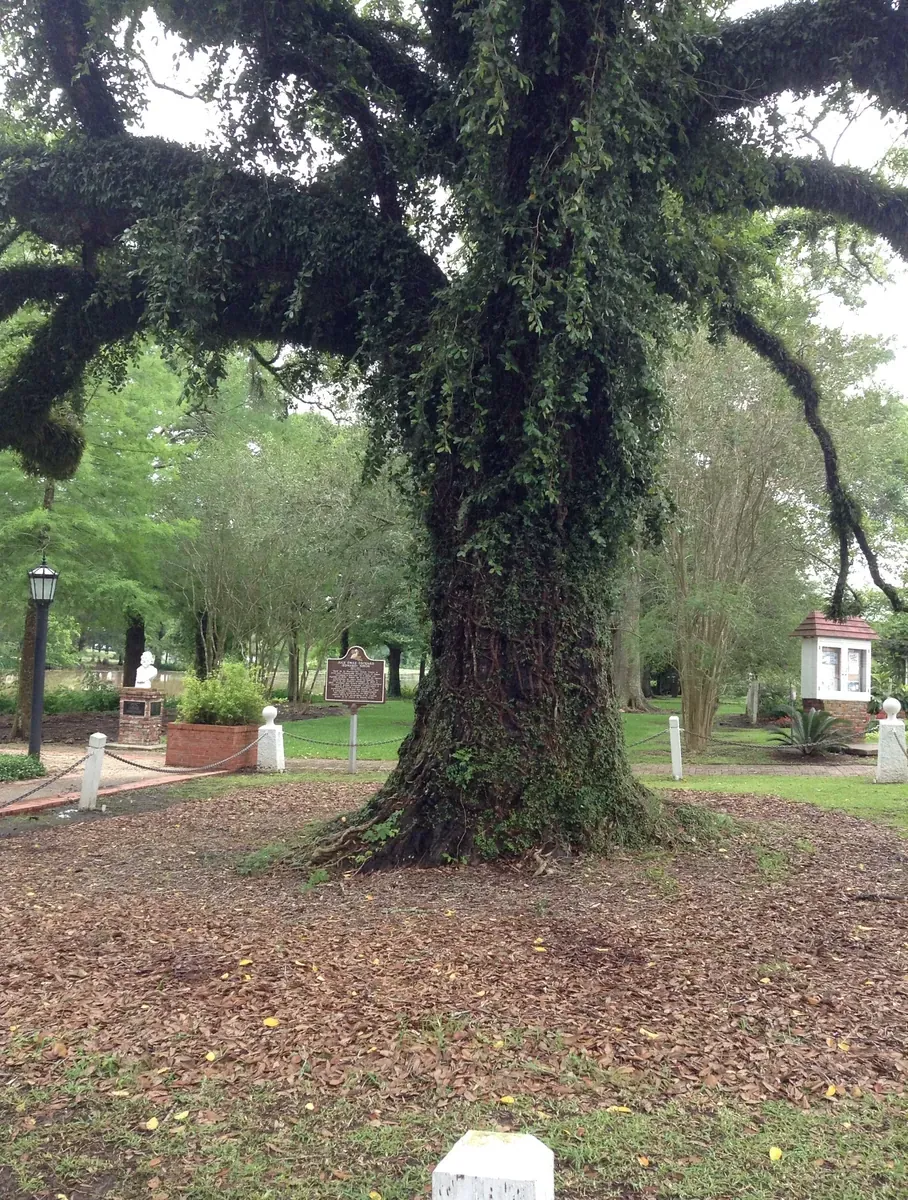 7Religious Site·1847The Evangeline Oak & St. Martin de Tours
Longfellow never saw Louisiana. He wrote *Evangeline* in 1847 from secondhand accounts of the Acadian deportation—the British expulsion from eastern Canada that scattered French families across the Atlantic world. The poem tells of a woman separated from her betrothed during the expulsion, who finds him again in Louisiana only to learn he has committed to another. She never recovers from the shock of both finding and losing him. St. Martinville claimed the story immediately, and by the late nineteenth century the oak tree had become a pilgrimage site. St. Martin de Tours Catholic Church stands beside it. Acadian settlers founded the church in 1765—the third oldest in Louisiana and the mother church of the Acadian people who colonized this parish in the late 1700s. They brought the Evangeline story with them, and some believe the historical woman behind the tale—possibly an orphan named Emmeline Labiche—was buried on these grounds. The statue in the churchyard came later. After Dolores del Río starred in the 1929 film adaptation, she donated a likeness of Evangeline modeled on her own face. Oak, statue, and church stand within steps of each other on Main Street. Free to visit. You're standing at the physical claim Acadiana made on a story written by a man who never came here—proof that a people decides which tales belong to them, regardless of who wrote them down.