Almost nothing downtown predates May 1864, when Nathaniel Banks's retreating Union army burned twenty-two blocks in an afternoon. What rebuilt itself was a railroad and timber town — and the walk reads as that second city. The Hotel Bentley went up in 1907 on lumber-baron money; the Rapides Parish Courthouse, a seven-story Art Deco slab finished in 1940 for $588,825, is still the tallest thing on the skyline. River Oaks Square fills a donated 1899 home with 25 working studios. The fire is the gap the rest of the block fills.
The route
 1Architecture·Industrial·NRHPHotel Bentley
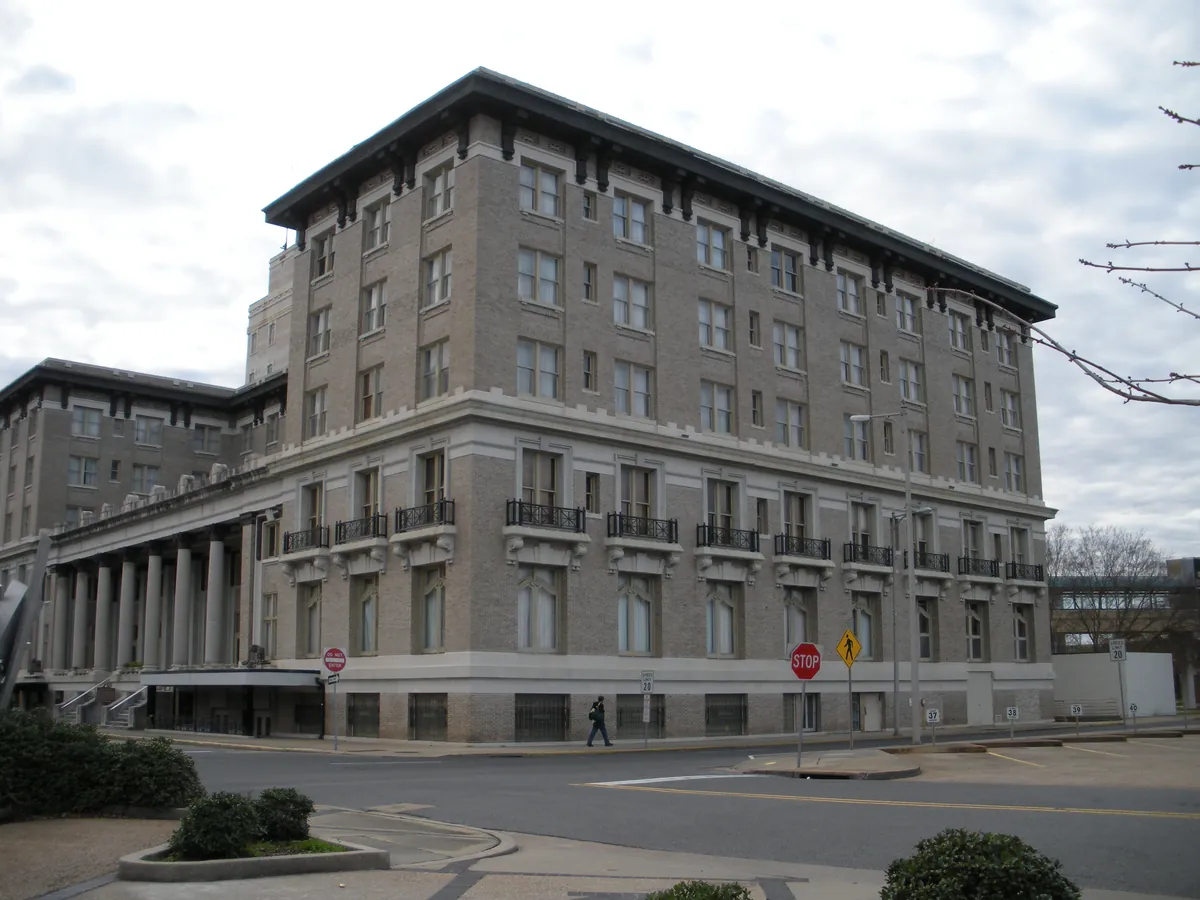
Joseph Bentley spent $700,000 on this Renaissance-style hotel in downtown Alexandria — allegedly because another establishment had refused him dinner service for improper attire. It opened in August 1908, and Bentley lived in the building until his death in 1938. The Louisiana Maneuvers brought Eisenhower, Patton, Bradley, and Stilwell through central Louisiana during World War II. Many of them headquartered at the Bentley. A World War II exhibit in the Main Lobby holds memorabilia from that period. A case in the lobby displays artifacts on loan from the Louisiana History Museum. The hotel was added to the National Register of Historic Places on November 15, 1979. After a closure in December 2004, Michael Jenkins purchased the facility for $3.4 million in October 2012 and reopened it with a hundred rooms. The newer seven-story tower is being converted into condominiums; the older section remains a hotel. The Bentley Room restaurant and Mirror Room lounge have reopened. The hotel has hosted Cary Grant, Roy Rogers, and John Wayne. The building celebrated its 110th anniversary in August 2018, still operating as the Bentley.
 2Art·ModernRiver Oaks Square Arts Center
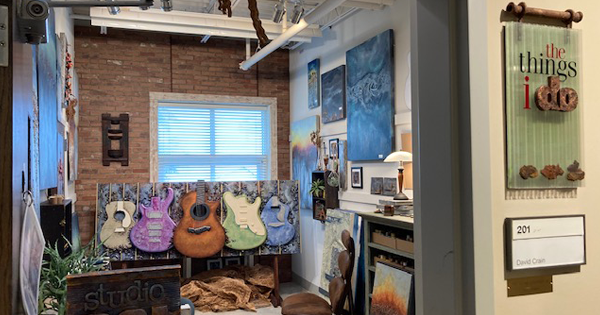
The Bolton family gave away their home in 1979 with a single stipulation: whatever came next had to serve the arts. Five years later, River Oaks Square Arts Center opened on that promise, filling a full city block in Alexandria's downtown Cultural District. The Studio Annex holds twenty-five working studios and three galleries—not display space for occasional showings, but actual working rooms where artists keep tools, make messes, and finish pieces. The Arts Academy runs a university-grade ceramics lab, the kind of setup where you can throw, glaze, and fire work without having to own a kiln or know how to mix stoneware. Over two hundred artists show work in the gift shop, which means the selection turns over faster than most galleries can manage. River Oaks functions as Central Louisiana's creative nerve center—the place where someone serious about making things can find equipment, wall space, and other people doing the same work. It's a working building, not a monument to the idea of art. Go when the studios are open.
 3Architecture·Modern·NRHPRapides Parish Courthouse
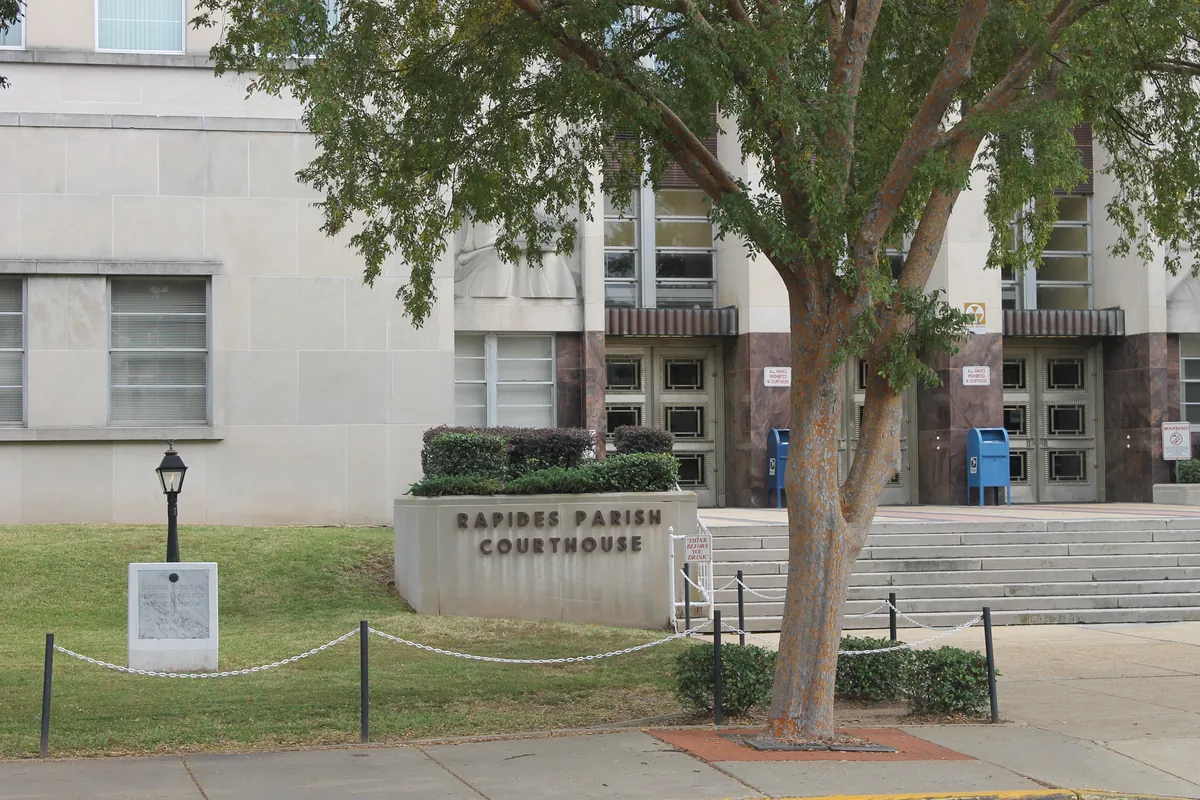
At 701 Murray Street in downtown Alexandria, a seven-story courthouse stands in concrete and bas-relief. Completed in 1940 for $588,825, the building was designed by Edward F. Neild, D.A. Somdal, and Edward F. Neild Jr. in the Art Deco and Streamline Moderne vocabularies—straight vertical lines, horizontal speed-banding, and a facade that reads less like ornament than a deliberate announcement of what a parish seat could be. The detail that holds the eye is the bas-relief of Moses with law books, positioned on the facade. It is the kind of sculptural gesture that civic architecture in this period used to signal permanence and moral authority, and here it reads clearly. Alexandria developed along the Red River as the seat of Rapides Parish, a jurisdiction created in 1807 after the Louisiana Purchase. By 1940, the parish had been operating for over a century, and this courthouse was the structure built to formalize that continuity—seven stories of it, which in 1940 meant something in a downtown that was still finding its scale. In 1974, a three-story addition went up on the southeast side. The original building was listed on the National Register of Historic Places, which means the architecture has held its significance for more than just local memory. Walk up to Moses and the law books. The building still works, which is not a small thing for a courthouse to be able to say after eighty-four years.
 4Family & Kids·ModernT.R.E.E. House Children's Museum
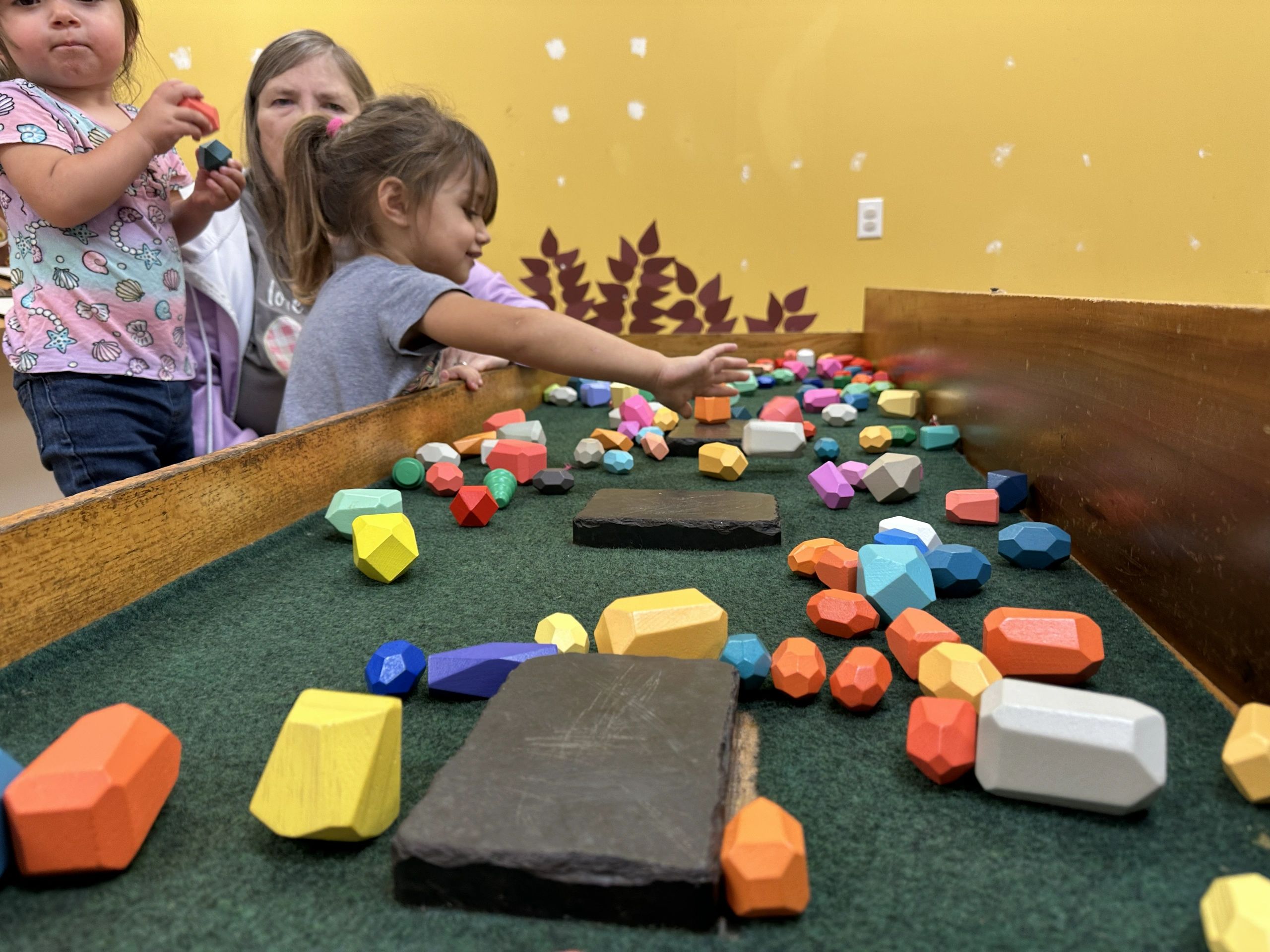
A group of Alexandria parents pooled their money in 1998 to build the children's museum the city didn't have, and named it T.R.E.E. House — the Rapides Exploratory Education House — for the downtown storefront they could afford. The Rockwell Railroad scale-model village still runs every day. Hands-on exhibits cover ages 3 to 12. It is the smallest children's museum in Louisiana doing the most with what it has.