After the Louisiana Purchase, American money arrived in New Orleans and the Creoles refused to sell them lots in the Quarter. So the Americans bought the sugar plantations across Canal Street and built their rebuttal: lawns instead of courtyards, Greek Revival instead of Creole, Episcopal churches instead of Catholic. The St. Charles streetcar — the oldest continuously operating line in the world — cuts through the evidence. Anne Rice lived in the Brevard-Rice House from 1989 to 2003. Commander's Palace has served the same turtle soup since 1893.
The route
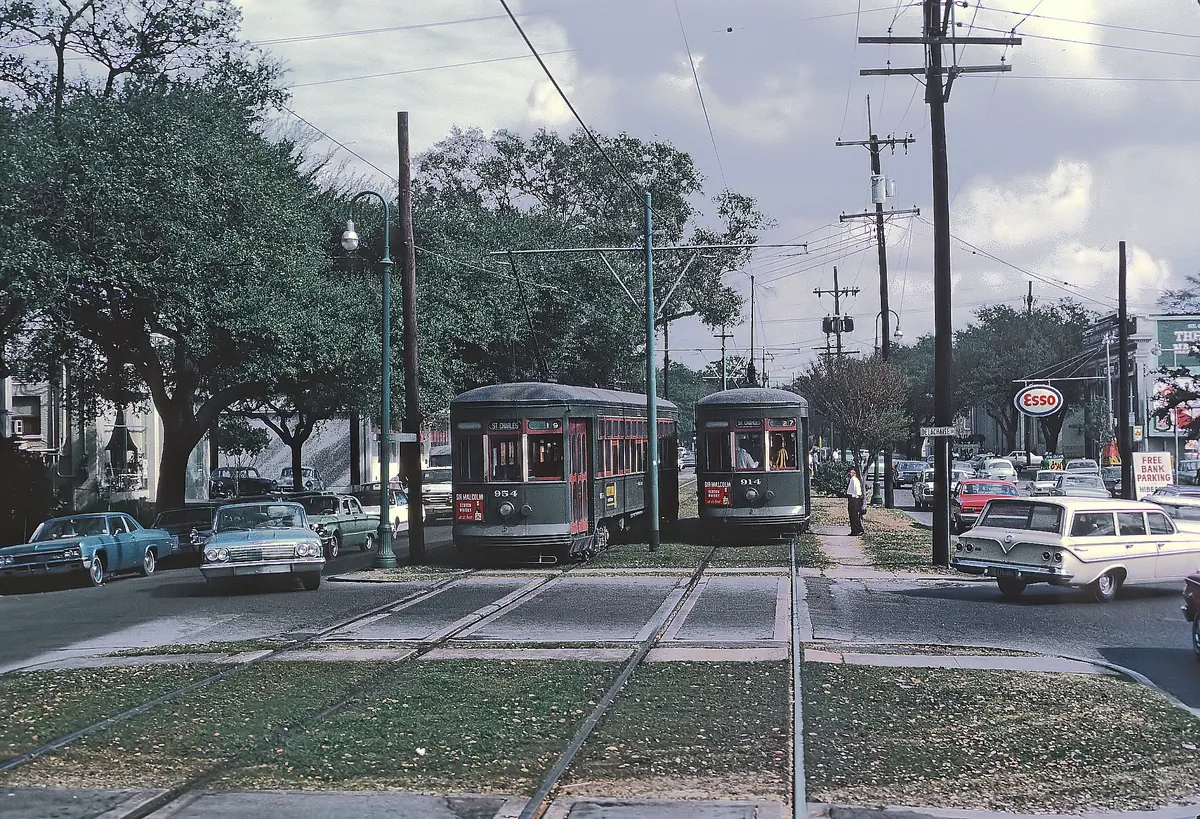 1Historic Site·1835·NHLSt. Charles Streetcar Line
The oldest continuously operating streetcar line in the world, running since 1835. Planning began in 1831, and work began as the New Orleans and Carrollton Railroad in February 1833. Passenger and freight services by steam locomotives began on September 26, 1835. Two locomotives were supplied from England by B. Hick and Sons. Service began as a suburban railroad, since Carrollton was at that time a separate city. As the area along the line became more urbanized, objections to the soot and noise produced by the locomotives increased, and transport was switched to cars powered by horses and mules. Experimental systems included overhead cable propulsion, with a cable clamp patented by P. G. T. Beauregard in 1869 later being adapted for the San Francisco cable car system. Dr. Emile Lamm designed several innovative systems, including ammonia engines and the Lamm Fireless Engine which propelled pairs of cars along the line in the 1880s and was adopted by the street railways of Paris. The line was electrified February 1, 1893. The line was extended from the corner of St. Charles and Carrollton Avenues to continue eight blocks out Carrollton to a new car barn at Willow Street. The line starts uptown at South Carrollton Avenue and South Claiborne Avenue. It runs on South Carrollton Avenue through the Carrollton neighborhood towards the Mississippi River, then near the river levee turns on to St. Charles Avenue. It proceeds past entrances to Audubon Park, Tulane University and Loyola University New Orleans. It continues through Uptown New Orleans including the Garden District, and ends at Canal Street in the New Orleans Central Business District at the edge of the French Quarter. The distance is 6 miles. Most of the line runs in the neutral ground with greenery between the tracks
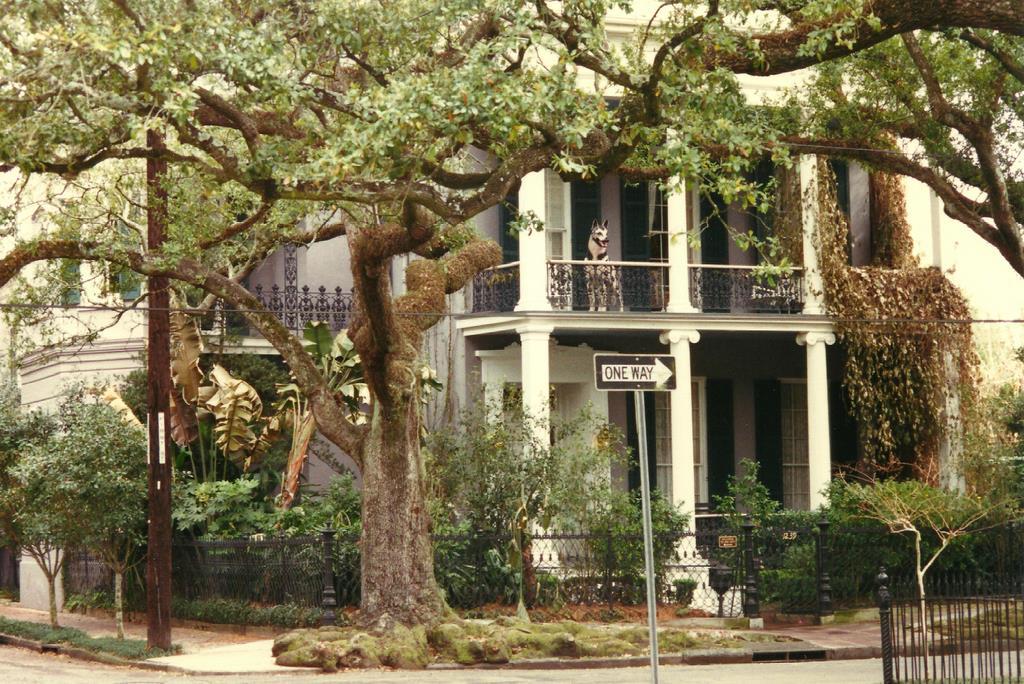 2Architecture·1832·NHLGarden District Historic District
The Livaudais Plantation sold off in parcels in 1832, subdivided into city squares for wealthy Americans who didn't want to live in the French Quarter with the Creoles. Architect Barthelemy Lafon laid out what became the City of Lafayette in 1833, annexed by New Orleans in 1852. The district was developed between 1832 and 1900 with only a couple of houses per block, each surrounded by a large garden—giving the neighborhood its name. Late nineteenth-century subdivision filled the blocks with Victorian houses alongside the earlier Greek Revival mansions with columned porticos and cast-iron galleries, creating the pattern that runs through the district today: a couple of antebellum estates per block, the rest gingerbread trim and later construction. It's now known for its architecture more than its gardens. The Goldsmith-Godchaux House, designed by Henry Howard in 1859, has more fresco wall decoration and stenciling than probably any other mid-nineteenth-century residence in the South. Colonel Short's Villa at 1448 Fourth Street, built in 1859 with an ornate cornstalk wrought-iron fence from the Philadelphia foundry of Wood and Miltenberger, was seized by federal forces in 1862 and briefly served as the executive mansion of newly elected Federal Governor Michael Hahn in 1864, then became the residence of Major General Nathaniel P. Banks. The Brevard-Rice House at 1239 First Street, built in 1857, was purchased in 1989 by novelist Anne Rice and her husband, poet and painter Stan Rice. Lafayette Cemetery No. 1, established in 1833 by the City of Lafayette on a square acquired from Cornelius Hurst and laid out by city surveyor Benjamin Buisson, holds the tombs of Samuel Jarvis Peters, father of the New Orleans public school system, and Confederate General Harry T. Hays. The cemetery contains many persons of German and Irish origin who lived in the City of Lafayette. The district was declared a National Historic Landmark in 1974 and is considered one of the best-preserved collections of historic mansions in the Southern United States. Walking tours start at Washington and Prytania, next to Lafayette Cemetery. Free to walk; self-guided and guided tours available.
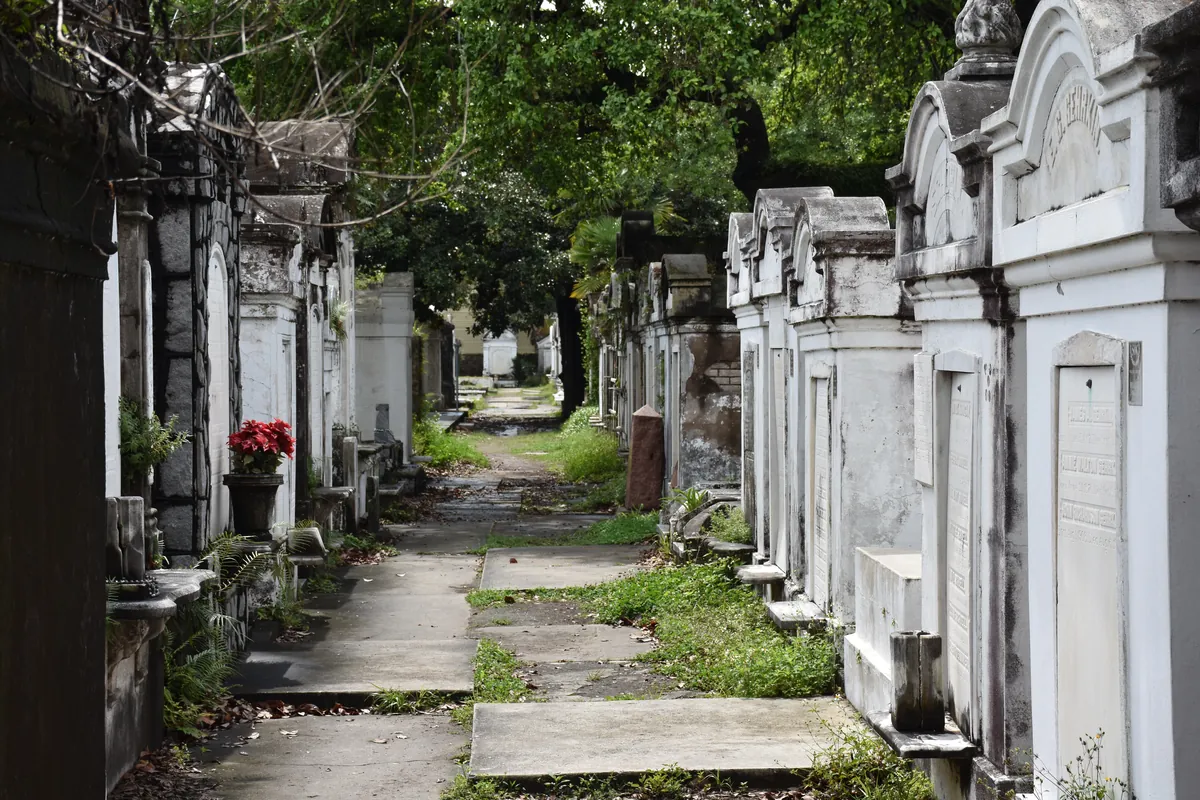 3Religious Site·1833·NRHPLafayette Cemetery No. 1
The cemetery that defines the Garden District — a walled city of the dead occupying a full city block at Washington Avenue and Prytania Street. Established in 1833 to serve the American settlers who were building their mansions upriver from the Creole French Quarter, Lafayette Cemetery No. 1 holds elaborate raised tombs built by immigrant German and Irish families alongside wealthy Anglo-American merchants. The yellow fever epidemics of the 1850s filled entire society vaults in weeks. Anne Rice set scenes from 'Interview with the Vampire' here. The cemetery reopened after a long restoration; guided tours are available through Save Our Cemeteries.
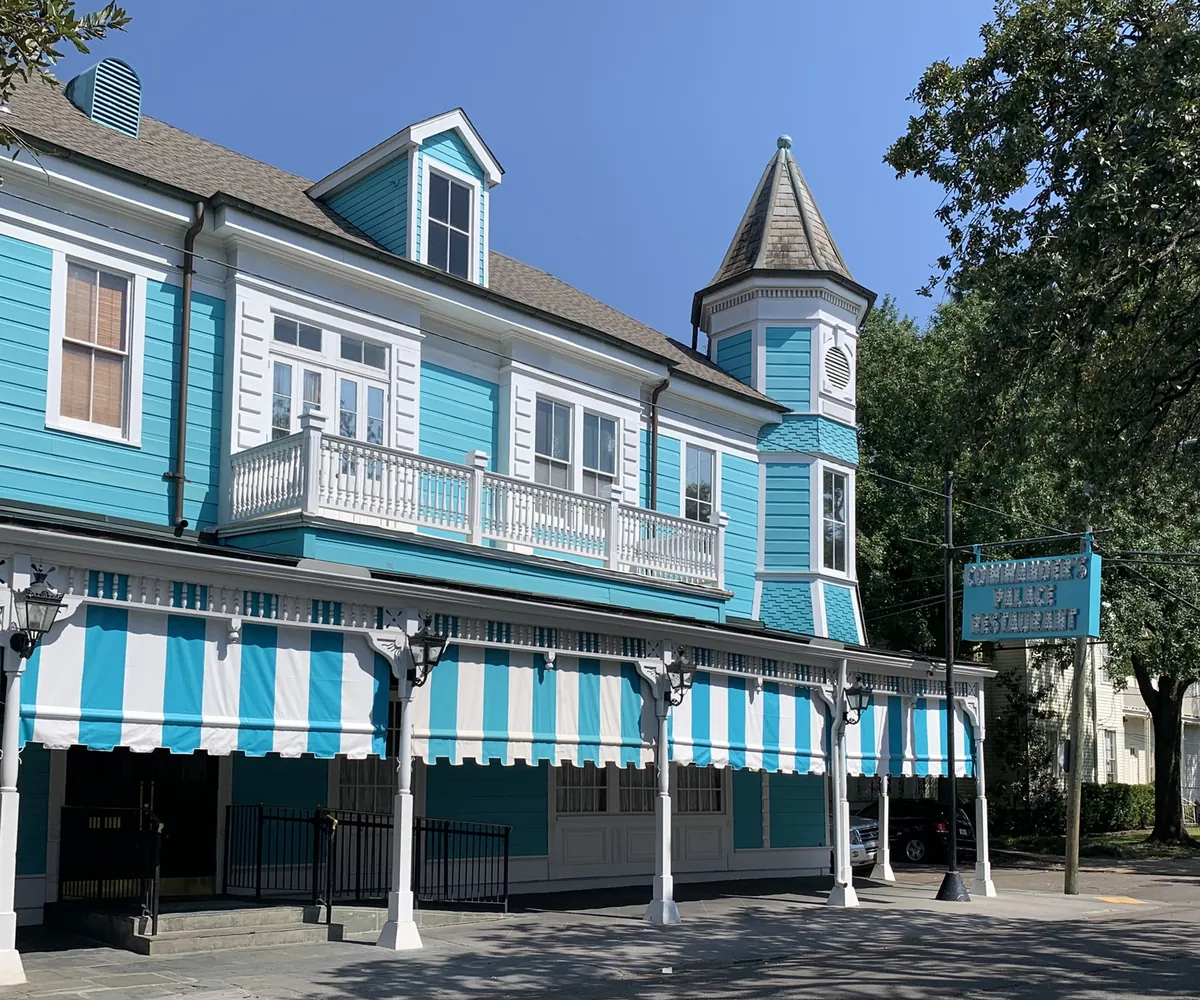 4Food & Drink·1893Commander's Palace
Emile Commander opened a saloon at the corner of Washington Avenue and Coliseum Street in 1893. Within a few years he turned it into a restaurant patronized by the distinguished families of the Garden District. By 1900 Commander's Palace was attracting gourmets from all over the world. The turquoise-and-white Victorian mansion sits across from Lafayette Cemetery. In 1969, the Brennan family purchased it and began a redesign — large windows replaced walls, custom trellises and paintings were commissioned to complement the outdoor setting. What emerged was a kitchen that produced more great chefs than any other in the city. Paul Prudhomme ran it. Emeril Lagasse ran it. Tory McPhail ran it. Hurricane Katrina damaged the restaurant extensively in 2005. After a full renovation, it reopened October 1, 2006. The James Beard Foundation awarded it Most Outstanding Restaurant in 1996. Tory McPhail won Best Chef: South in 2013. Ella Brennan received the Lifetime Achievement Award in 2009. Since 2012, Wine Spectator has given Commander's Palace its Grand Award. Zagat listed it as the Most Popular Restaurant in New Orleans for eighteen years. The 25-cent martini lunch remains a New Orleans institution. Turtle soup and bread pudding soufflé are non-negotiable. Jacket required at dinner. Reservations strongly recommended.
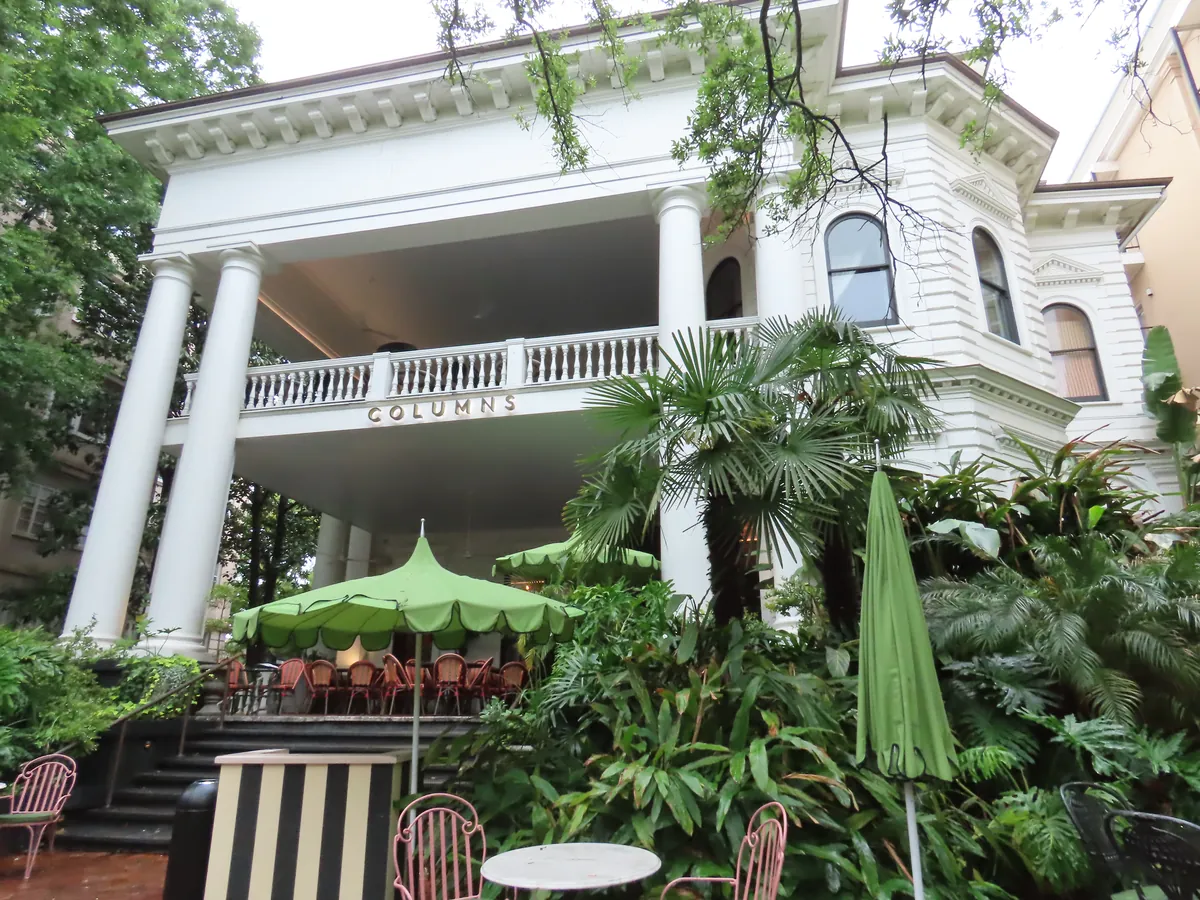 5Architecture·1883·NRHPThe Columns Hotel
Simon Hernsheim made his money in tobacco, and in 1883 he built himself a Richardsonian Romanesque mansion at 3811 St. Charles Avenue with a wide columned front gallery that overlooks the streetcar tracks. It's the best porch in New Orleans — not for architectural distinction alone, but because the hotel bar and the gallery are both open to non-guests, which means you can sit there in the late afternoon with a drink and watch the streetcars pass under the oaks. That experience costs you nothing but the price of the drink. Louis Malle filmed *Pretty Baby* here in 1978, the columns and gallery serving as backdrop for a film set in an earlier New Orleans. The building now operates as a hotel, listed on the National Register of Historic Places, but it hasn't sealed itself off from the avenue. The bar welcomes anyone who walks in. The porch welcomes anyone who wants to sit. A late afternoon drink on the gallery watching streetcars pass under the oaks is one of the finest free experiences in the city — in a city that was once the largest port in the Southern United States, that exported most of the nation's cotton to Western Europe and New England, that has always understood the value of offering its best without charging admission. Hernsheim built for tobacco money and permanence. What endures is the gallery, the streetcar tracks, and the invitation to sit down.
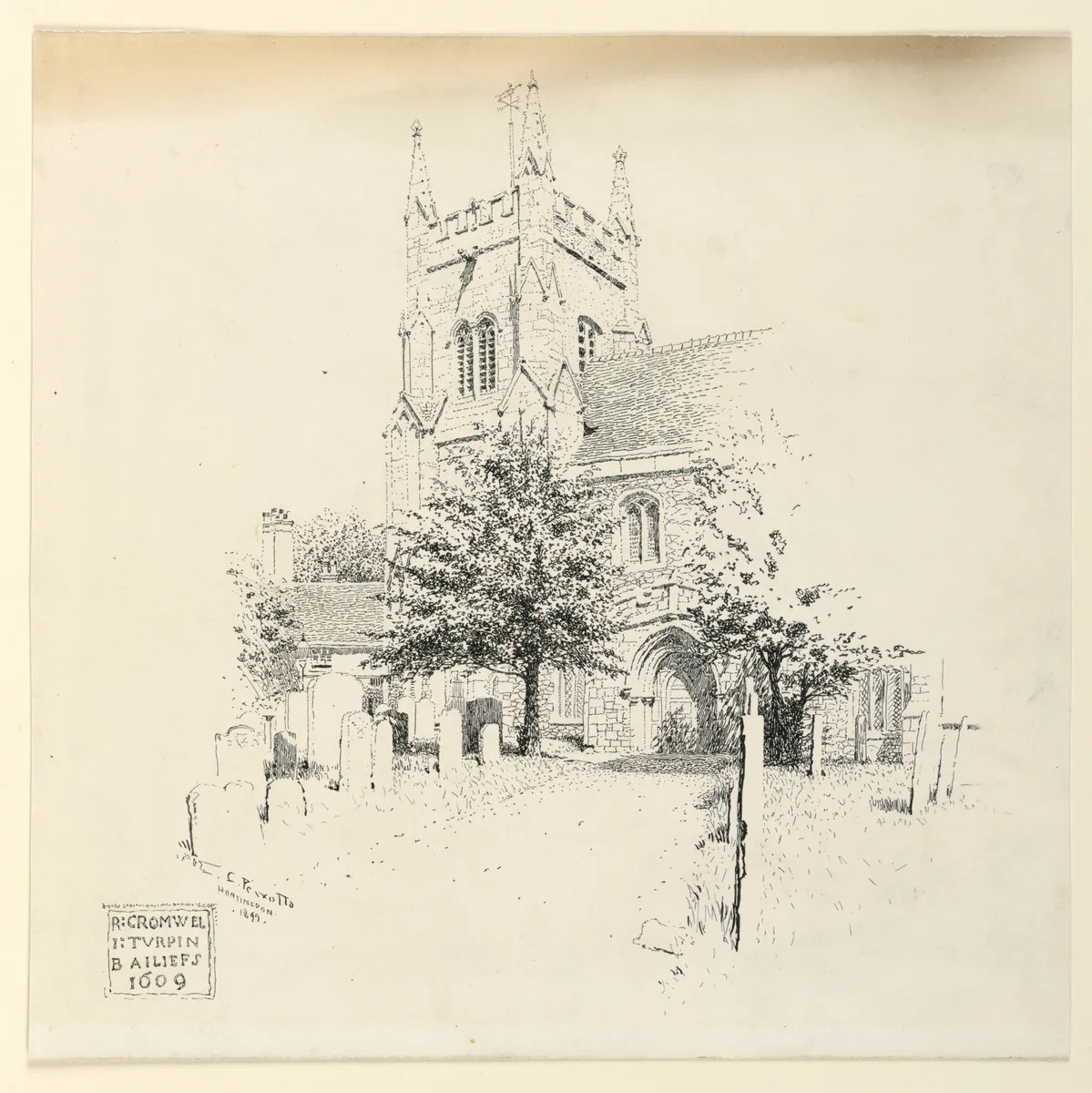 6Religious Site·1858·NHLSt. Mary's Assumption Church
Two Catholic parishes rose on opposite sides of Constance Street in the Lower Garden District, built for the same faith in different languages. St. Mary's Assumption went up for German immigrants — completed in 1860 — while across the street the Irish built St. Alphonsus at the same time. Same doctrine, competing congregations, twin expressions of who belonged where in a city that sorted itself by where your family came from. The twin steeples and Baroque Revival interior rank among the most ornate in New Orleans. In 1974, the church was declared a National Historic Landmark, recognized as a rare and elaborate example of German Baroque Revival architecture. Inside is a shrine and museum for Blessed Francis Xavier Seelos, a German priest who came to the United States to minister to German-speaking immigrants. Seelos served as pastor at St. Mary's Assumption and died in 1867 after contracting yellow fever while caring for victims of the epidemic. The Roman Catholic Church beatified him in 2000. The church has survived what New Orleans throws at buildings. Hurricane Betsy damaged it heavily in 1965, nearly resulting in demolition. Hurricane Katrina in 2005 caused rain and wind damage, with water infiltration damaging interior plaster and ceiling. It remains an active parish, better maintained than St. Alphonsus across the street. The grand organ in the second balcony was constructed in 1861 by Simmons & Willcox of Boston, rebuilt in 1900, and partially electrified around 1920. A second pipe organ, built in 1971 by Pels & VanLeeuwen of the Netherlands, was relocated here in 2015. Go because the paired churches tell a foundational story about how ethnic identity shaped the physical city — how people who shared a creed still needed separate ground.