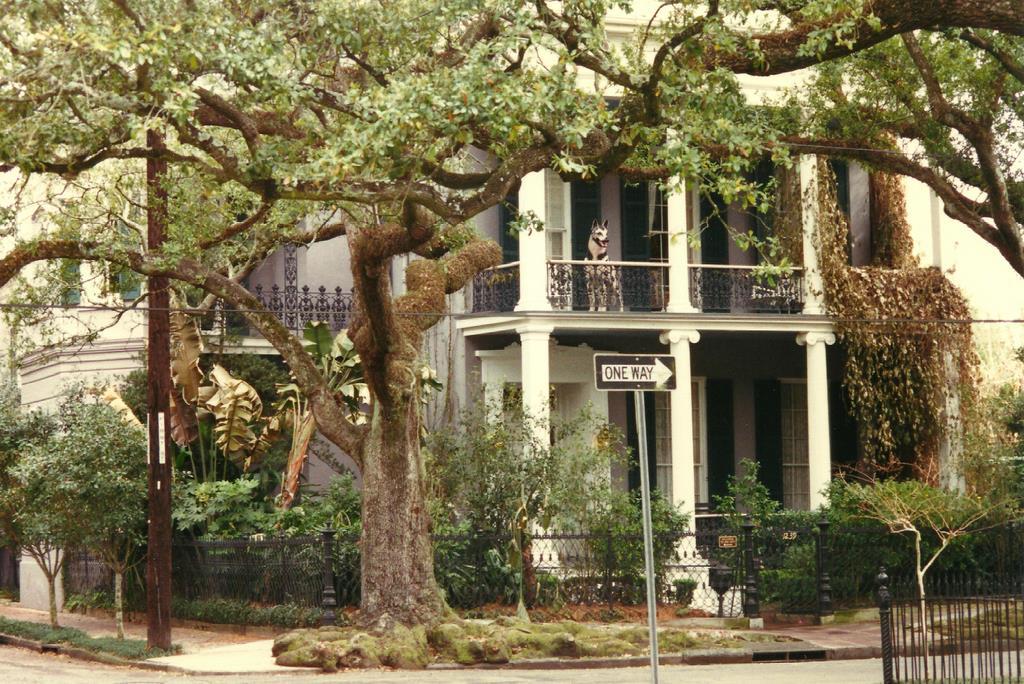
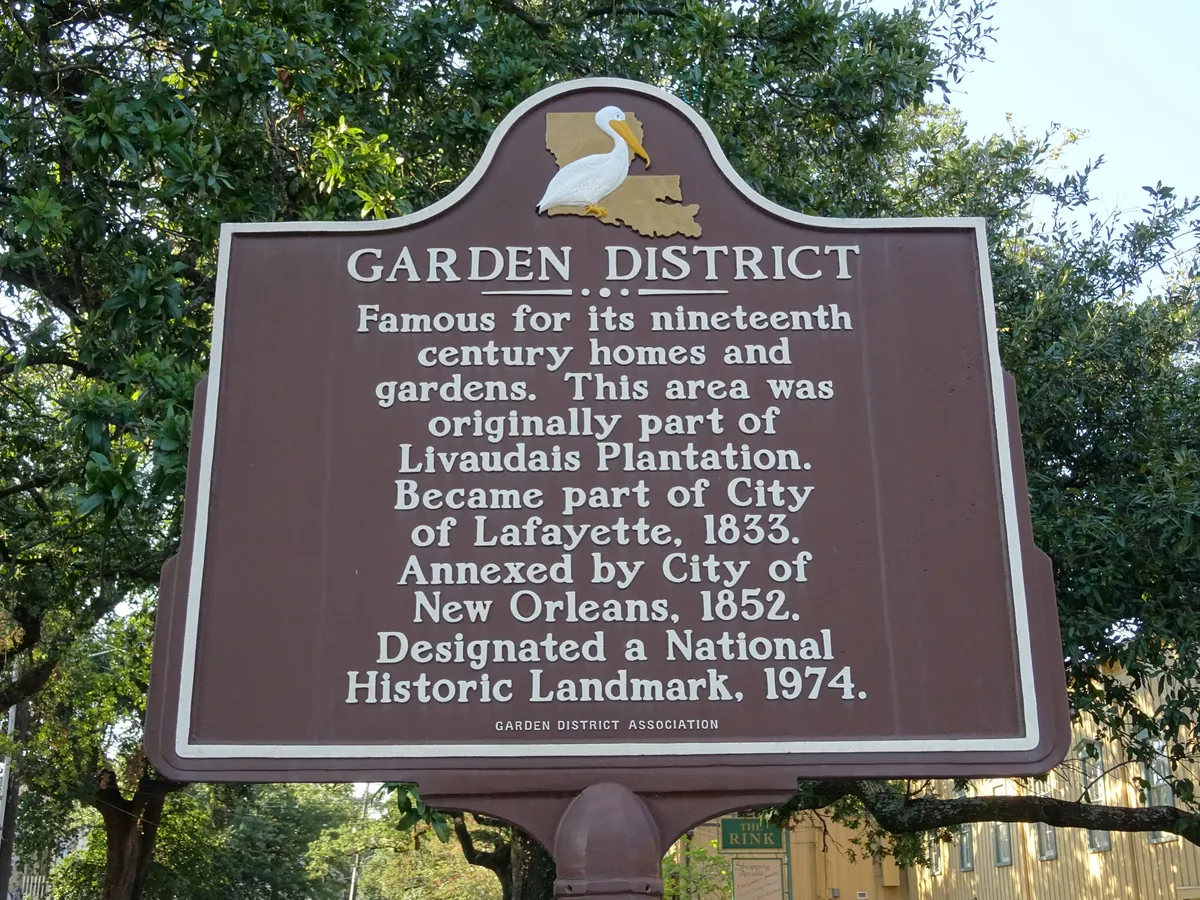
The Livaudais Plantation sold off in parcels in 1832, subdivided into city squares for wealthy Americans who didn't want to live in the French Quarter with the Creoles. Architect Barthelemy Lafon laid out what became the City of Lafayette in 1833, annexed by New Orleans in 1852. The district was developed between 1832 and 1900 with only a couple of houses per block, each surrounded by a large garden—giving the neighborhood its name. Late nineteenth-century subdivision filled the blocks with Victorian houses alongside the earlier Greek Revival mansions with columned porticos and cast-iron galleries, creating the pattern that runs through the district today: a couple of antebellum estates per block, the rest gingerbread trim and later construction.
It's now known for its architecture more than its gardens. The Goldsmith-Godchaux House, designed by Henry Howard in 1859, has more fresco wall decoration and stenciling than probably any other mid-nineteenth-century residence in the South. Colonel Short's Villa at 1448 Fourth Street, built in 1859 with an ornate cornstalk wrought-iron fence from the Philadelphia foundry of Wood and Miltenberger, was seized by federal forces in 1862 and briefly served as the executive mansion of newly elected Federal Governor Michael Hahn in 1864, then became the residence of Major General Nathaniel P. Banks. The Brevard-Rice House at 1239 First Street, built in 1857, was purchased in 1989 by novelist Anne Rice and her husband, poet and painter Stan Rice.
Lafayette Cemetery No. 1, established in 1833 by the City of Lafayette on a square acquired from Cornelius Hurst and laid out by city surveyor Benjamin Buisson, holds the tombs of Samuel Jarvis Peters, father of the New Orleans public school system, and Confederate General Harry T. Hays. The cemetery contains many persons of German and Irish origin who lived in the City of Lafayette. The district was declared a National Historic Landmark in 1974 and is considered one of the best-preserved collections of historic mansions in the Southern United States.
Walking tours start at Washington and Prytania, next to Lafayette Cemetery. Free to walk; self-guided and guided tours available.
- ·Laid out in the 1830s on the former Livaudais Plantation for Anglo-American settlers who couldn't buy into the Creole Quarter.
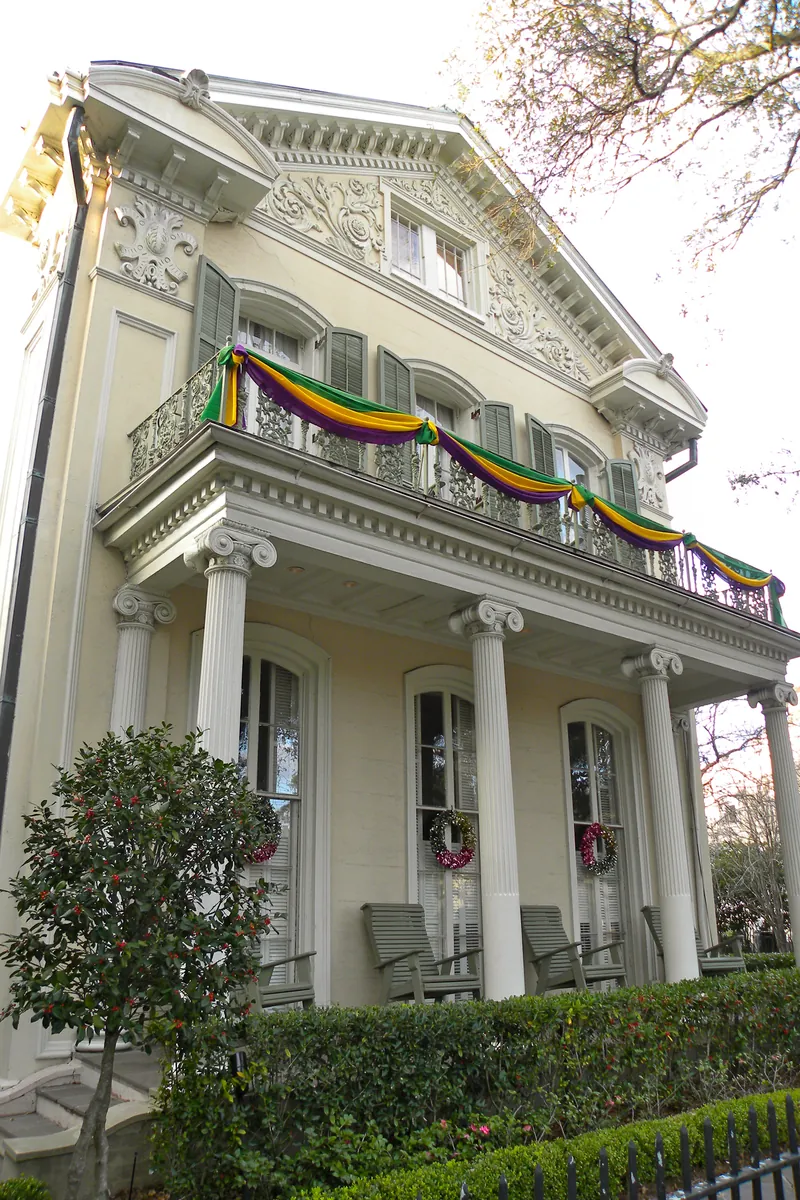
- ·Greek Revival mansions with columned porticos, cast-iron galleries, and gardens that sprawl to property lines.
- ·A National Register Historic District and one of the best-preserved antebellum residential collections in the South.
- ·Walking tours start at Washington and Prytania, next to Lafayette Cemetery.
- ·Free to walk; self-guided and guided tours available.
More archive
Memories
Editorial content compiled with AI assistance. Place details verified against public records.