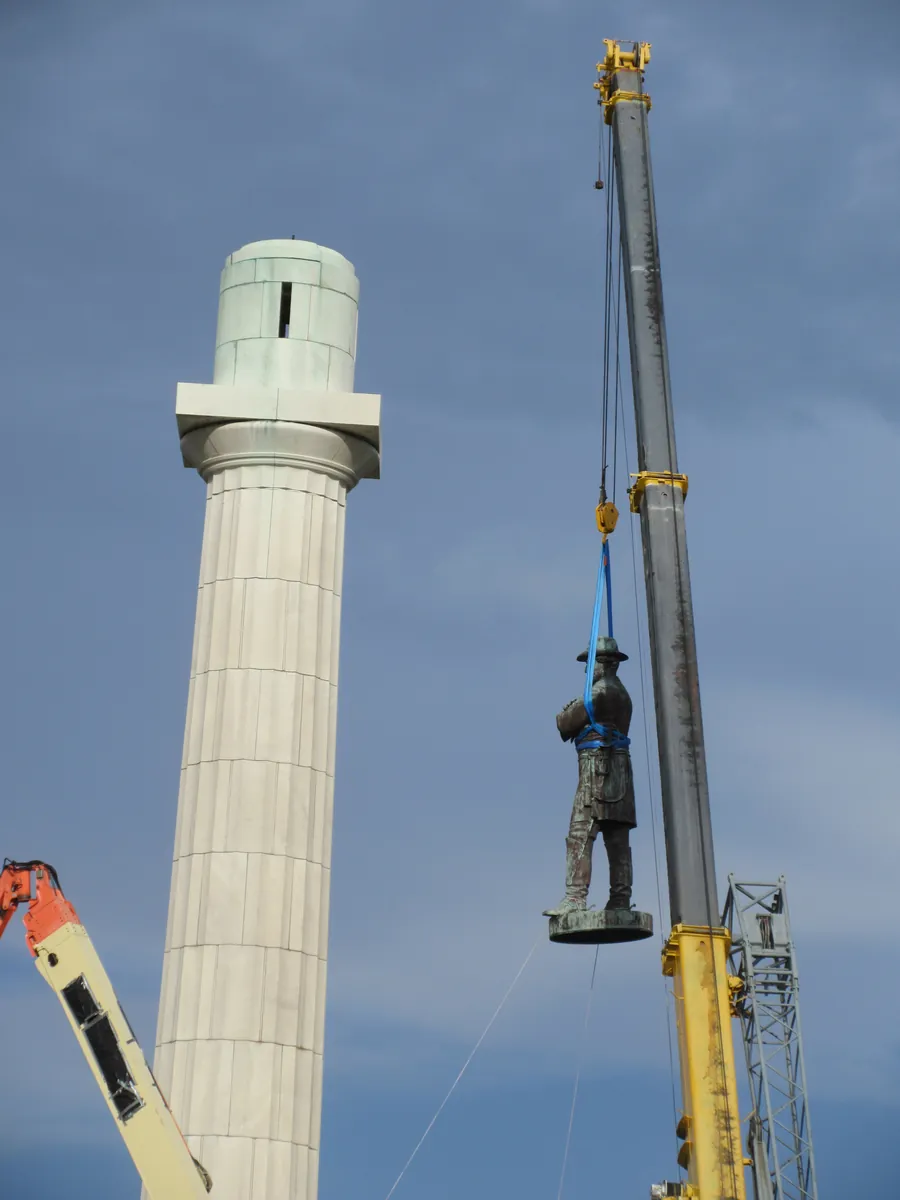
The Warehouse District is what a city does with its industrial back of house after industry leaves. Shipping pulled out of the upriver wharves in the 1960s. The 1984 World's Fair — the only World's Fair to go bankrupt — cleared what remained and left the buildings open. Stephen Ambrose founded the National D-Day Museum in 2000; it grew into the WWII Museum and the city's second-largest visitor draw. The Ogden holds the most significant collection of Southern art in the country. Lee Circle has been a vacant pillar since 2017, and the city is still arguing about what should stand there.
The route
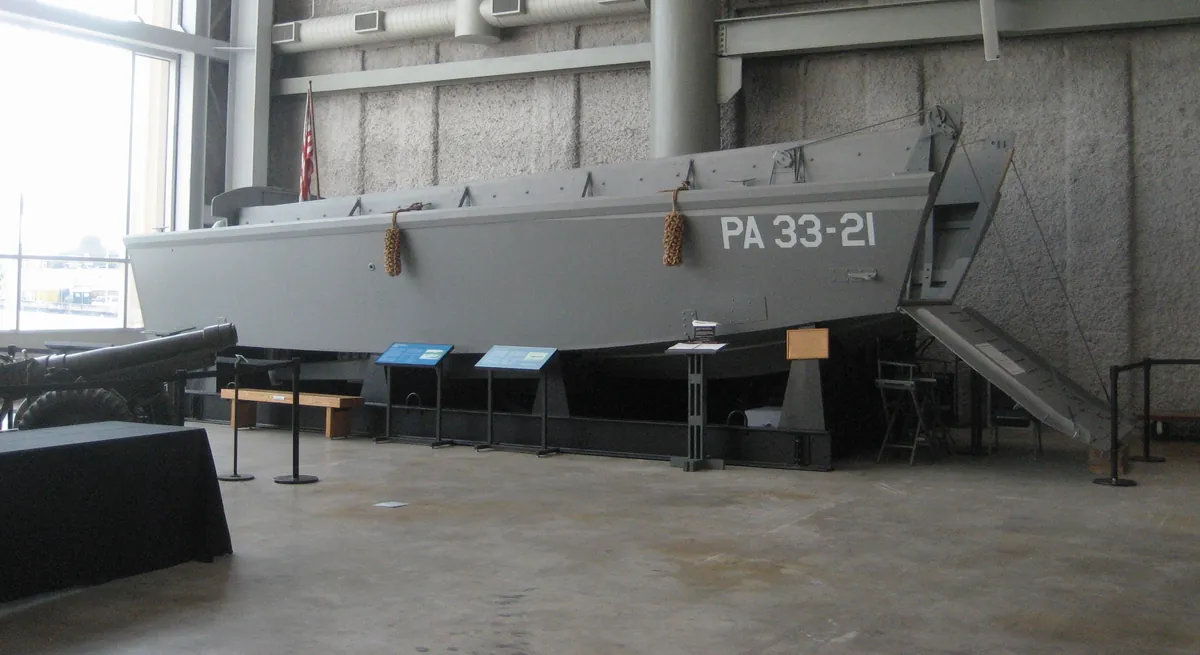 1Museum·2000The National WWII Museum
Eisenhower told historian Stephen Ambrose that the inventor of the Higgins boat "won the war for us." Andrew Higgins and his Higgins Industries designed, tested, and built the LCVP landing craft in New Orleans — the boats that carried troops onto the Normandy beaches. That single industrial fact is why the museum exists in this city. Ambrose discussed the idea with historian Nick Mueller in Ambrose's hometown of New Orleans. Real estate developer Peter Kalikow, then-owner of the *New York Post*, provided $50,000 in startup funding. Congress later appropriated $4 million. The museum was officially dedicated June 6, 2000, the 56th anniversary of D-Day. It occupied the former Weckerling Brewery building, built in 1888 and closed two years later. In 2003, Congress designated it America's official National WWII Museum; the name change became official in 2006, delayed by Hurricane Katrina. The museum is an affiliated institution of the Smithsonian. The campus spans six acres in the Warehouse District. The original Louisiana Memorial Pavilion holds several aircraft suspended in its atrium, including a Supermarine Spitfire and a Douglas C-47 Skytrain. A Higgins boat is usually on display. Visitors board a simulated train that mimics the experience of soldiers going off to war. The Dog Tag Experience, opened in 2013, assigns each visitor a servicemember's identity; touching the tag to screens within exhibits reveals that person's experience. US Freedom Pavilion: The Boeing Center holds a B-17E Flying Fortress, B-25J Mitchell, SBD-3 Dauntless, TBF Avenger, P-51D Mustang, and Corsair F4U-4. The B-17E is *My Gal Sal*, lost over Greenland and recovered 53 years later. The pavilion includes an interactive submarine experience based on the final mission of the USS *Tang*. The 32,000-square-foot Campaigns of Courage Pavilion opened its Road to Berlin exhibit in December 2014 and Road to Tokyo in 2015. The Liberation Pavilion, opened in 2023, explores how the war affects us today. *Beyond All Boundaries*, the 4-D film shown in the Solomon Victory Theater, gives an overview of the war. The oral history collection — thousands of recorded veteran testimonies — is irreplaceable. Plan a full day. Admission charged.
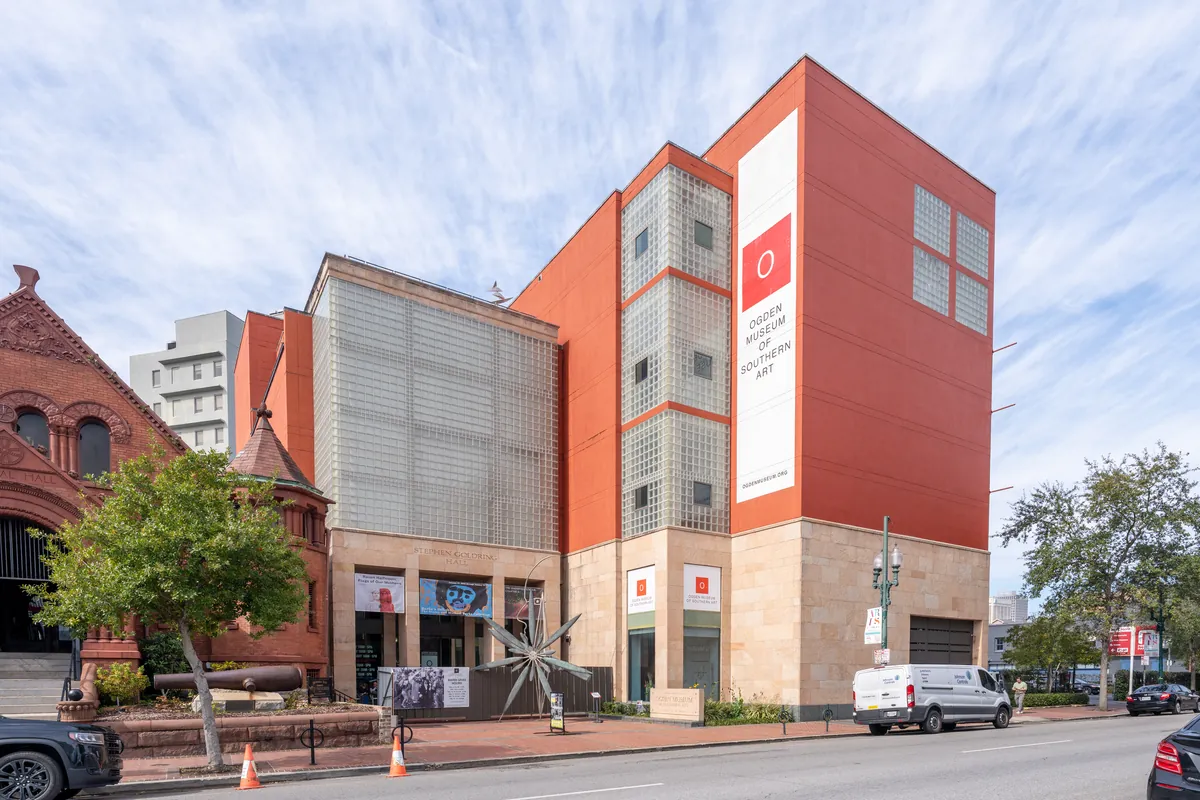 2Museum·2003Ogden Museum of Southern Art
Roger H. Ogden donated more than 600 works from his private collection in 1999, the founding gift for what became the largest and most significant collection of Southern art in the world. The museum opened in 2003 at 925 Camp Street in two joined buildings: the Patrick F. Taylor Library, built in 1889 and designed by Henry Hobson Richardson, and the new Stephen Goldring Hall, a five-story glass and stone structure designed by Errol Barron and Michael Toups. The collection has grown to more than 4,000 works — paintings, watercolors, drawings, prints, photographs, sculpture, wood, and crafts — from artists from or associated with fifteen Southern states and the District of Columbia. New Orleans was the largest port in the South throughout the nineteenth century, exporting most of the nation's cotton and other farm products to Western Europe and New England. The city was a place of many tongues long before that — Bulbancha, the Choctaw name meaning "place of many tongues," was an important trading hub for thousands of years before French settlers arrived. The Ogden holds work from that long sweep of Southern experience: folk art and shadowy bayou paintings, haunting old photographs and bright modern abstractions. Artists include Clementine Hunter, George Rodrigue, George Dureau, Ida Kohlmeyer, Walter Anderson, and George Ohr. When the museum opened, the New York Times observed there is no easily identifiable Southern art style in the collection. What emerged were themes of place, history, and memory. The self-taught art collection — work by artists with no formal training, often from rural and African American communities — is the most significant in any museum. Ogden After Hours on Thursday nights pairs live music with open galleries. Louisiana residents get in free on the first Thursday of the month.
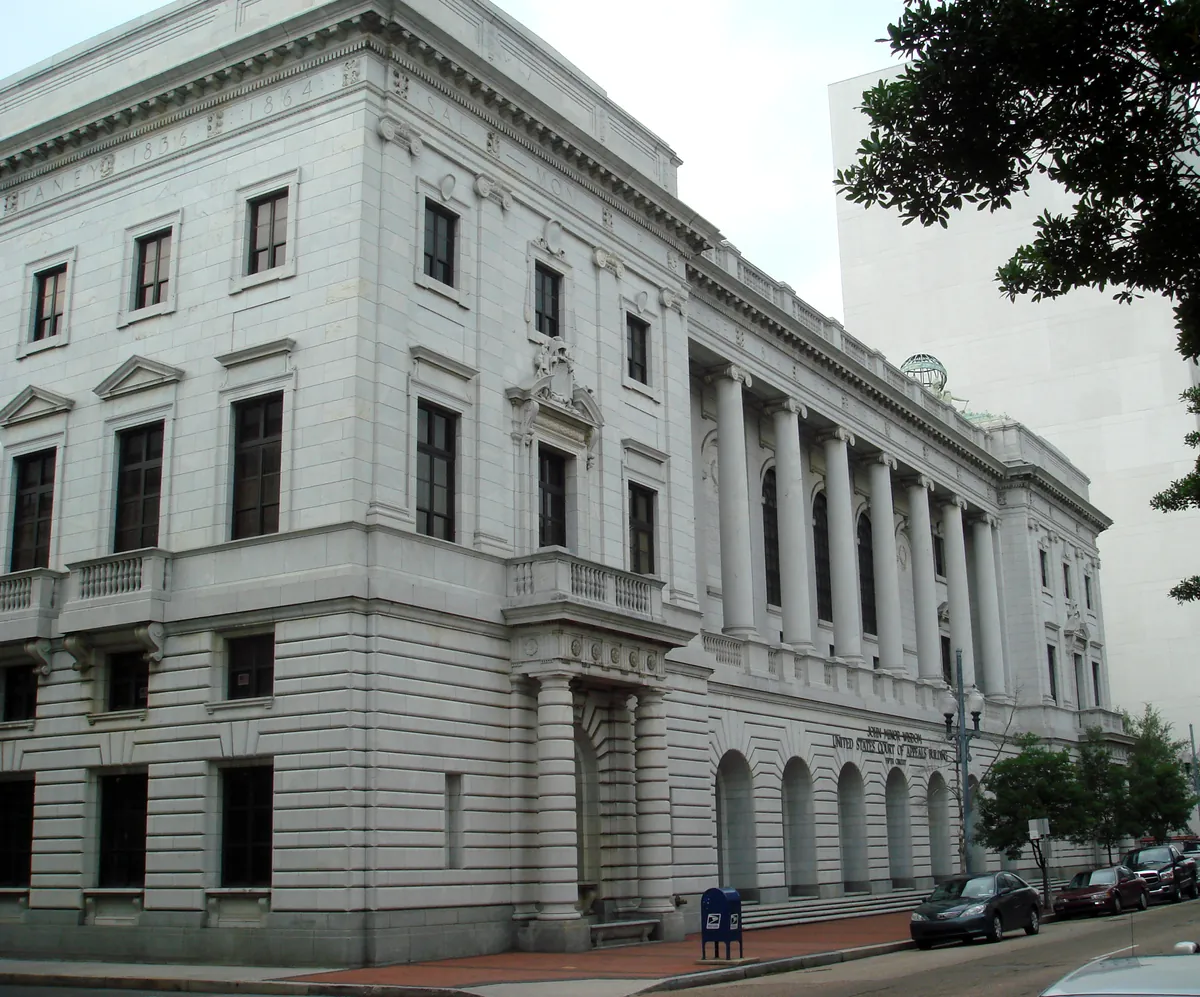 3Historic Site·1914·NHLJohn Minor Wisdom U.S. Court of Appeals
The Fifth Circuit Court of Appeals, housed at 600 Camp Street in an Italian Renaissance Revival building completed in 1915, is where Judge John Minor Wisdom wrote landmark desegregation opinions that reshaped American law. In *U.S. v. Jefferson County Board of Education* (1966), his majority opinion established the legal framework for affirmative integration, articulating a principle that would echo through decades of jurisprudence: "The Constitution is both color blind and color conscious. To avoid conflict with the equal protection clause, a classification that denies a benefit, causes harm, or imposes a burden must not be based on race. But the Constitution is color conscious to prevent discrimination being perpetuated and to undo the effects of past discrimination." Wisdom was a Tulane-educated Republican from New Orleans who had left the Democratic Party in reaction to what he perceived as the corrupt administration of Governor Huey Long. He became instrumental in securing Dwight Eisenhower's nomination at the 1952 Republican National Convention, and helped Eisenhower win Louisiana in 1956 -- the first time the state had voted Republican in eighty years. Eisenhower appointed him to the Fifth Circuit in 1957. During Wisdom's tenure, the Fifth Circuit's jurisdiction stretched across Louisiana, Mississippi, Texas, Alabama, Georgia, Florida, and the Canal Zone. Wisdom was one of the "Fifth Circuit Four," judges who advanced the goals of the Civil Rights Movement through a series of crucial decisions in the 1950s and 1960s. The court became one of the most consequential federal courts for civil rights law. President Bill Clinton awarded Wisdom the Presidential Medal of Freedom in 1993. The building was renamed in 1994 for the judge who served on the court until his death in 1999. It is a National Register property and a National Historic Landmark -- and it remains a working courthouse.
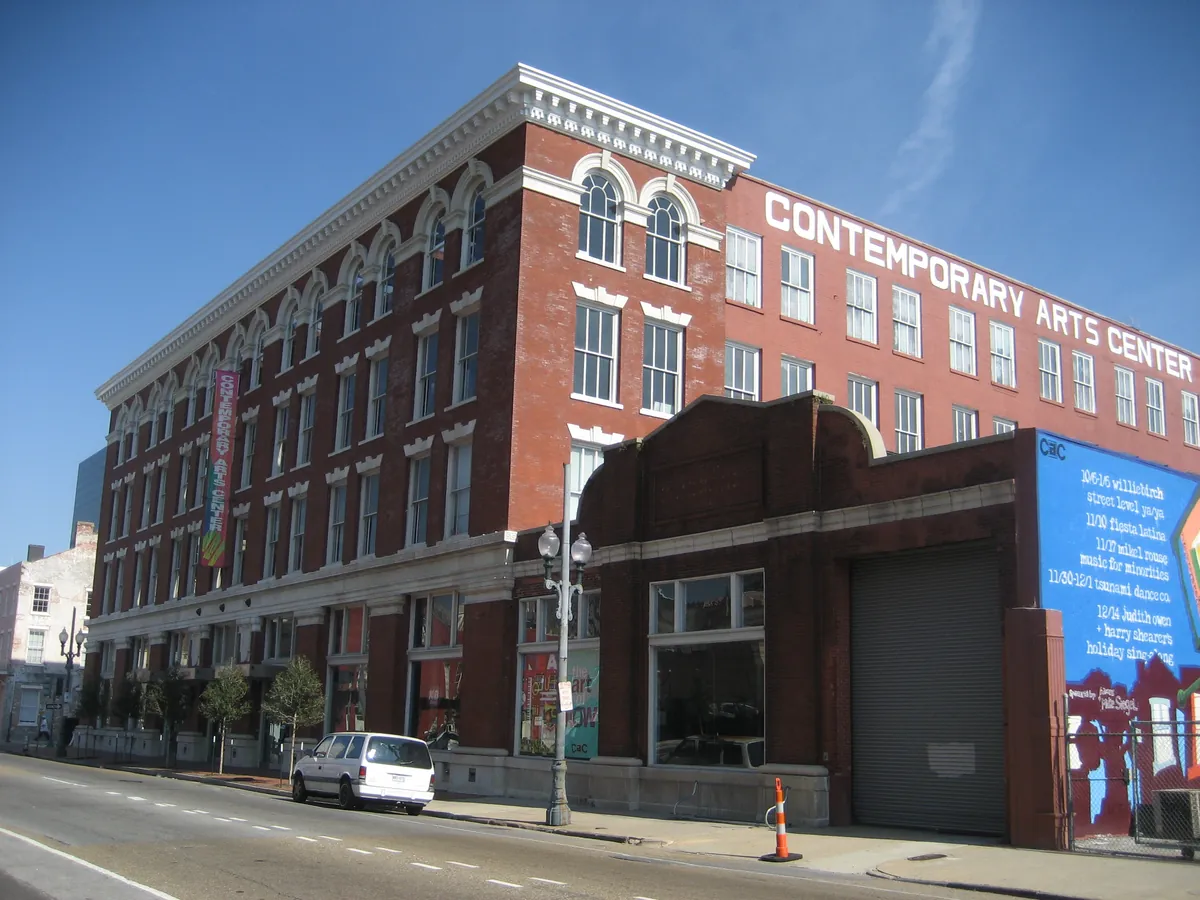 4Museum·1976Contemporary Arts Center New Orleans
The warehouse was already eighty years old when someone decided it should hold the newest work being made in America. Founded in 1976, the Contemporary Arts Center was among the first institutions in the country to commit solely to contemporary art — and it did so by refusing every curatorial instinct that turns a museum into a mausoleum. No permanent collection. No archive. No retrospectives. Only new work, rotating with the calendar. The 1905 warehouse on Camp Street still stands in the Warehouse District, its brick exterior unchanged while what fills the interior turns over constantly. Visual art, performance, experimental theater, concert performances, lectures — all of it passes through the same rooms, sometimes in the same month. The center offers courses across disciplines, treating making and viewing as adjacent practices rather than separate worlds. General gallery admission is free to Louisiana residents. New Orleans has always been a port city, built at the juncture of the Mississippi and Lake Pontchartrain to control the river valley and funnel the cotton and farm products of the entire South toward Europe and New England. What made the city essential in the nineteenth century was what moved through it. The Contemporary Arts Center operates on the same logic: its value is not what it holds, but what it allows to pass through. Go when something is happening. That is the only standing collection.
 5Historic Site·1884Lee Circle (Tivoli Circle) — Monument Removal Site
For 133 years, a 60-foot bronze statue of Robert E. Lee stood atop a 68-foot marble column at the center of this traffic circle — erected in 1884 not as a memorial to the dead but as a political statement by the white supremacist Crescent City White League. On May 19, 2017, a crane lifted Lee off the column before a crowd of thousands. The pedestal stood empty for years before the city renamed it Tivoli Circle, restoring the name the space carried before the Confederacy claimed it.