The parish-seat courthouse is how rural Louisiana told itself it was a place. Columbia laid out its square in the 1830s when the parish bench was barely a generation old. Homer's 1860 Greek Revival courthouse is one of five antebellum survivors in the state — recording deeds since before the Civil War. Ruston was platted on a railroad grid in 1884; the courthouse came with it. Bastrop's 1914 courthouse anchors a downtown built on lumber and paper-mill money. Winnsboro's Romanesque pile closes the loop. Each square is a claim that the parish meant something.
The route
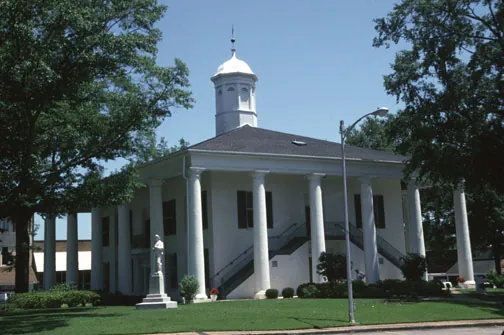 1Architecture·Reconstruction·NRHPHomer Claiborne Parish Courthouse
The courthouse in Homer went up in 1861, built in Greek Revival with a pedimented portico on the town square. Louisiana seceded in January of that year. The war came. The building stayed. It is one of Louisiana's few antebellum courthouses still doing government work—still the seat of Claiborne Parish, listed on the National Register, still open during business hours. The Greek Revival façade faces the square. The building performs the same function it was built for. Walk in and the government of Claiborne Parish is there, transacting the ordinary business of a parish that has used this building for more than a century and a half. The reason to go is to stand in front of something that was built before the Civil War and never stopped being a courthouse. Most didn't make it. This one did.
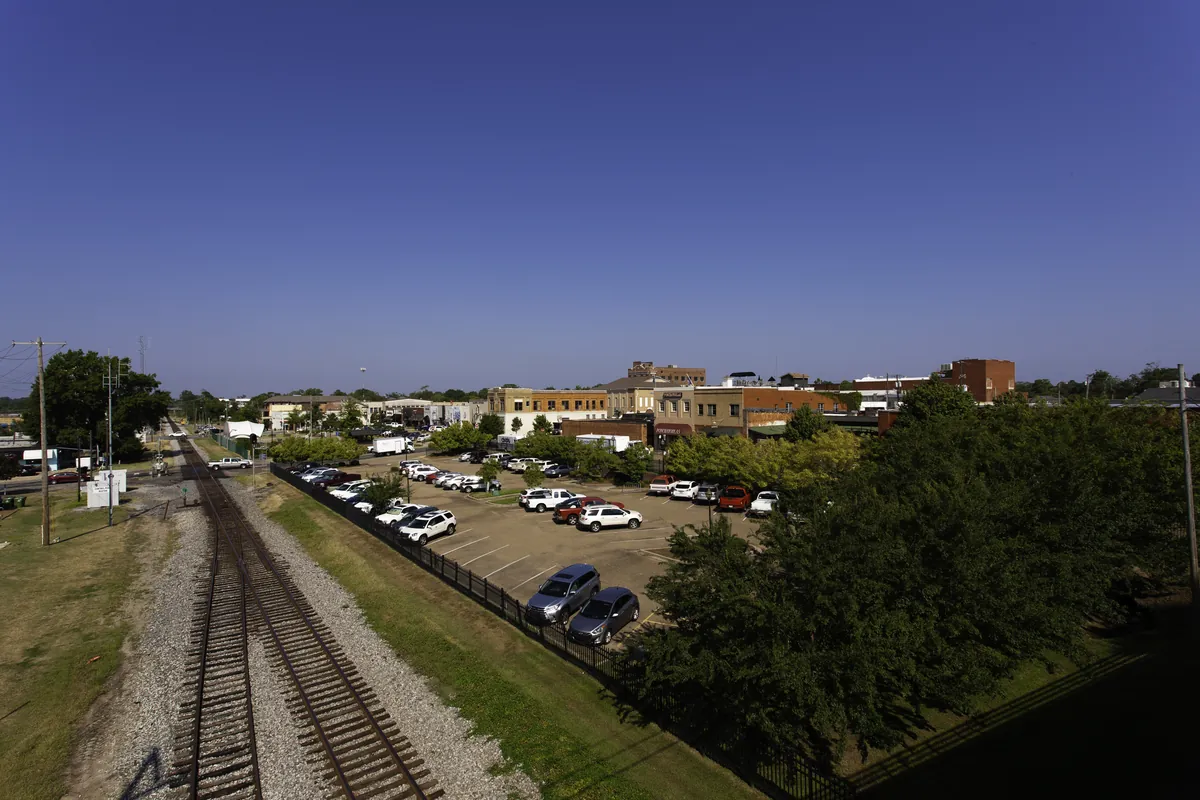 2Architecture·IndustrialRuston Historic Downtown
Ruston was platted as a railroad town in 1884, the grid running off the tracks. Louisiana Tech opened in 1894, and the peach orchards followed. By the 1920s Ruston was shipping more peaches than anywhere else in Louisiana, a run that held through the 1950s. The Louisiana Peach Festival still marks the harvest every June. Vienna Street and Railroad Avenue carry the historic storefronts — the old commercial spine, built when the town was young and the fruit money was coming in. Thirty minutes north of Monroe on I-20, Ruston is where you go to see what a planned railroad town looks like when it worked: the depot called the grid into being, the university and the orchards gave it a reason to stay, and the festival keeps the formative crop in the calendar. The storefronts are still occupied. The festival is real, not heritage theater. It's a working town that hasn't had to apologize for what it was.
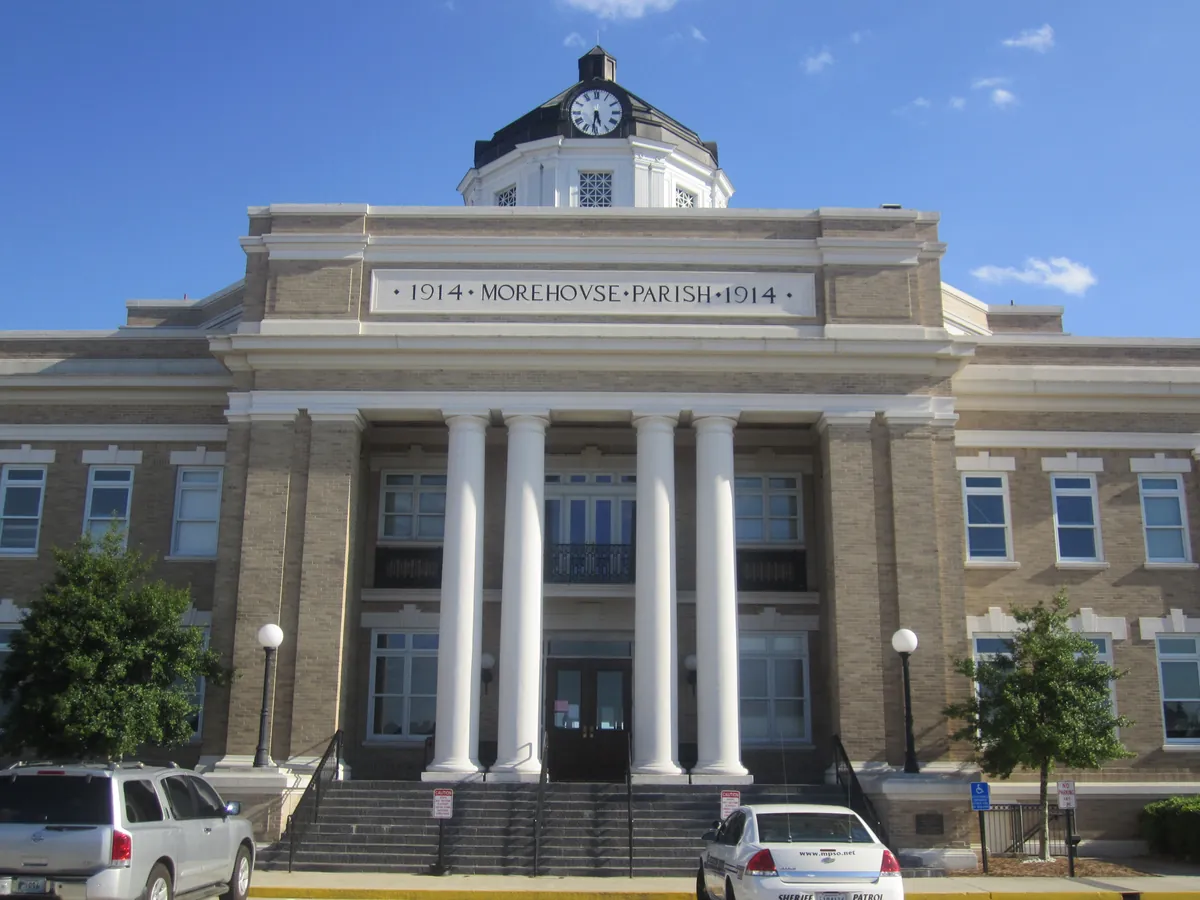 3Architecture·IndustrialBastrop Historic Downtown
Bastrop built itself on what came out of the pine forests. In the early 1900s, lumber money poured into this Morehouse Parish seat, and the boom stamped itself into brick. The storefronts that line the downtown blocks are ornate, industrial-era commercial buildings — the kind of architecture that signals a town certain it would last. At the center stands the 1914 Morehouse Parish Courthouse, anchoring the square the way courthouses do in parish seats across Louisiana. The paper mills followed the lumber. That combination — pine, pulp, industrial employment — gave Bastrop its shape during the first quarter of the twentieth century. What's left is a downtown grid of brick facades from that narrow window, before the mills went quiet. The Snyder Memorial Museum covers regional history. It's housed a few blocks from the courthouse square and holds the parish's record: the people who worked the timber stands, the mills, the tenant farms. Bastrop sits twenty-five miles north of Monroe on US-165, and the drive up takes you through flatwoods and cleared fields — the same country that fed the boom.
 4Architecture·Antebellum·NRHPColumbia Town Square Historic District
Columbia was planned in the 1830s around a courthouse square, the Caldwell Parish seat laid out in a grid typical of pre-railroad parish towns. The National Register of Historic Places designation covers the district, which still reads as one intact piece—antebellum houses on some blocks, Victorian on others, the Caldwell Parish Courthouse holding the center where it was drawn. The architecture tells two stories at once. Antebellum structures stand alongside Victorian residential buildings, marking the periods when Columbia grew. The grid layout remains legible, the courthouse still at the focal point, the residential blocks still facing in toward public space. This is what a Louisiana parish seat looked like before railroad development reshaped the region's towns—and Columbia kept that form. You go to see a town square that still does what it was built to do: organize public life around a courthouse, with the residential architecture of two centuries surrounding it.