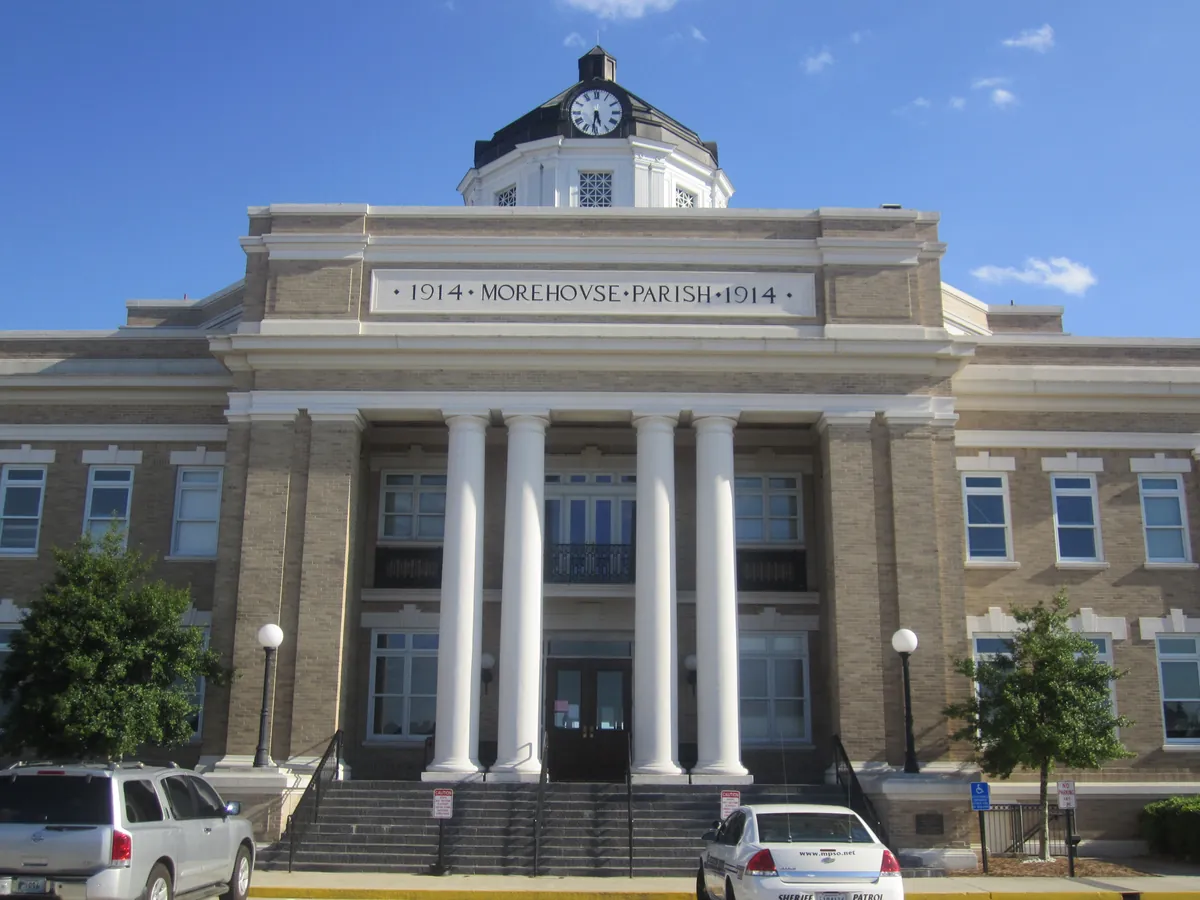
Bastrop built itself on what came out of the pine forests. In the early 1900s, lumber money poured into this Morehouse Parish seat, and the boom stamped itself into brick. The storefronts that line the downtown blocks are ornate, industrial-era commercial buildings — the kind of architecture that signals a town certain it would last. At the center stands the 1914 Morehouse Parish Courthouse, anchoring the square the way courthouses do in parish seats across Louisiana.
The paper mills followed the lumber. That combination — pine, pulp, industrial employment — gave Bastrop its shape during the first quarter of the twentieth century. What's left is a downtown grid of brick facades from that narrow window, before the mills went quiet.
The Snyder Memorial Museum covers regional history. It's housed a few blocks from the courthouse square and holds the parish's record: the people who worked the timber stands, the mills, the tenant farms. Bastrop sits twenty-five miles north of Monroe on US-165, and the drive up takes you through flatwoods and cleared fields — the same country that fed the boom.
- ·Lumber and paper-mill boom town, early 1900s
- ·1914 Morehouse Parish Courthouse
- ·Ornate brick storefronts from industrial era
- ·Snyder Memorial Museum covers regional history
- ·Morehouse Parish seat
- ·25 miles north of Monroe on US-165
Memories
Editorial content compiled with AI assistance. Place details verified against public records.