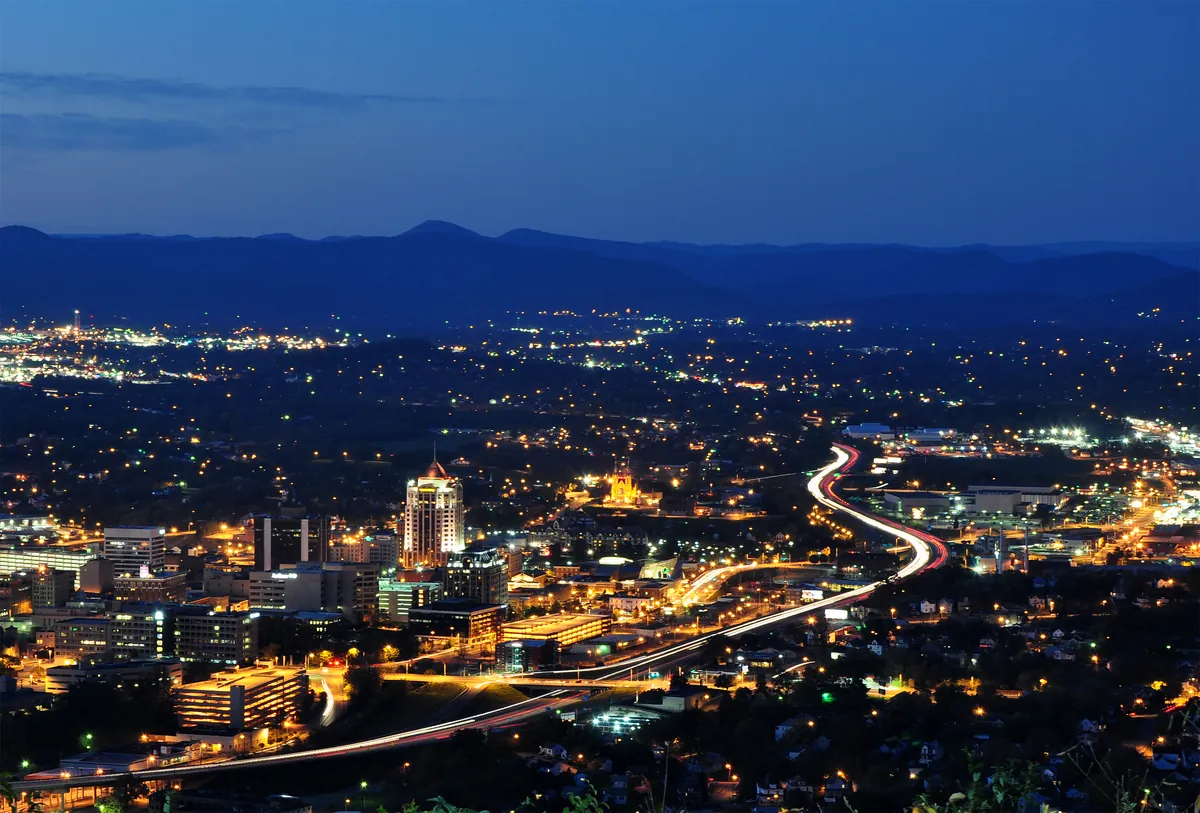
The Roanoke City Market has run continuously since 1882 — the oldest open-air market in Virginia and the spine of a downtown that does more with less than any small city in the South. opened in 2008, designed by Randall Stout, throws its zinc planes off the Norfolk Avenue corner. Center in the Square holds five museums on five floors of the old Heironimus department store. in the 1898 Norfolk & Western passenger station, holds the photographs of the railroad's last steam decade. Elmwood Park is where the city gathers.
The route
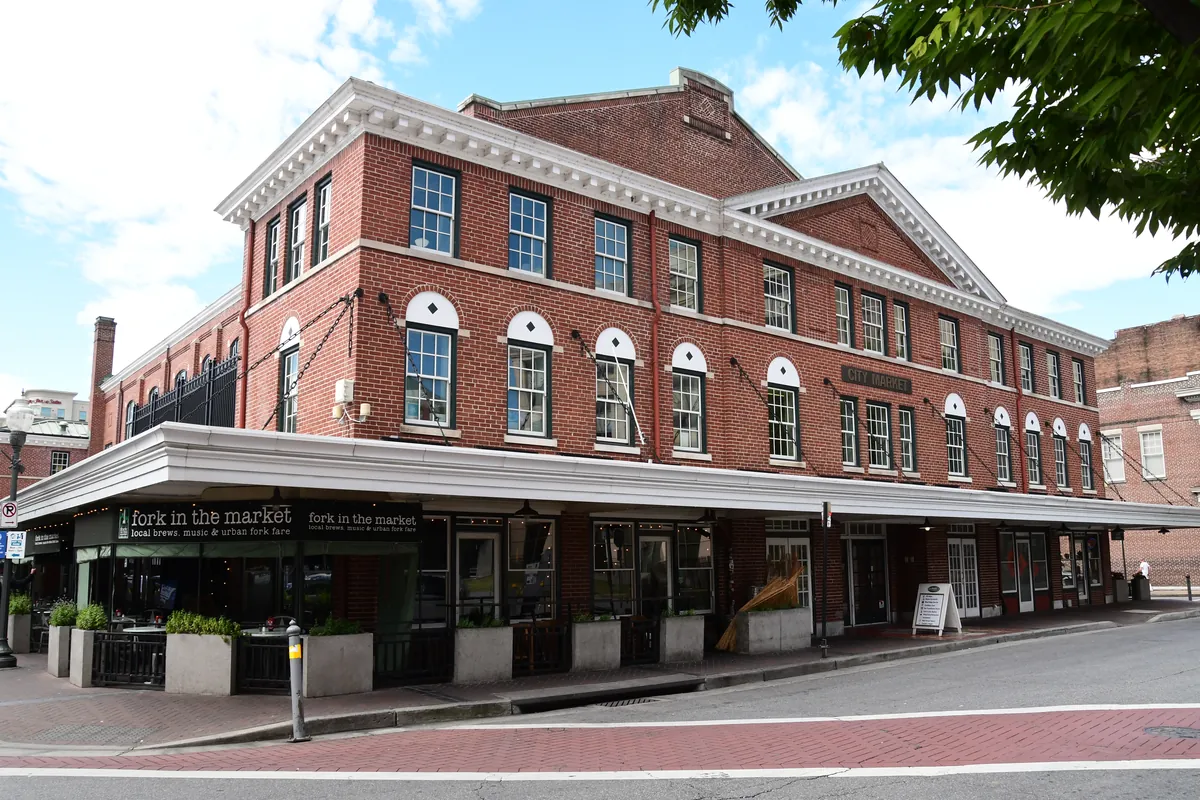 1Historic Site·1882·NRHPRoanoke City Market
The Norfolk and Western Railway chose the small town of Big Lick as its headquarters in 1882, and within two years the population had exploded — from under 700 to over 5,000 — earning Roanoke its early nickname, "The Magic City." The farmers' market dates to that same year, 1882, and still operates from its original location, making it the oldest continuously running open-air market in Virginia. The covered market building anchors what became the Market Square district, now the center of Roanoke's dining and nightlife scene. A pedestrian bridge connects the market to the Hotel Roanoke, the Tudor Revival structure the railroad also built in 1882. The hotel started as a 69-room Queen Anne building before numerous rebuilds and expansions gave it its current 330-room form. Both landmarks arrived when the railroad companies set out to build much of the town from scratch — railroad shops, offices, a hotel, and suitable housing for their employees. On Saturdays, the market shows what it was built to do. Stalls spill onto the sidewalk with local produce, baked goods, and crafts. Weekday hours are shorter, but the market runs year-round. The surrounding block has cycled through the city's transformations: the boomtown chaos of the 1880s, the railroad's 1982 departure for Norfolk, the manufacturing closures that followed, and the healthcare-driven economy that eventually reversed decades of population decline. The market outlasted all of it. Same location, same purpose — farmers and vendors selling to the city the railroad made.
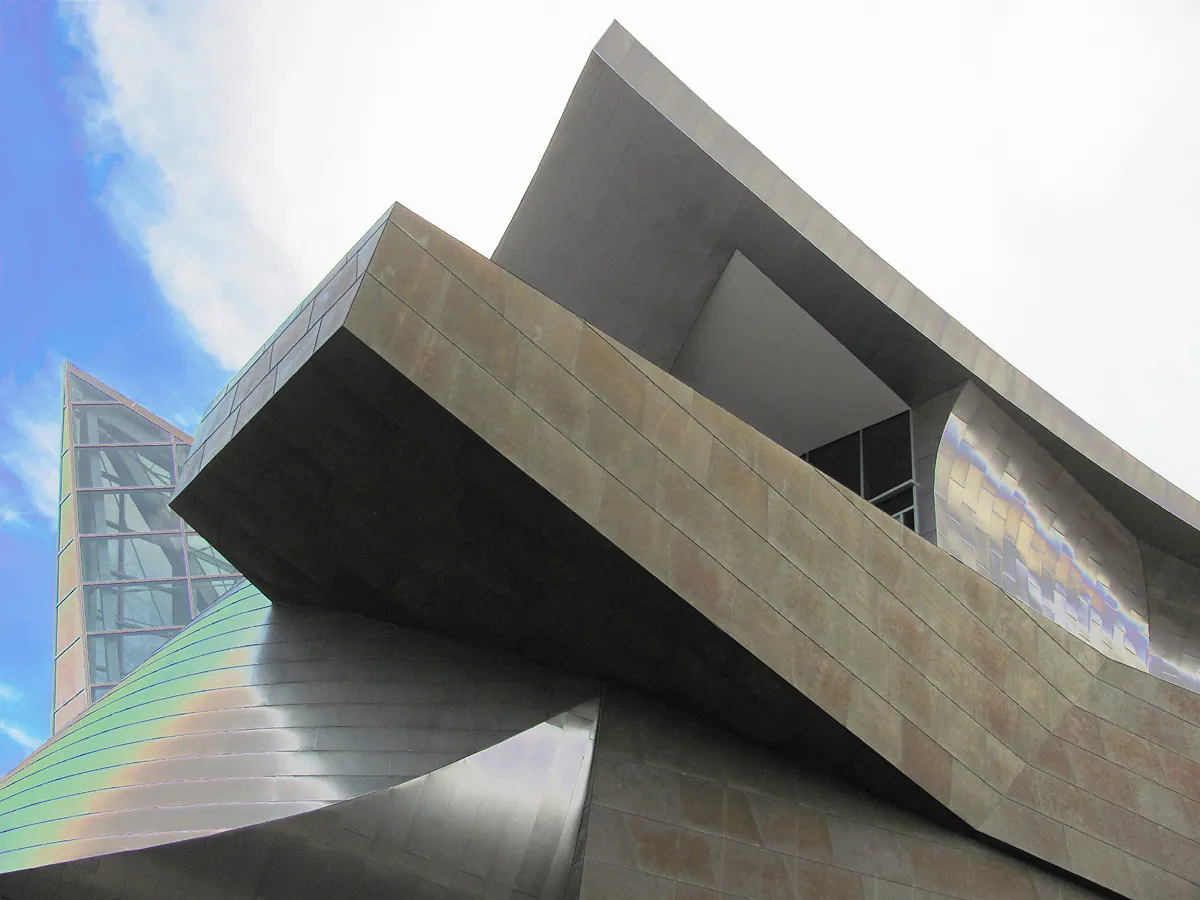 2Museum·2008Taubman Museum of Art
Randall Stout's building sits on the site of the old Roanoke grocery terminal, and when you stand in the galleries the crystalline roofline echoes the ridgeline of the Blue Ridge visible through the windows — the architecture was designed to mirror what you're looking at. Stout, a protégé of Frank Gehry, delivered a seventy-five-thousand-square-foot facility that drew controversy when it opened in 2008 but has since received international praise. The institution itself began in 1951, when the Roanoke chapter of the American Association of University Women requested a major exhibition from the Virginia Museum of Fine Arts. By 1983 the museum had moved to Center in the Square on Market Square downtown; by the late 1990s it had outgrown that space. In 2000 the city donated a site and four million dollars. Construction began in May 2006. Nicholas F. Taubman, former CEO of Advance Auto Parts and later U.S. ambassador to Romania, and his wife Eugenia donated over fifteen million dollars toward the sixty-six-million-dollar project. The museum was named in their honor. The building houses twelve galleries hosting twelve to fifteen exhibitions annually, a seventy-seven-foot City of Roanoke Atrium for large temporary installations, and Art Venture, an interactive gallery for younger visitors. Corporate donations have provided free admission to the permanent galleries since 2012. The permanent collection of more than two thousand works includes nineteenth- and early twentieth-century American art — Hudson River School, American Realism, American Impressionism, Arts and Crafts — as well as modern and contemporary art, photography, design, decorative arts, and Southern folk art. Thomas Eakins, Winslow Homer, John Singer Sargent, Norman Rockwell, Thomas Hart Benton. Jasper Johns, Robert Rauschenberg, Jacob Lawrence, Romare Bearden, John Cage. The museum received a bequest in 2001 that included twenty-seven works associated with Thomas Eakins and his circle, along with funds to support a named gallery. You go because the admission is free and the collection is serious, and because Stout built a room where the art and the mountains occupy the same sightline.
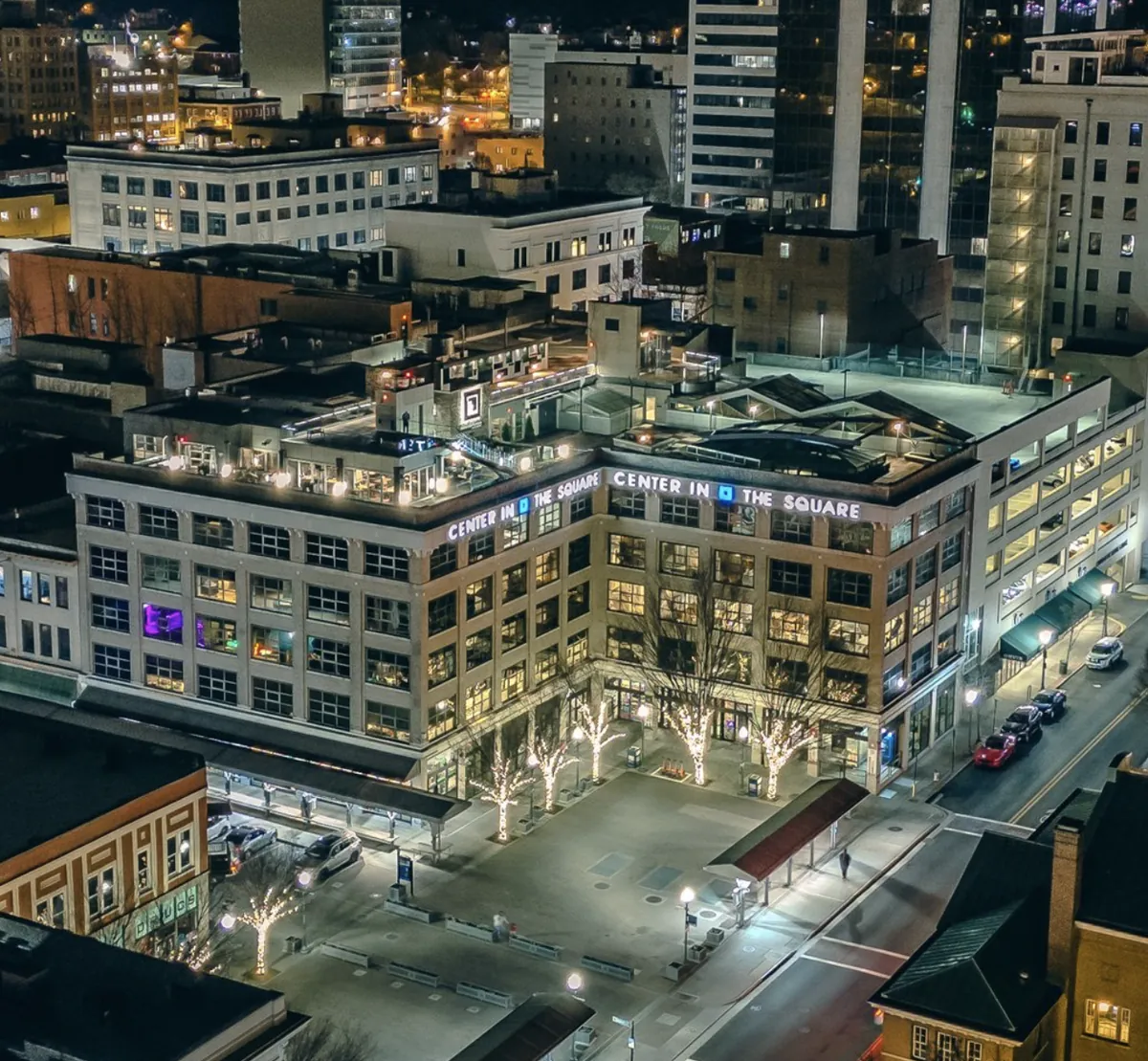 3Cultural Heritage·1983Center in the Square
A 1914 warehouse on Market Square became five reasons to stay indoors in a city defined by outdoor access. When Norfolk and Western Railway moved its headquarters out of Roanoke in 1982, the city's identity as a railroad town ended—and the next year, Center in the Square opened, consolidating a science museum, planetarium, theater, history museum, and aquarium under one roof. The timing wasn't coincidence. The building turned a freight-handling structure into the kind of cultural infrastructure a service economy runs on. The rooftop terrace earned its keep: it's the best downtown vantage for Mill Mountain and the 88.5-foot illuminated Star that gave Roanoke its nickname. First-Friday gallery openings pull locals and visitors into the same room, which is the whole point of putting five organizations in one building. Some attractions charge separate admission; others are free. The warehouse holds what the railroads left behind—a city that had to decide what it was for. Open daily.
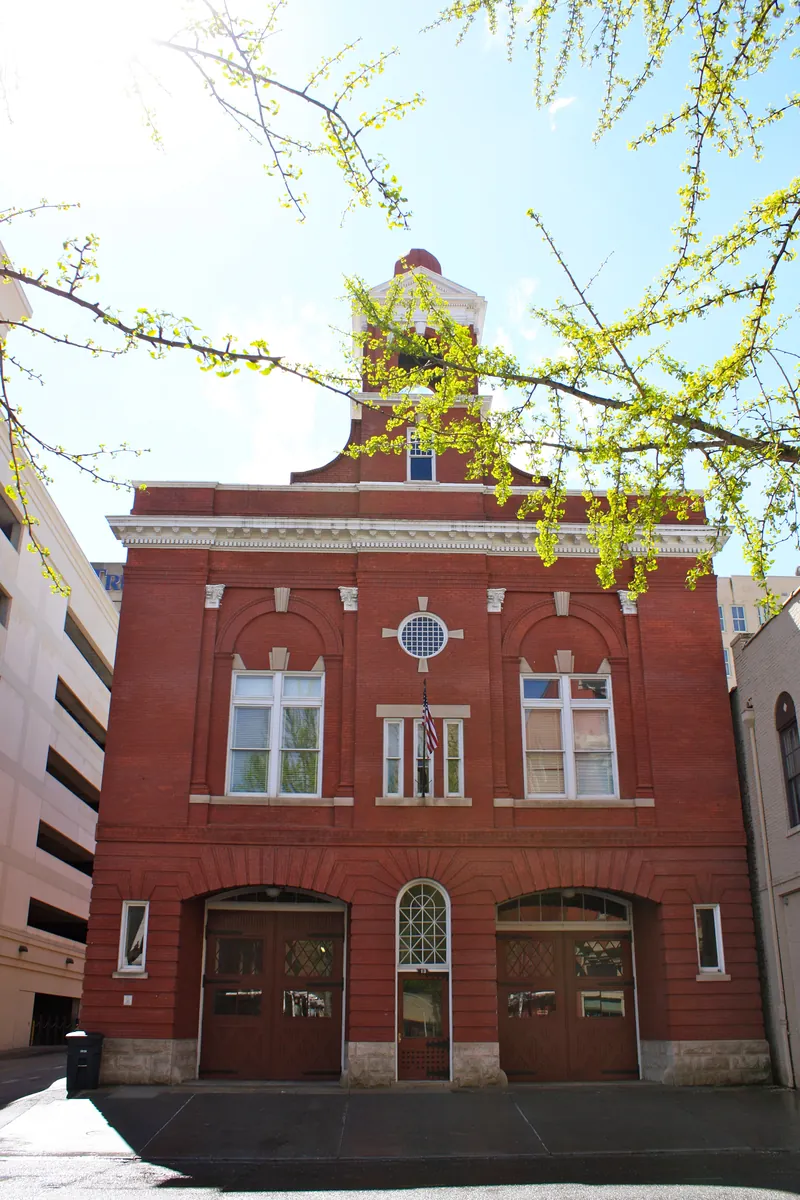 4Architecture·1907·NRHPFire Station No. 1
The Norfolk and Western Railway made Roanoke a city in 1882 by planting its headquarters in what had been a crossroads called Big Lick. Population multiplied by twenty-two in the 1880s. By 1907, the volunteer brigades couldn't cover a city that kept doubling, so Roanoke built Fire Station No. 1 on Church Avenue — the first permanent house for engines and paid crews. The Romanesque Revival brick is a downtown fixture now, listed on the National Register of Historic Places. The hose tower is the distinctive feature: a tall narrow shaft that rises above the roofline, built to let wet hoses dry vertically between calls. Active crews worked here until 1969. The building was adapted for commercial use after that, but the exterior survives intact on Church Avenue downtown, and the tower still marks the block where the boomtown learned to fight its own fires.
 5Nature & Parks·1903Elmwood Park
Roanoke's oldest public park — three shaded blocks in the center of downtown, laid out in 1903. A bandshell hosts free summer concerts every Thursday evening. The fountain runs from April to October. Office workers eat lunch on the benches. Families bring kids to the playground. The farmers' market is one block east. One block from the Taubman Museum and Market Square. Free and open daily.