Before Nashville consolidated country music, Shreveport was the proving ground. The Louisiana Hayride broadcast live from the Municipal Auditorium starting in 1948 — Hank Williams played his last full show there in 1952, Elvis signed his contract with Louisiana Hayride there in 1954, Johnny Cash and Johnny Horton worked the same stage. The Strand Theatre, a 1927 movie palace with hand-painted frescoes, anchors Spring Street's three surviving theaters. The Commercial District's brick warehouses date to the cotton-and-river decades. The Texas Street Bridge crosses to Bossier. The walk is the argument.
The route
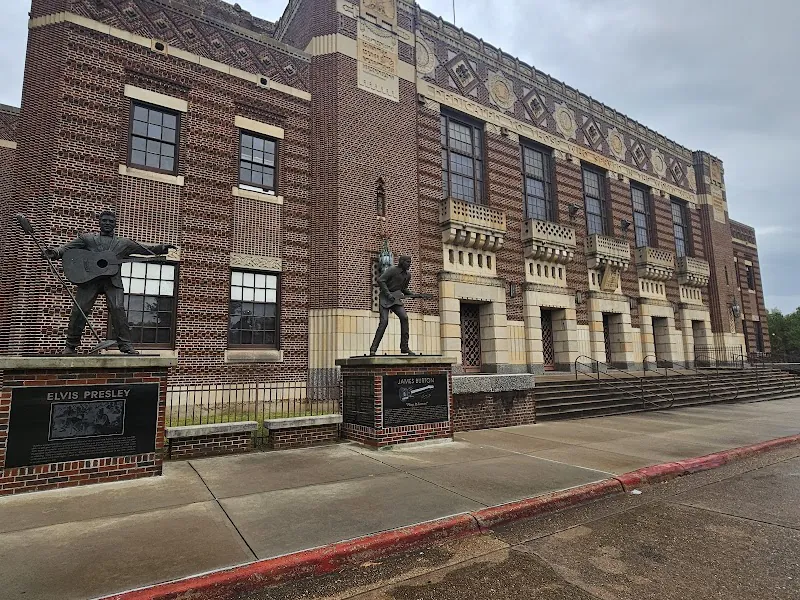 1Music·Industrial·NHLShreveport Municipal Auditorium
The Louisiana Hayride radio show broadcast live from this Art Deco auditorium from 1948 to 1960, launching careers that rewrote American music. Elvis Presley performed here for the first time on October 16, 1954. Hank Williams, Johnny Cash, Johnny Horton, Jim Reeves, and Slim Whitman all stepped onto this stage when their names meant nothing yet. The building was constructed between 1926 and 1929 as a memorial to World War I servicemen, designed by Samuel G. Wiener Sr. and Seymour Van Os and built by the Ashton Glassell Company during Mayor Lee Emmett Thomas's administration. Host Frank Page ran the Hayride through its prime years, booking performers who would define country and rockabilly for a generation. The 3,200-seat auditorium still operates as a concert hall, hosting live music, Broadway shows, and boxing matches. Renovations between 1994 and 2004 added air conditioning, updated restrooms, and installed accessibility ramps and an elevator. The Stage of Stars Museum occupies part of the building now. You go because this is where the sound started — not in Nashville, not in Memphis first, but here, in a municipal auditorium in Shreveport where unknowns became legends on live radio. The building earned National Historic Landmark status in 2008 for that specific contribution: proving a regional stage could birth national careers. It sits on Elvis Presley Boulevard now — the street itself a marker of what happened inside. It's still a working venue. You can still hear music in the room where it happened.
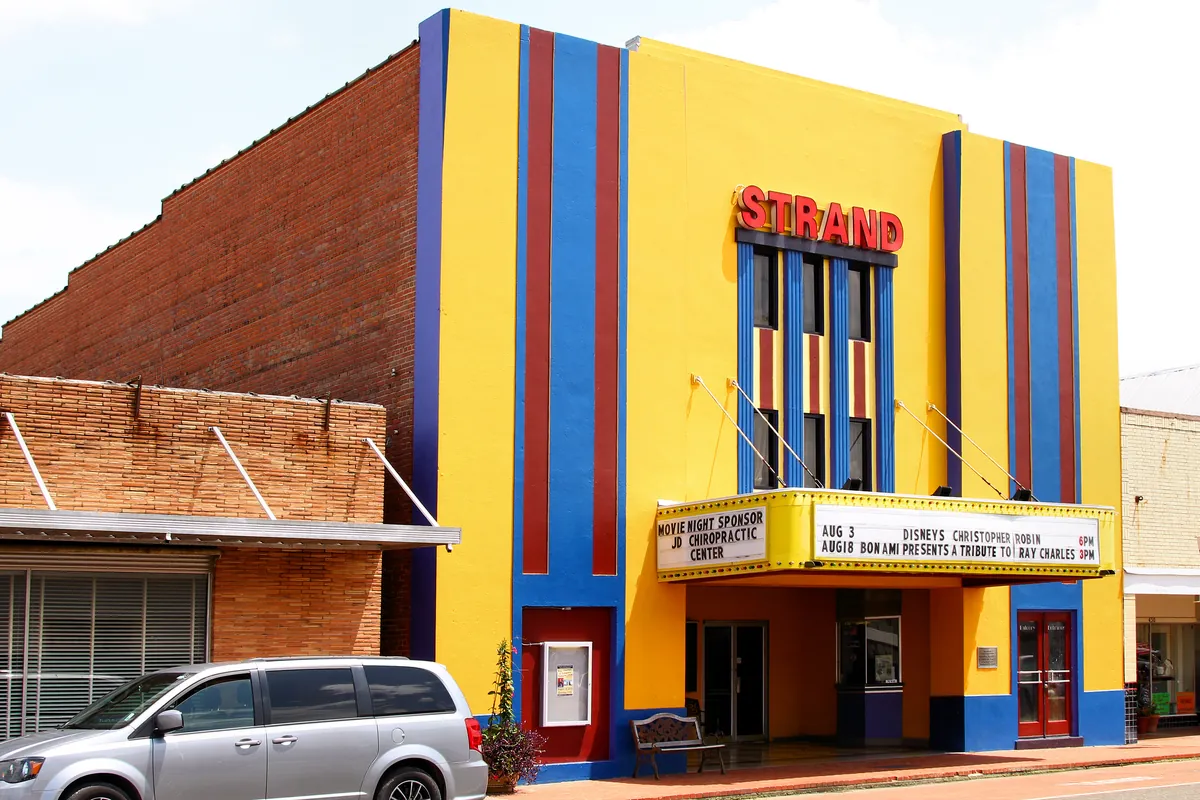 2Architecture·Industrial·NRHPThe Strand Theatre
When the Strand opened in 1925, Shreveport had oil money and wanted a movie palace to prove it. The result seated 1,700 across orchestra and balcony, under hand-painted ceiling frescoes and chandeliers that still hang today. This was silent-film grandeur—built for projection and spectacle, not intimacy. The building went dark for decades. By the 2000s, a major restoration brought it back as a touring house. Now Broadway productions and classical concerts work the same stage that opened nearly a century ago. The frescoes survived. So did the chandeliers. What you see at 619 Louisiana Avenue is original fabric, not replica. Downtown Shreveport built big in the 1920s because it could. The Strand is what remains of that moment—a working theater that never pretended to be anything else. If you go, look up. The ceiling tells you what ambition looked like before the oil ran out.
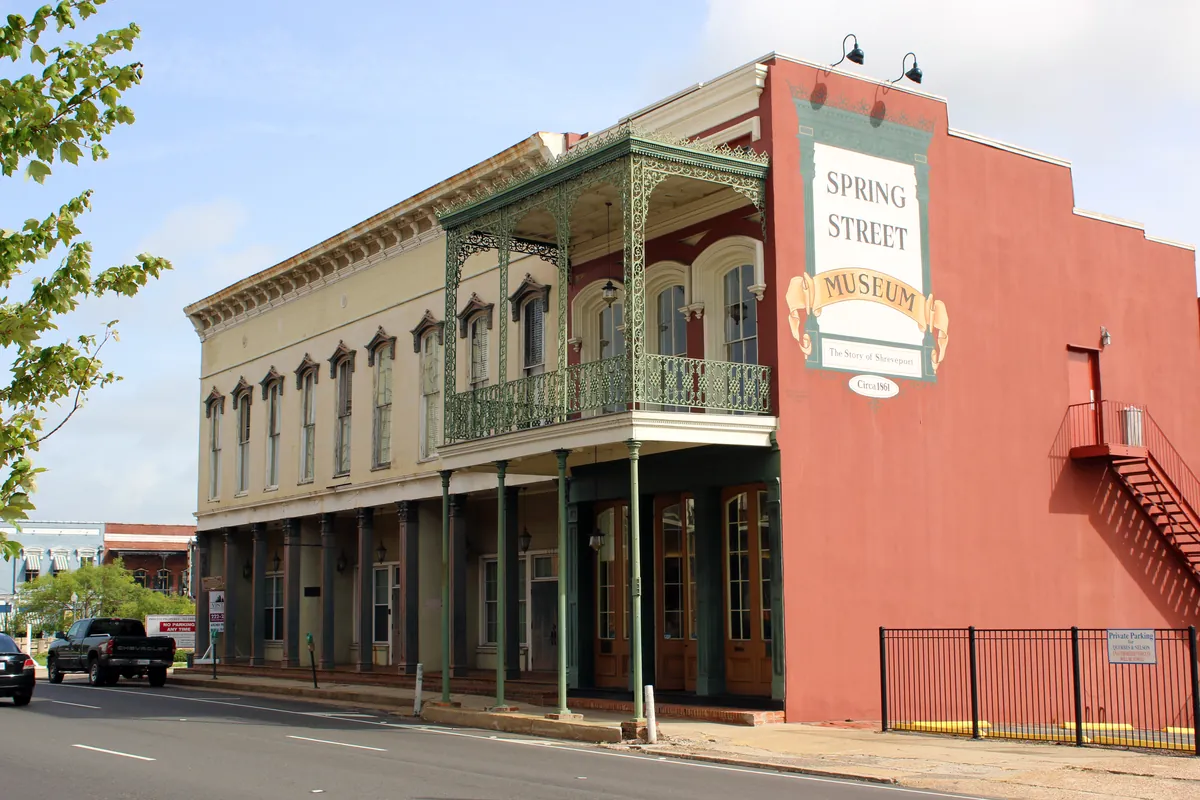 3Music·Industrial·NRHPSpring Street Historic District
Three theaters share a single block in downtown Shreveport, all survivors from the district's core years as a theater hub since the 1920s. The buildings carry Spanish Renaissance and Art Deco styles — architecture built to announce entertainment before anyone walked through the door. This concentration is what earned the district its National Register listing: a preserved commercial entertainment corridor that never stopped being one. The block still holds galleries, restaurants, and live music venues. Shreveport built its downtown around performance, and Spring Street stayed the heart of that engine. What you're walking through isn't nostalgia dressed as nightlife — it's the same bones doing the same work, hosting the acts that route through Northwest Louisiana now the way touring shows always have. The theaters are still theaters. The district is still where you go when the sun drops.
- 4Architecture·Industrial·NRHPShreveport Commercial Historic District
The brick spine of Shreveport's downtown still holds the shape of the 1880s–1920s commerce years, when riverboats and rail lines pulled goods through the Red River bluff and the warehouses went up in Romanesque and Italianate brick. The district — now on the National Register of Historic Places — runs a catalog of arched storefronts and corbeled cornices that mark what a river-and-rail city built when the money flowed through Commerce Street and Texas Street. Most of the warehouses have since pivoted. Restaurants, galleries, and lofts occupy the buildings that once stacked cotton bales, but the brick faces remain intact enough to read the original logic of the grid. Walking tours move through the district to pull out the architectural details — cast-iron columns, transom windows, pressed-metal ceilings — that survived because adaptive reuse needed the bones more than it needed empty lots. The district anchors Shreveport's downtown revitalization not as a museum piece but as working infrastructure. The same walls that held nineteenth-century freight now hold twenty-first-century tenants, and the rhythm of the streetscape — storefront, alley, storefront — still runs on the intervals the original builders set. If you want to see how a commerce city builds permanence, you walk the blocks where the permanence held.
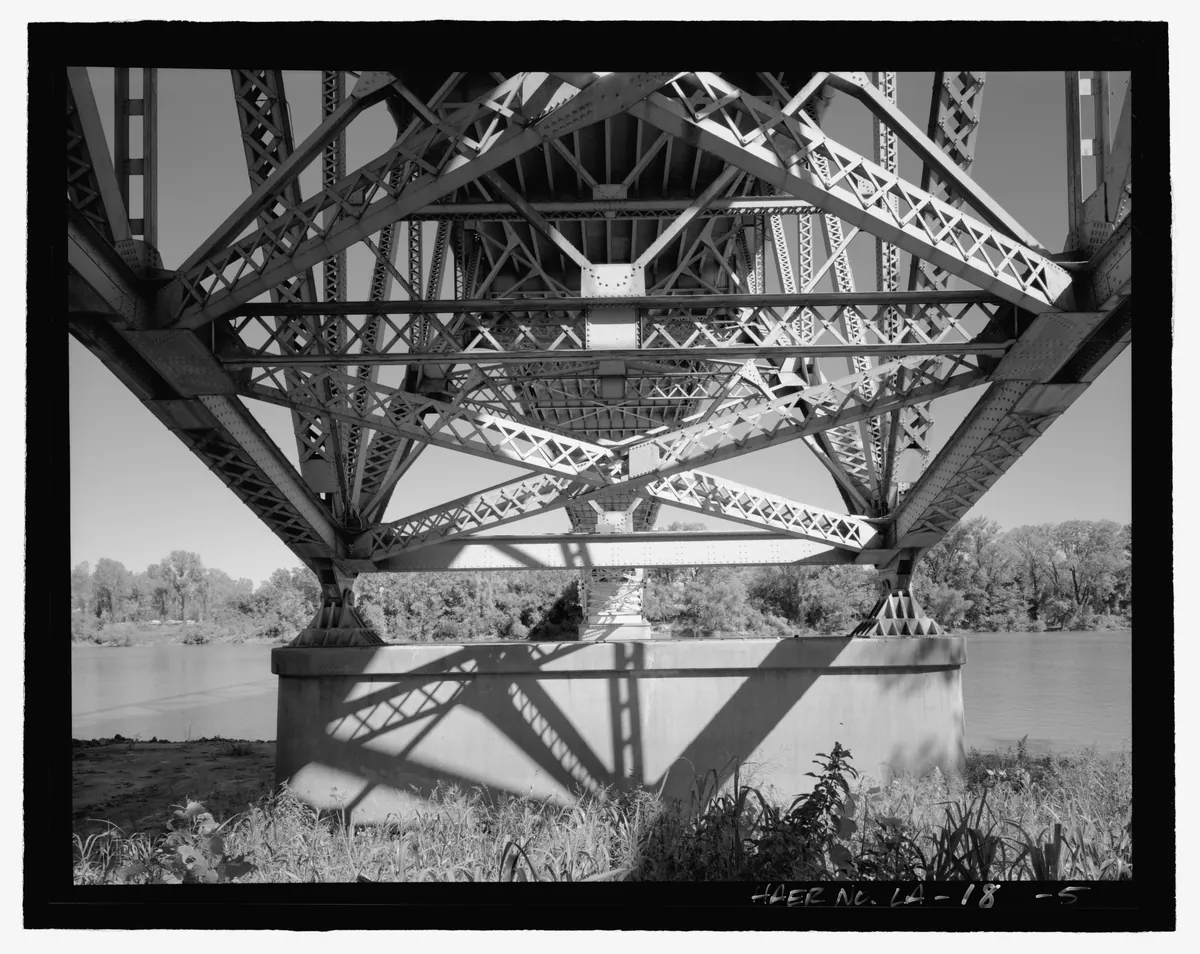 5Architecture·Industrial·NRHPTexas Street Bridge
A steel cantilever span crosses the Red River on the strength of its 1933 engineering, joining downtown Shreveport to Bossier City. Named for Governors Huey Long and Oscar Allen, it's also called the Long-Allen Bridge — a mark of the political machinery that built Louisiana's public works in the Depression. The structure is walkable, and the pedestrian crossing offers unobstructed views of the Red River below and both downtowns at either end. Listed on the National Register of Historic Places, it remains a working bridge, holding the weight of through traffic and foot traffic alike. If you want to feel how two cities became one urban fabric, walk it.