Kisatchie is the only national forest in Louisiana, and the Pine Hills are the only place in the state where the ground actually rises — sandstone outcrops the rest of the coastal plain doesn't have. The Longleaf Vista loop crosses 1.5 miles of restored longleaf pine, the species that once covered 90 million acres of the South and was logged down to less than three percent. The Caroline Dormon Trail runs 10.5 miles through the forest she lobbied Washington to create in 1930 — the first woman forester hired by the U.S. Forest Service. Her work is the trail.
The route
 1Nature & Parks·NaturalKisatchie National Forest
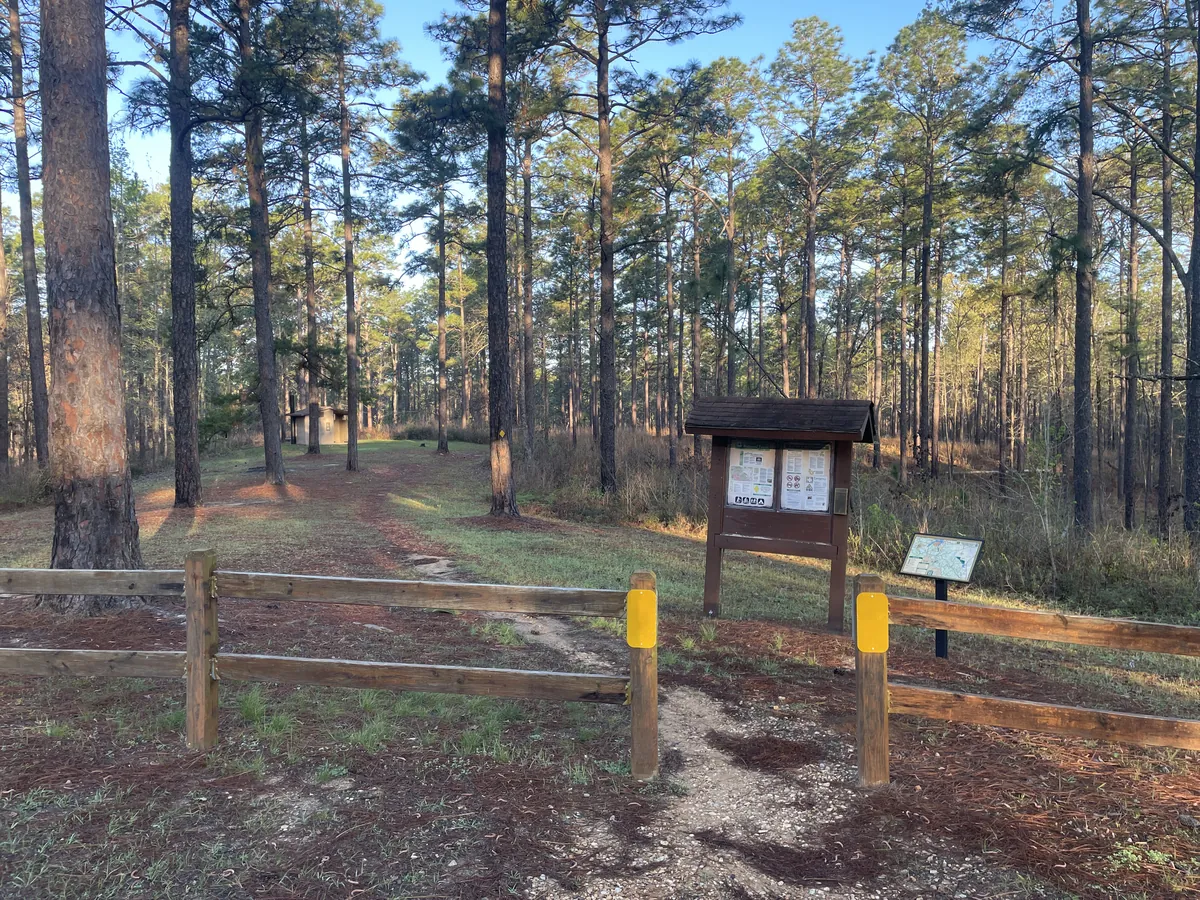
Louisiana logged itself nearly bare in the early twentieth century. Mill towns chewed through longleaf pine forest at a pace that left hillsides skeletal, creeks choked with slash, the ground too poor to farm. In 1930, the federal government drew a line around 604,000 acres of cutover land across seven parishes and called it Kisatchie — the state's only national forest. The name comes from the Kichai, a tribe of the Caddo Confederacy. What the Civilian Conservation Corps replanted in the 1930s has had ninety years to knit itself back together. More than half the acreage now holds longleaf pine and flatwoods, ecosystems nearly extinct across the South. The forest protects hillside seepage bogs, calcareous prairie fragments — the Kieffer prairie's 769 acres are part of the fewer than one thousand acres of that habitat type left in Louisiana — and sandstone bluffs. Biologists count 155 bird species, 48 mammal species, 56 reptile and 30 amphibian species. The red-cockaded woodpecker nests here. The Louisiana black bear moves through. Pale pitcher plants wait in the bogs. The Wild Azalea Trail runs 26.2 miles through the forest, the longest continuous hiking trail in the state. Kisatchie Bayou cuts clear water over rock, forming Kisatchie Falls — one of the few waterfalls in Louisiana and the only Class II rapids. Wolf Rock Cave, a 70-foot above-ground overhang beside Bundick Creek, is the only known cave in the state. The 8,700-acre Kisatchie Hills Wilderness is federally designated roadless ground, one of three such areas in Louisiana. Hit the Wild Azalea Trail in March for peak bloom. Bring a paper map; cell service is spotty. The forest has more than 40 developed recreation sites and over 100 miles of trail for hiking, biking, and horseback riding. What you're walking through isn't original — it's what grew back after the cut. That's the story.
 2Nature & Parks·ModernLongleaf Vista Interpretive Trail
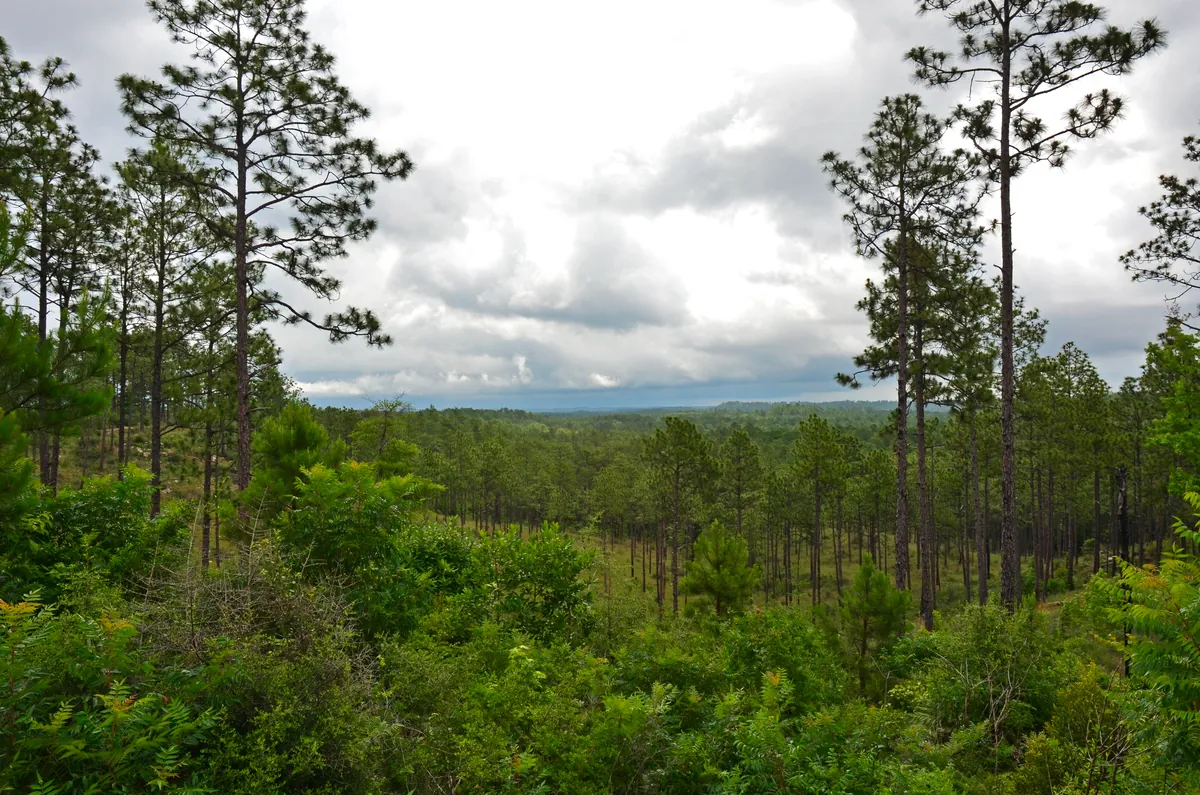
A 1.5-mile loop that climbs 164 feet — topography Louisiana doesn't usually offer. The trail winds through longleaf pine, and at the summit, a stone gazebo frames views across the Kisatchie Hills Wilderness. The elevation gain is enough to feel in your legs, enough to make the vista at the top feel earned. The red-cockaded woodpecker nests here, excavating cavities in living pine. The species is particular: it needs mature longleaf stands, living heartwood soft enough to carve but sound enough to shelter. The fact that they're here now means the forest has recovered enough to support them. The trailhead has parking and restrooms. The path is paved. You reach it from I-49 exit 119, then Forest Highway 59. The gazebo at the high point is stone — built to last, built to frame what you came to see. Go for the climb, stay for the quiet at the top, and watch for woodpeckers working the bark on your way back down.
- 3Nature & Parks·ModernCaroline Dormon Trail
Caroline Dormon spent her career naming what grew in Louisiana pine forests — cataloging native plants, tracking migratory birds, mapping what was worth keeping. In 1930, she helped establish Kisatchie National Forest, the state's only national forest, and became the first woman employed by the U.S. Forest Service. The work was taxonomic and political both: convincing the federal government that cutover longleaf pine country was worth protecting required knowing exactly what lived there. The 10.5-mile trail named for her runs through that forest now. It's open to hikers, horseback riders, and cyclists — multi-use in the way Forest Service trails often are, built for whoever shows up. The forest Dormon helped protect in 1930 is still here, and the trail moves through it without trying to explain too much. She died in 1971. What she identified and argued for remains.
 4Museum·1910s–1940s·NRHPSouthern Forest Heritage Museum
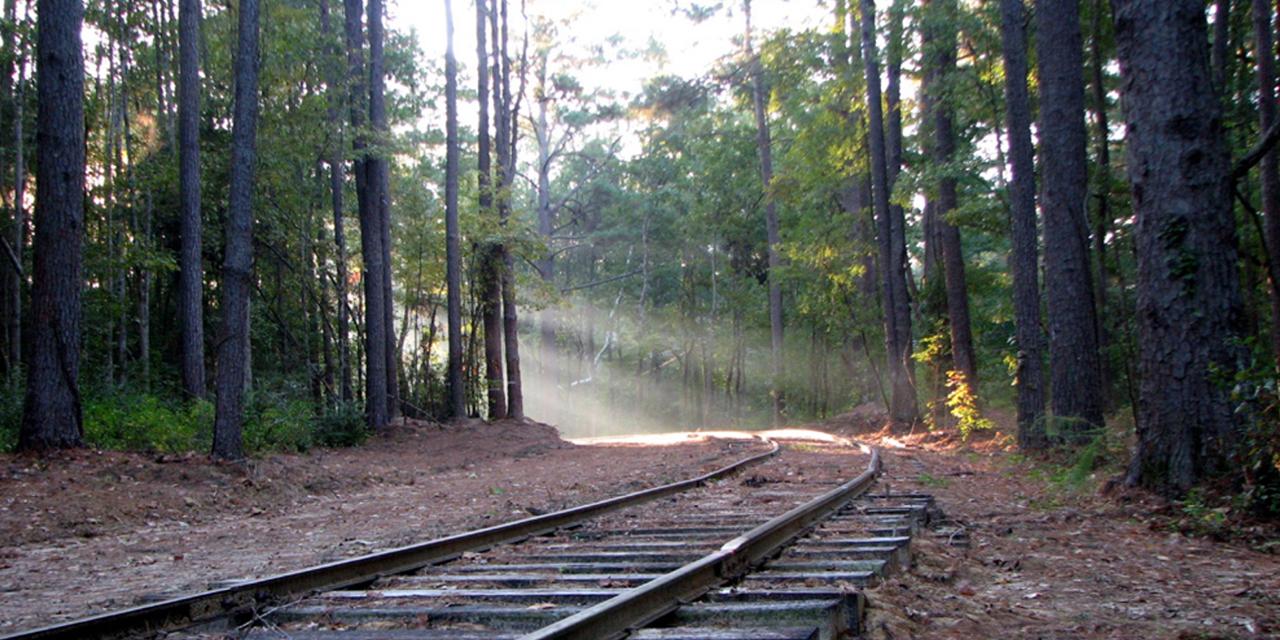
On Valentine's Day 1969, the sawmill closed. The workers left their lunch pails on the bench. Nobody came back for them. What remains is fifty-seven acres of machinery that processed longleaf pine — the sawmill, planer mill, machine shop, commissary, and remnants of the company town that ran on the sound of those blades. The complex is on the National Register of Historic Places at the National Level of Significance. The timber cut here was shipped to New Orleans and built Higgins landing craft during WWII. The machinery that processed those trees still stands. Three historic locomotives are on site, including RR&G #106, under active restoration. You can ride the 1937 Doodlebug railcar for six dollars — a loop tour through the grounds on the same rails that hauled the timber out. The railcar runs, the engines turn over, the commissary is still there. You walk through what stopped but did not fall down. Open Wednesday through Saturday, nine to four. Adults eight dollars, children six to twelve pay five, under five free. Seventy-seven Longleaf Road in Long Leaf, three miles south of Forest Hill off US-165. Go for the Doodlebug, stay because the lunch pails are still there.