April 21, 1927. The Mississippi had been rising on the Delta for weeks. National Guardsmen and conscripted plantation workers — most of them Black — had been working in the rain to raise and reinforce the levees north of Greenville. Around eight in the morning the levee at Mounds Landing, about a dozen miles upstream of Greenville, gave way. The crevasse opened three-quarters of a mile wide and ran for days. The water came down across the Delta thirty feet deep in places.
By the time it finished, the 1927 flood had drowned twenty-seven thousand square miles, left more than seven hundred thousand people homeless, and put some hundred and eighty-five thousand on the run from the water. About thirteen thousand of them, almost all of them African American, were not evacuated — they were kept on the strips of dry levee, in camps the historians who came later called what they were: concentration camps. Food and water arrived erratically; white women and children were taken off to safety first; the men who had built the levees were ordered to keep building them. The flood became one of the great accelerants of the Black migration out of the South.
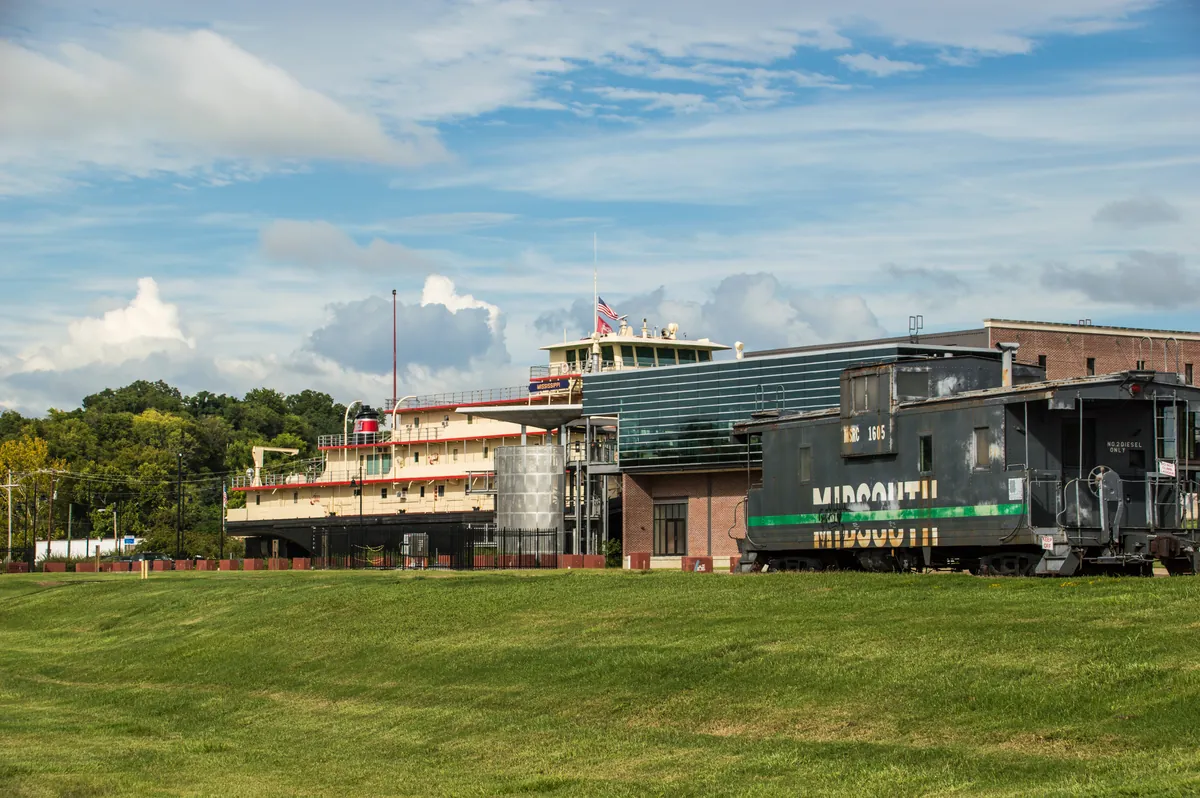
Vicksburg, on its bluff, did not flood. It became the operational center of the response — the Mississippi River Commission was already headquartered there, and the American Red Cross set up its regional command in town. Herbert Hoover, sent by President Coolidge, ran his relief effort from this stretch of the river. The Lower Mississippi River Museum, on Vicksburg's riverfront, still tells the story.
The Mounds Landing crevasse was eventually closed. The levees were rebuilt higher, then rebuilt higher again. The Flood Control Act of 1928 gave the Army Corps the authority and the money to build the modern system. What it could not give back was what 1927 had already taken — and what it had revealed about who gets saved first.