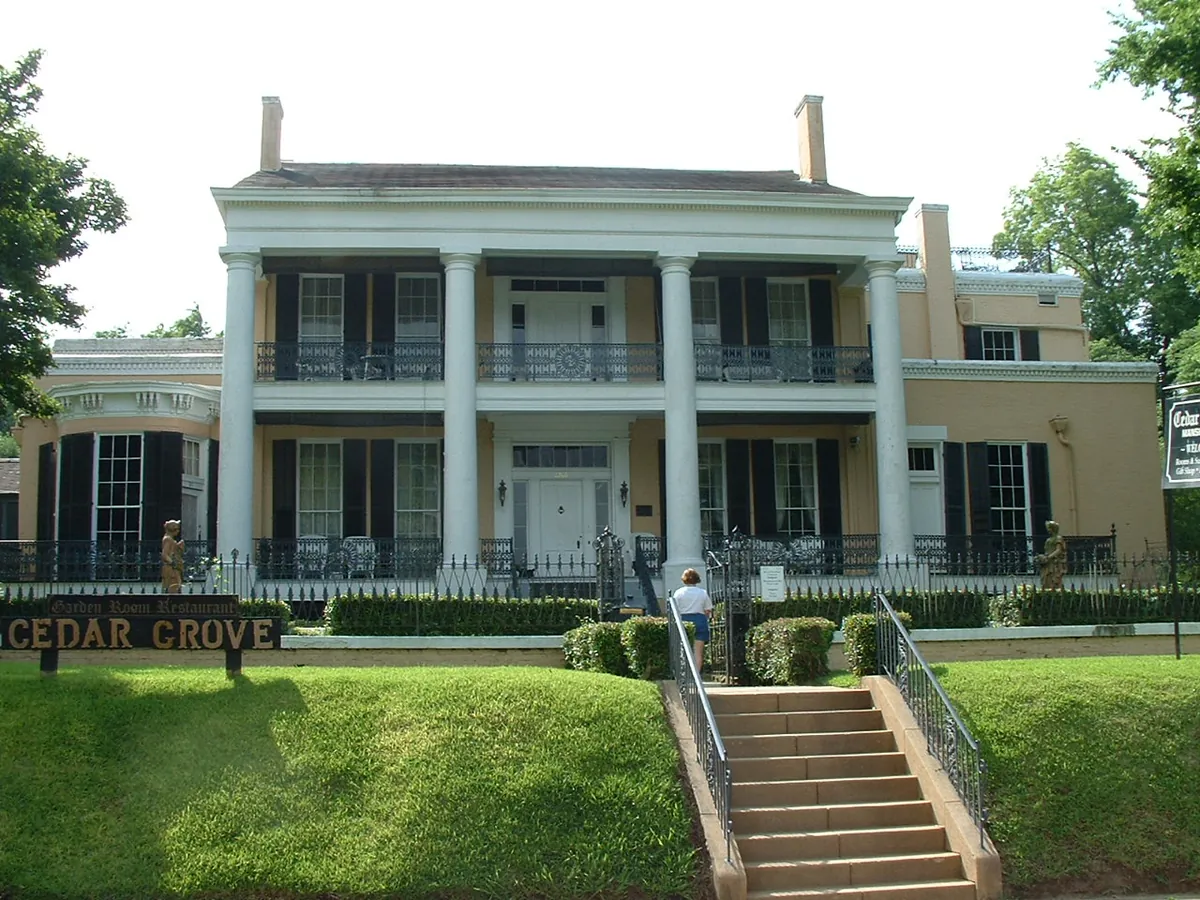
A Union cannonball from 1863 sits embedded in the parlor wall, left exactly where it struck. The shell hit John Alexander Klein's Greek Revival mansion during the war that remade Vicksburg — the Confederate river-port whose July 1863 surrender, alongside Gettysburg, marked the conflict's turning point. Klein built the house in the 1840s with commanding views of the Mississippi, the water that made this city a strategic prize.
The mansion is among the finest surviving examples of Greek Revival architecture in Vicksburg. Upper galleries overlook the river that drew French colonists to these bluffs in 1719, that made fortunes in the antebellum cotton years, that brought Union gunboats within range of parlor walls. The cannonball remains visible, a physical fact left unrepaired for more than a century and a half.
Today Cedar Grove operates as The Inn at Cedar Grove — overnight stays, events, and tours. The mansion is at 2200 Oak Street. Check cedargrovemansion.com for tour and lodging information.
- ·A Union cannonball remains lodged in the parlor wall — left in place since 1863.
- ·Built in the 1840s by John Alexander Klein with commanding river views.
- ·One of the finest surviving Greek Revival mansions in Vicksburg.
- ·Operates as The Inn at Cedar Grove — overnight stays, events, and tours.
- ·Upper galleries overlook the Mississippi River.
- ·Located at 2200 Oak Street. Check cedargrovemansion.com for tour and lodging info.
Memories
Editorial content compiled with AI assistance. Place details verified against public records.