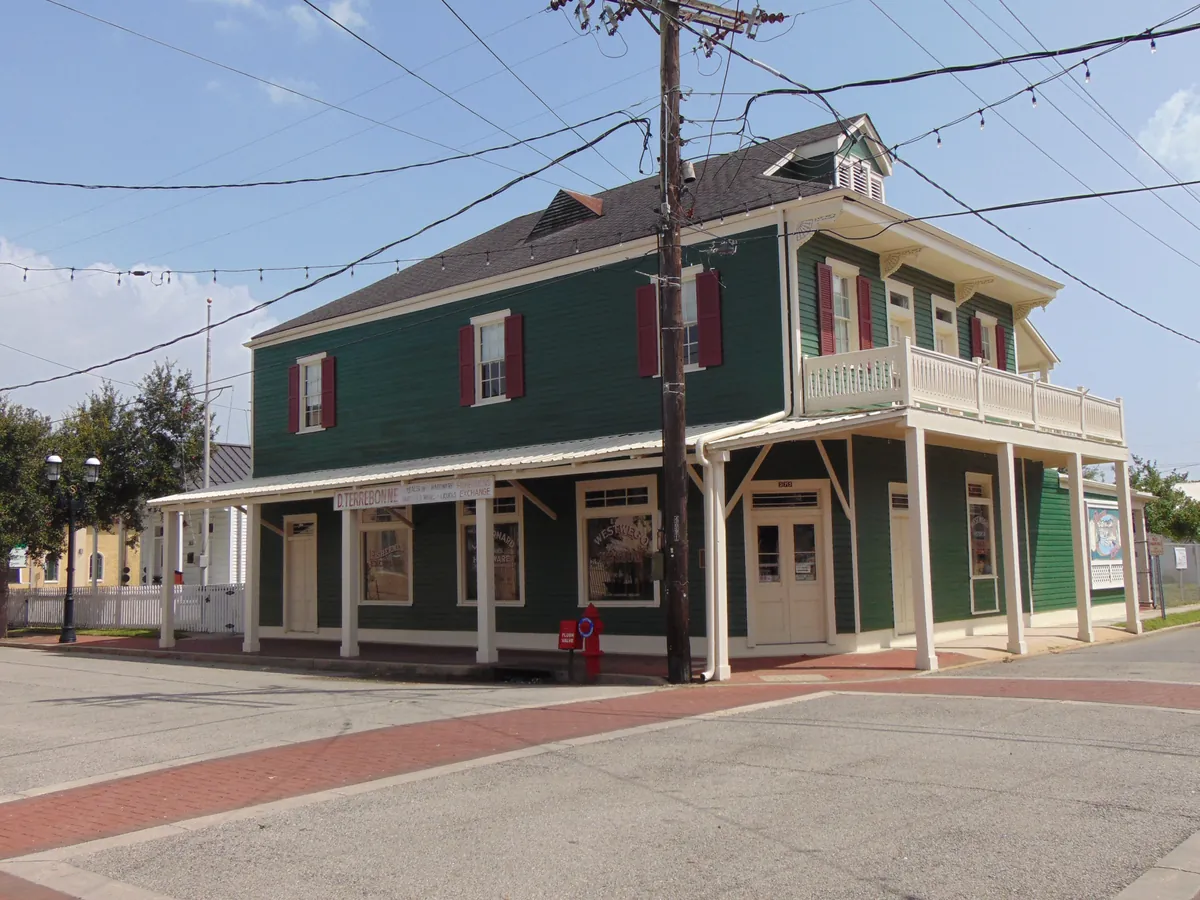
The hardware merchant who built this store in the early 1900s slept upstairs with his family, directly above the inventory. That practical arrangement — shop below, life above — is what the building shows you first. Period furnishings fill the upper quarters. Downstairs, the focus shifts to what made Westwego matter: the processing lines that turned Gulf seafood into canned goods.
By the 1940s, five processors employed 567 people in a town of 5,000. Eighty-three percent of those workers were women. Nearly 60% were Black. Sala Avenue at 2nd Street was the nucleus of the cannery scene — the concentration of labor, of machinery, of output that defined the local economy. The exhibits trace that industrial geography, the work itself, and the people who did it.
The town's name is a railway artifact. "West we go" — the westward terminus. The line stopped here, and the seafood industry rose around the stop.
Admission is free. Hours are limited. Call ahead before you drive out.
- ·Housed in a restored early-1900s hardware store with living quarters.
- ·Documents Westwego's seafood processing industry.
- ·By the 1940s, five processors employed 567 people in a town of 5,000.
- ·83% of processing workers were women, nearly 60% were Black.
- ·Period furnishings show how a merchant family lived above their shop.
- ·Sala Avenue at 2nd Street was the nucleus of the cannery scene.
- ·The name 'Westwego' comes from 'West we go' — the railroad's westward terminus.
- ·Free admission — limited hours, call ahead.
Memories
Editorial content compiled with AI assistance. Place details verified against public records.