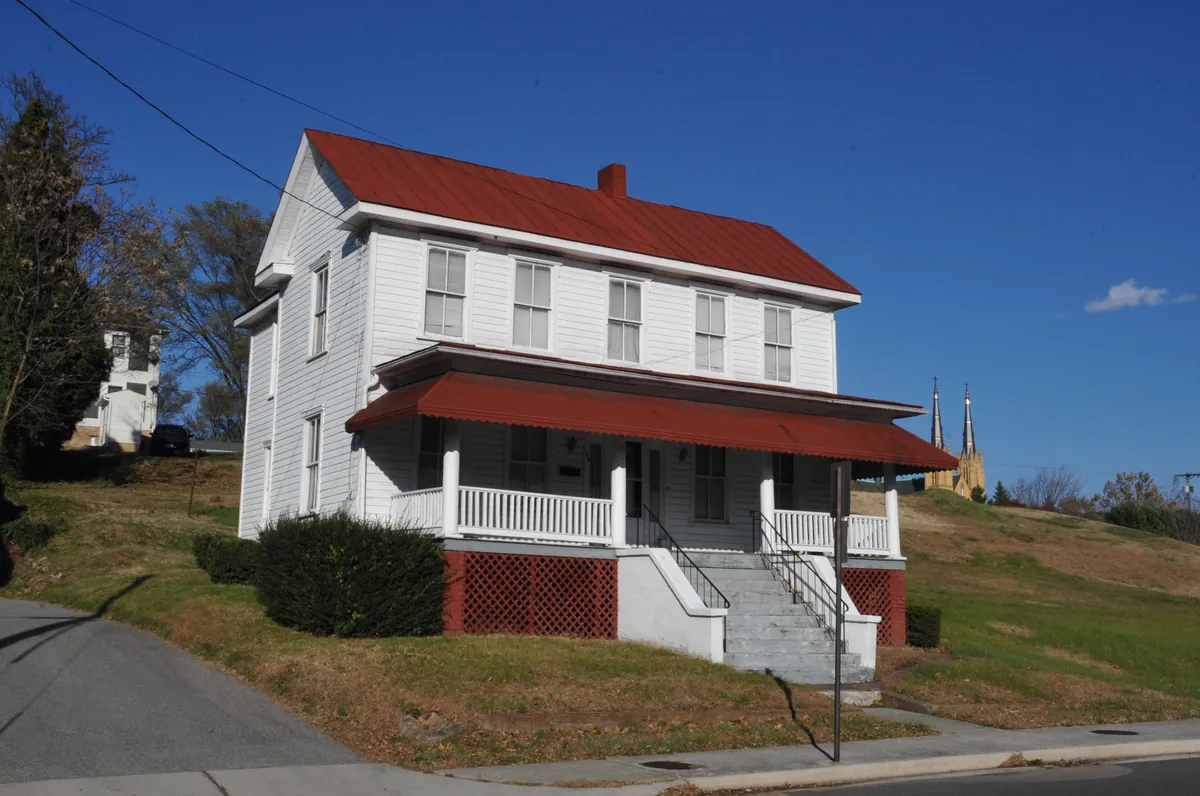
Gainsboro was Roanoke before Roanoke had that name — a neighborhood that predates the city's 1882 incorporation by half a century and was the commercial and cultural center of Black life in the valley. Henry Street with its ballrooms and recording studios. Porters' rooming houses along the Norfolk & Western yards. The Gainsboro Branch Library, one of the first Carnegie libraries in the South to serve Black patrons. The Burrell Memorial Hospital. Everything that makes a neighborhood a neighborhood.
In 1955 the city's Redevelopment and Housing Authority designated it blighted and started clearing it with federal urban-renewal money. Over twenty years, roughly fifteen hundred buildings were demolished — churches, the hospital campus, entire blocks of shotgun houses, the First Baptist and Ebenezer A.M.E. complexes. The interstate came through. A convention center and hotel complex were built on top of what Black Roanoke had been. The Gainsboro Branch Library still operates. The Harrison Museum preserves what can be preserved on paper. What remains is a perimeter of what survived — the same story that played out in Black neighborhoods in city after city across America in the 1950s and 1960s.
What stood here
2 surviving images.
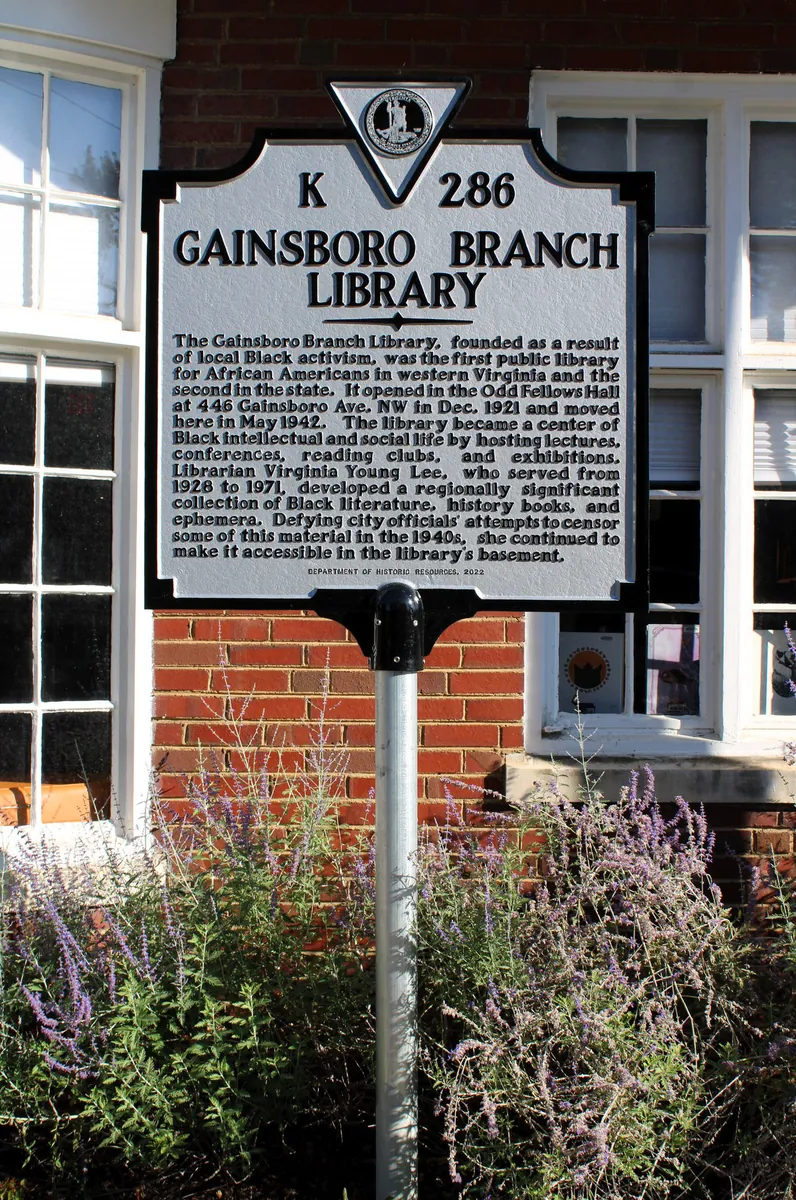
Gainsboro Branch Library — one of the first Carnegie libraries in the South serving African-American patrons
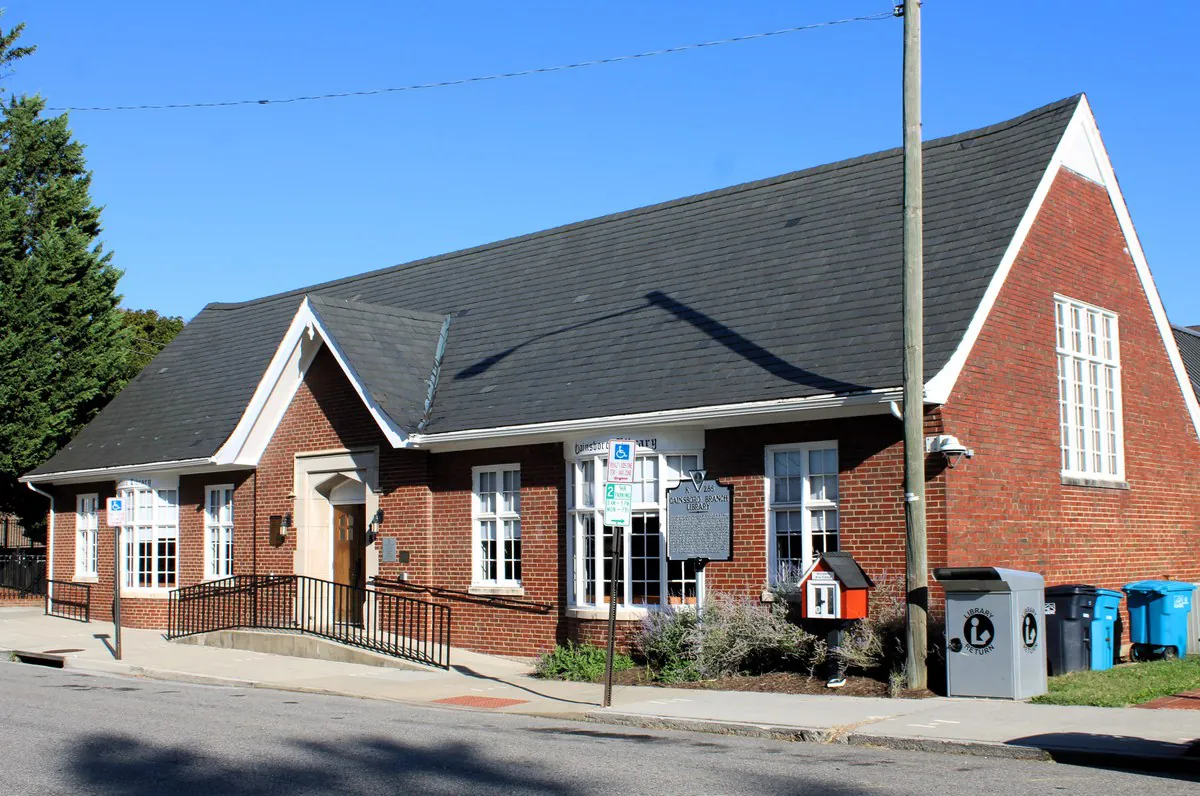
Gainsboro Branch of the Roanoke City Public Library, 2023