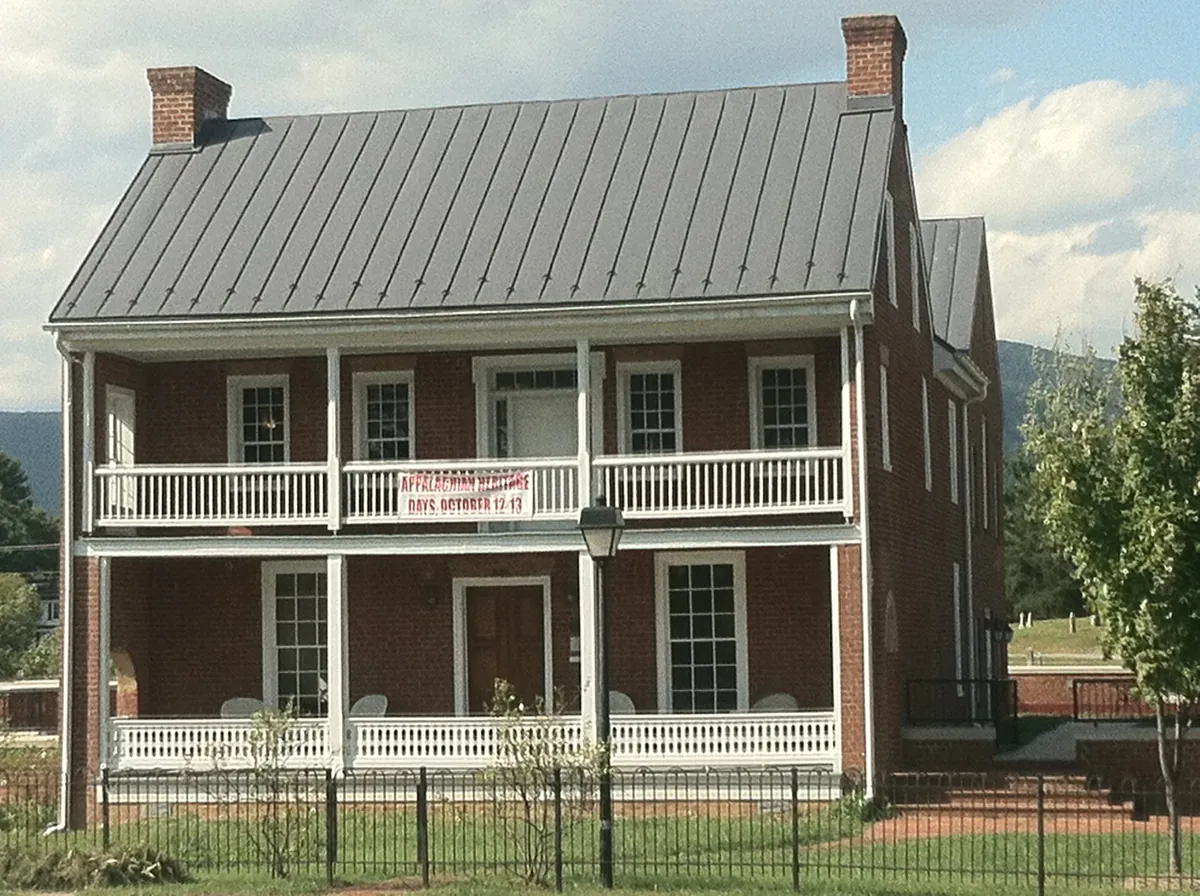
The Williams-Brown House sits on Salem's Main Street, built in 1845 when the Roanoke Valley was still a scatter of settlements along wagon roads. The house — frame and brick — is now the Salem Museum, holding what survives of the valley's deeper past. Before the Scotch-Irish and German farmers arrived in the 18th and early 19th centuries, the Tutelo, a Siouan-speaking people, lived here. European settlement gradually pushed them out. The museum's collections start with that Tutelo heritage and move forward through the decades when the valley became a crossroads: the Virginia and Tennessee Railroad arrived in 1852, Roanoke County was carved out in 1838, and by 1882 the Norfolk and Western Railway chose Big Lick — a small town east of here — as its headquarters. Within two years, Big Lick had become the City of Roanoke, its population growing by twenty-two times in the 1880s.
The house is on the National Register of Historic Places. The museum runs rotating exhibits and holds special events, but its real work is holding the formative facts of a place most people drive past on I-81. You can walk through in forty-five minutes. Free admission, open Tuesday through Saturday. The docent usually remembers something not in the exhibit text.
- ·Housed in the 1845 Williams-Brown House.
- ·Tutelo tribal heritage — original Siouan-speaking inhabitants.
- ·Rotating exhibits and special events.
- ·On the National Register of Historic Places.
Memories
Editorial content compiled with AI assistance. Place details verified against public records.