Uncle Sam was the most complete plantation complex of its kind left in the South — a unified set of Greek Revival buildings, the big house and its dependencies, built between 1829 and 1843 on the river at Convent. Architectural historians considered it close to perfect: not one grand house but a whole working ensemble that had survived intact into the twentieth century.
In 1940 the Pontchartrain Levee District decided the only fix for a failing stretch of Mississippi River levee was to build a new one straight over the site. Every structure was demolished. As the wrecking was nearly done, on March 12, 1940, a telegram reached the Army Corps in New Orleans from the National Park Service: stop, this might deserve National Monument status. It was too late — the buildings were already gone. The Historic American Buildings Survey had measured and drawn the place just before the end; those drawings are most of what remains. The rest is more concrete: three hundred thousand of Uncle Sam's bricks were carried a few miles downriver and built into the restoration of Evergreen Plantation, which still stands. You can go see Uncle Sam. It is holding up another house's walls.
What stood here
4 surviving images.
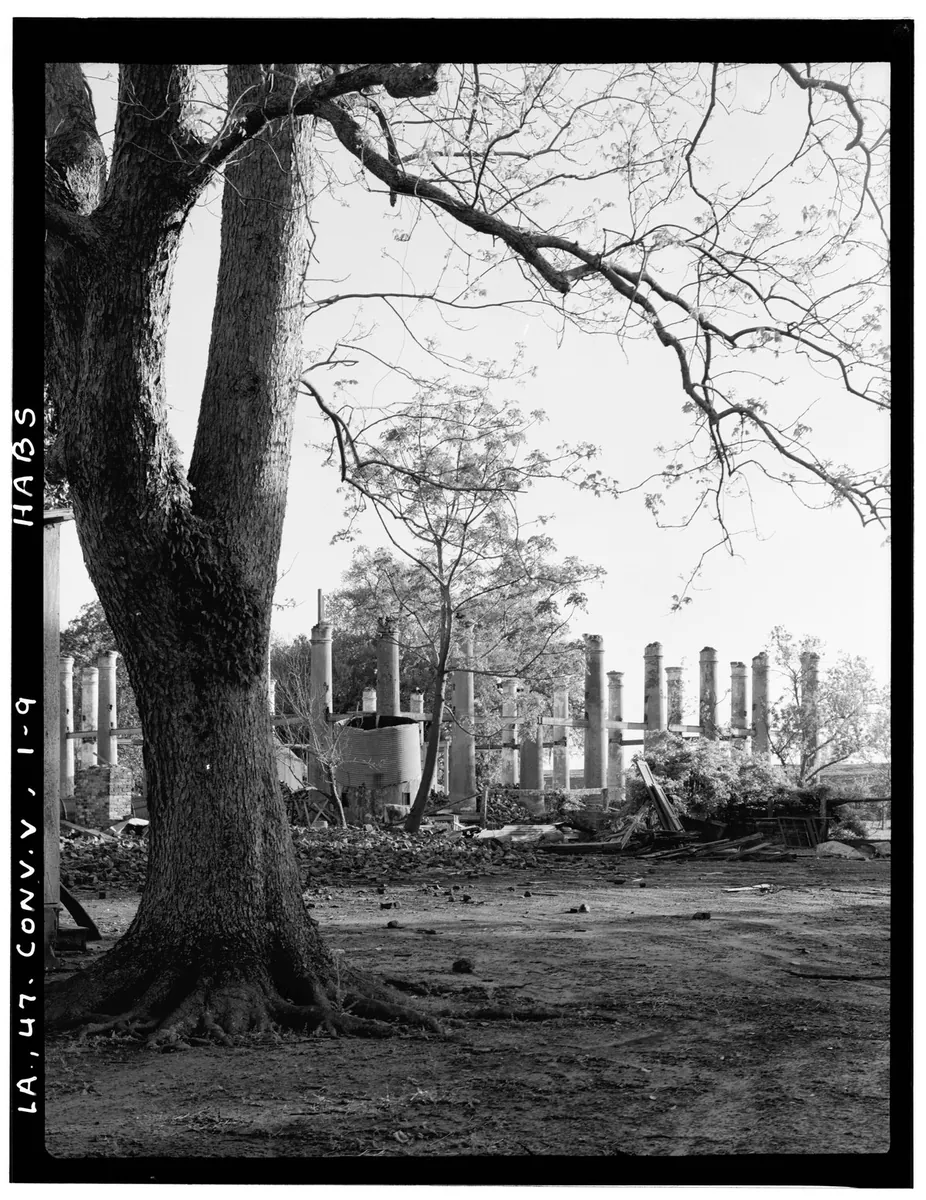
The main house from the northeast — Richard Koch's HABS photograph, March 1940, made as the demolition crews were already at work
Historic American Buildings Survey (Library of Congress, Public Domain)
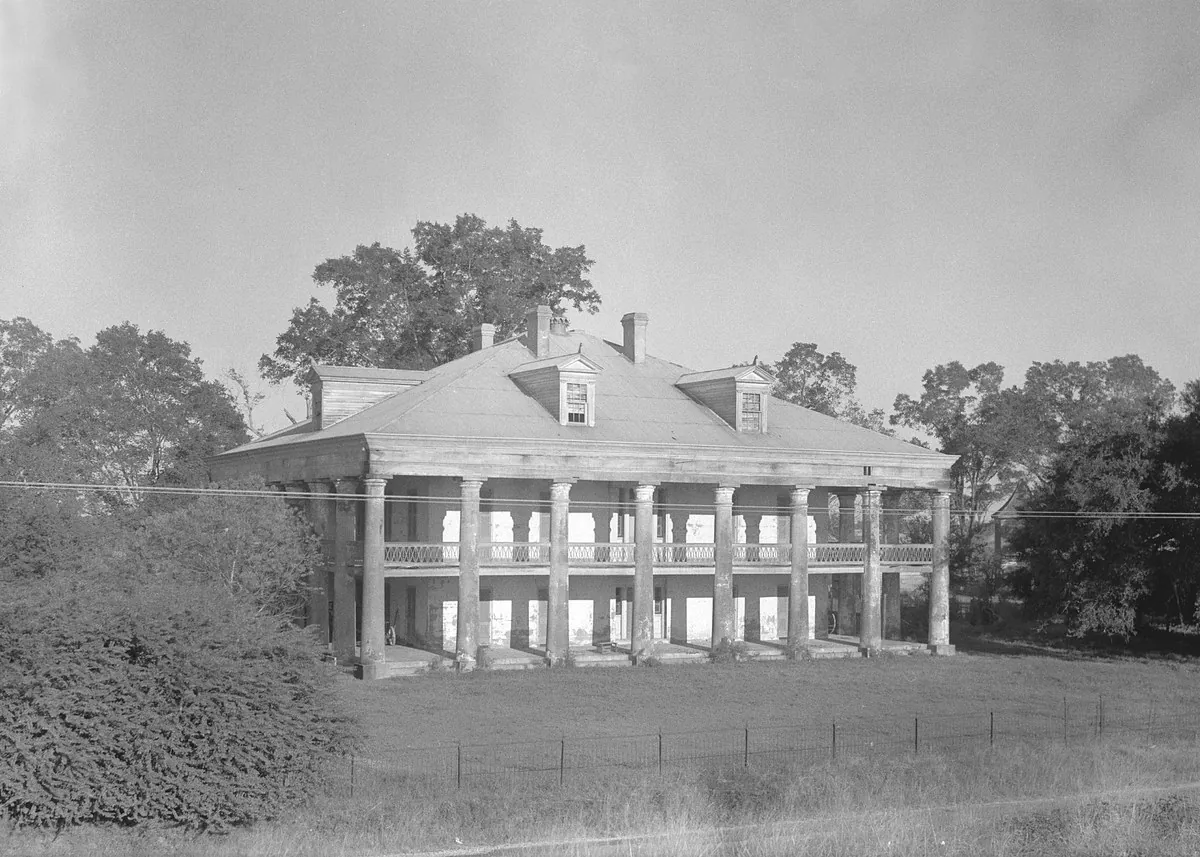
Uncle Sam Plantation — the Greek Revival complex intact, shortly before it was razed for the levee
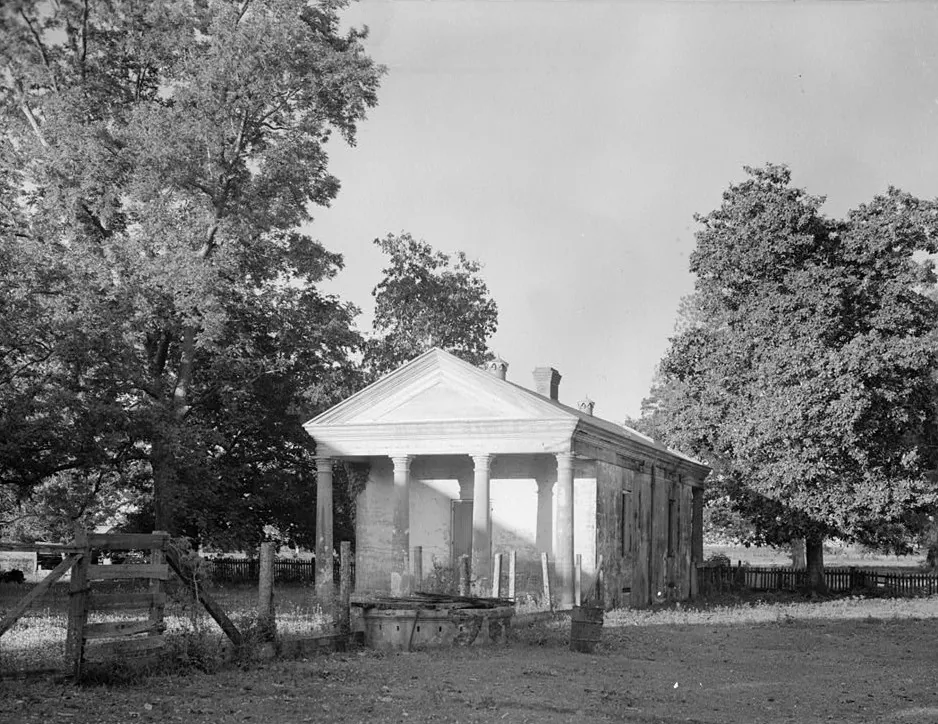
An outbuilding of the Uncle Sam complex — the unity of the ensemble is the thing that was lost
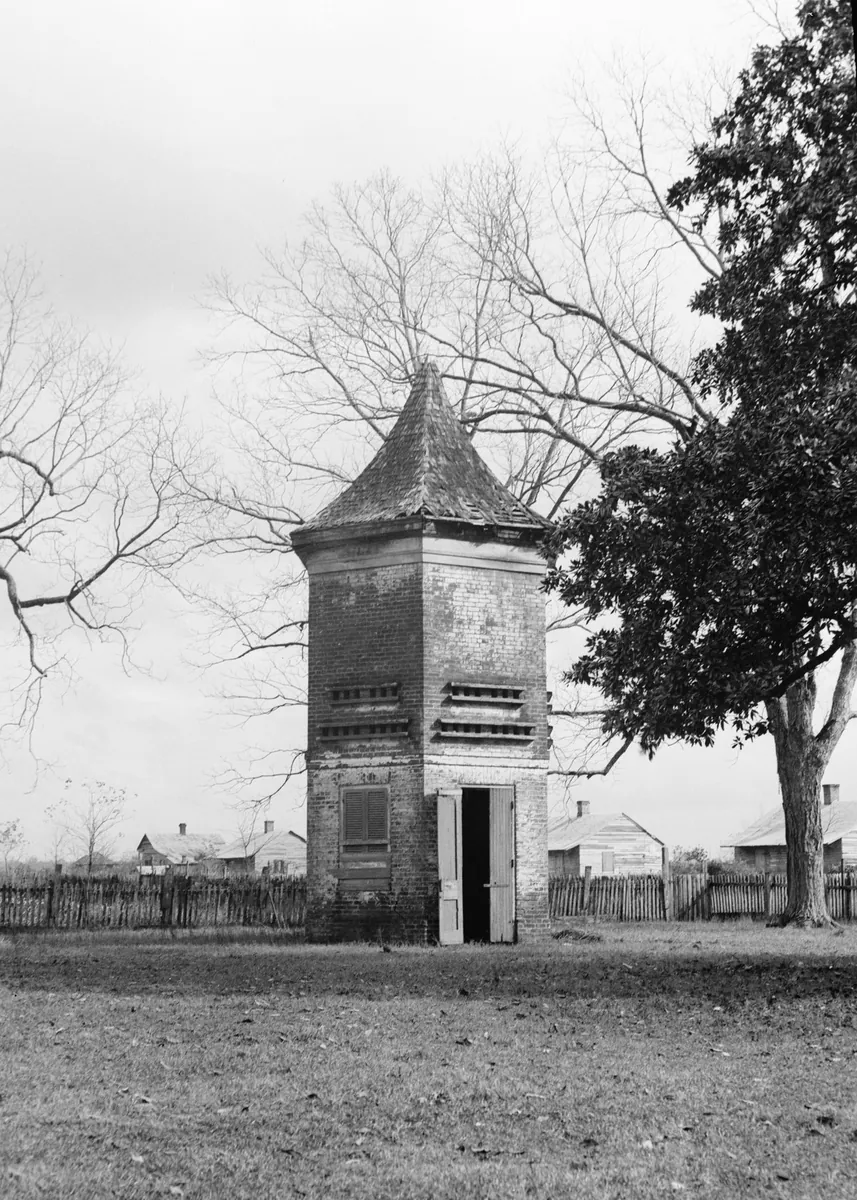
Uncle Sam Plantation, St. James Parish — among the last images before the river levee took the site in 1940