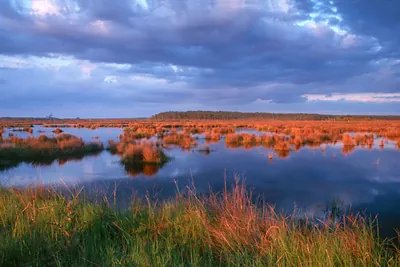
The refuge protects 80,000 acres of pine savanna, hardwood bottoms, and marsh along Lake Pontchartrain's northern shore. Lake Pontchartrain itself is an estuary — not truly a lake despite the name — covering 630 square miles and connected to the Gulf of Mexico via the Rigolets strait and Chef Menteur Pass. The lake was formed 4,000 to 2,600 years ago as the evolving Mississippi River Delta built its southern and eastern shorelines with alluvial deposits. The Pontchartrain Basin comprises more than 125,000 acres of wetland, including bottomland hardwoods and cypress swamps, along with a complex mixture of fresh, intermediate, and brackish marsh.
Eight endangered or threatened bird species live here, including the red-cockaded woodpecker. The woodpecker requires old-growth longleaf pine with active red-heart fungus — a specific dependency that makes habitat like this irreplaceable.
The Boy Scout boardwalk offers a short, kid-friendly route into the refuge ecosystem. Early morning in spring is best for birding. Bring binoculars and bug spray.
- ·Big Branch Marsh NWR protects 80,000 acres of pine savanna, hardwood bottoms, and marsh.
- ·The refuge hosts eight endangered or threatened bird species, including the red-cockaded woodpecker.
- ·Red-cockaded woodpeckers require old-growth longleaf pine with active red-heart fungus.
- ·The Boy Scout boardwalk is a short, kid-friendly introduction to the refuge ecosystem.
- ·Visitor tip: early morning in spring is best for birding — bring binoculars and bug spray.
Memories
Editorial content compiled with AI assistance. Place details verified against public records.