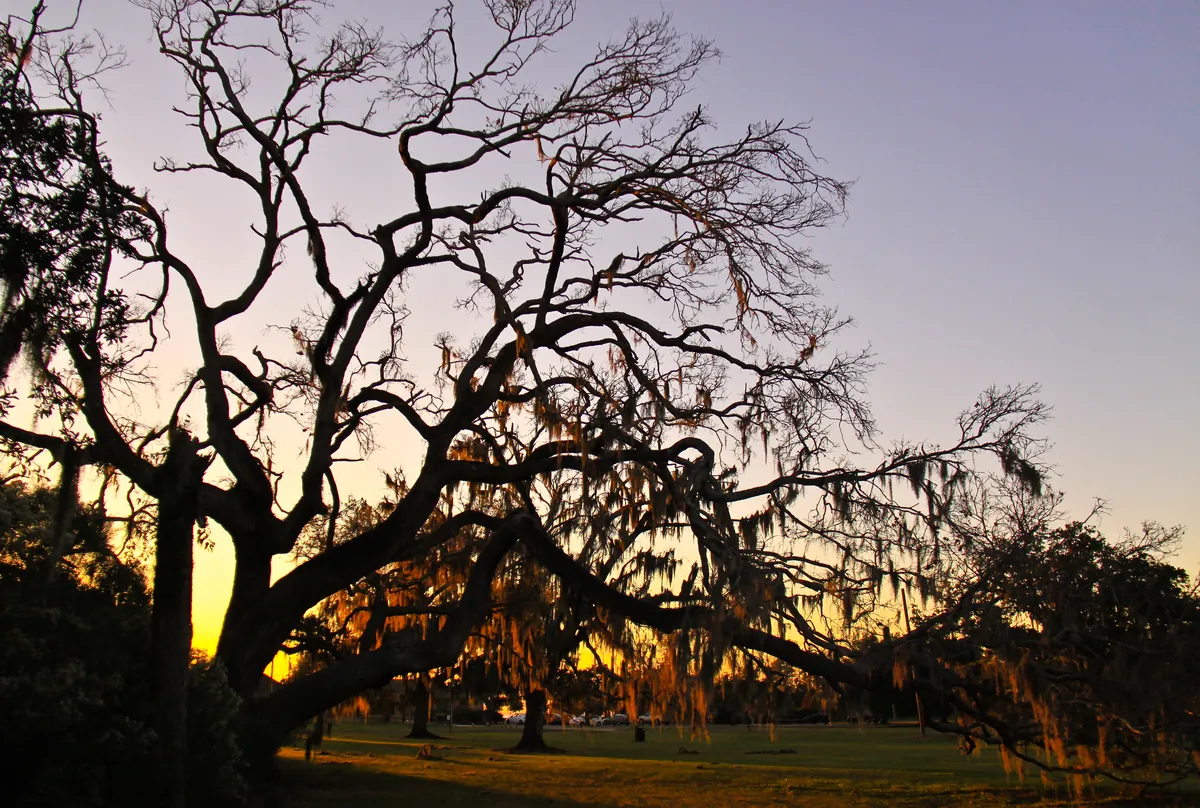
Bernard de Marigny named his sugar plantation for the Fontainebleau forest near Paris when he built here in 1829, but the 2,800-acre shoreline he claimed had already held human life for 2,400 years. The Tchefuncte people built on this ground from 600 BC, long before Lake Pontchartrain earned its own borrowed French name in 1699. The lake is an estuary, not a lake—630 square miles of brackish water fed by five rivers, connected to the Gulf of Mexico through narrow passes that allow small tides to pulse through. It formed 4,000 to 2,600 years ago as the Mississippi Delta built its southern and eastern shores with sediment.
What remains of Marigny's plantation are the brick ruins of the 19th-century sugar mill, visible near the park entrance. The site became Fontainebleau State Park and joined the National Register of Historic Places. It is now one of the North Shore's most popular camping and swimming destinations. If you want a cabin or campsite for a summer weekend, reserve months ahead—the park books out quickly. The draw is what it always was: a place where the estuary meets solid ground, where people have gathered for as long as people have been here.
- ·Fontainebleau State Park sits on a lakeshore inhabited by the Tchefuncte culture from 600 BC.
- ·Bernard de Marigny established a sugar plantation here in 1829, naming it for a French royal forest.
- ·Brick ruins of the plantation's 19th-century sugar mill remain visible near the park entrance.
- ·The 2,800-acre park is one of the North Shore's most popular camping and swimming destinations.
- ·Visitor tip: reserve cabins or campsites months ahead — summer weekends book out quickly.
Memories
Editorial content compiled with AI assistance. Place details verified against public records.