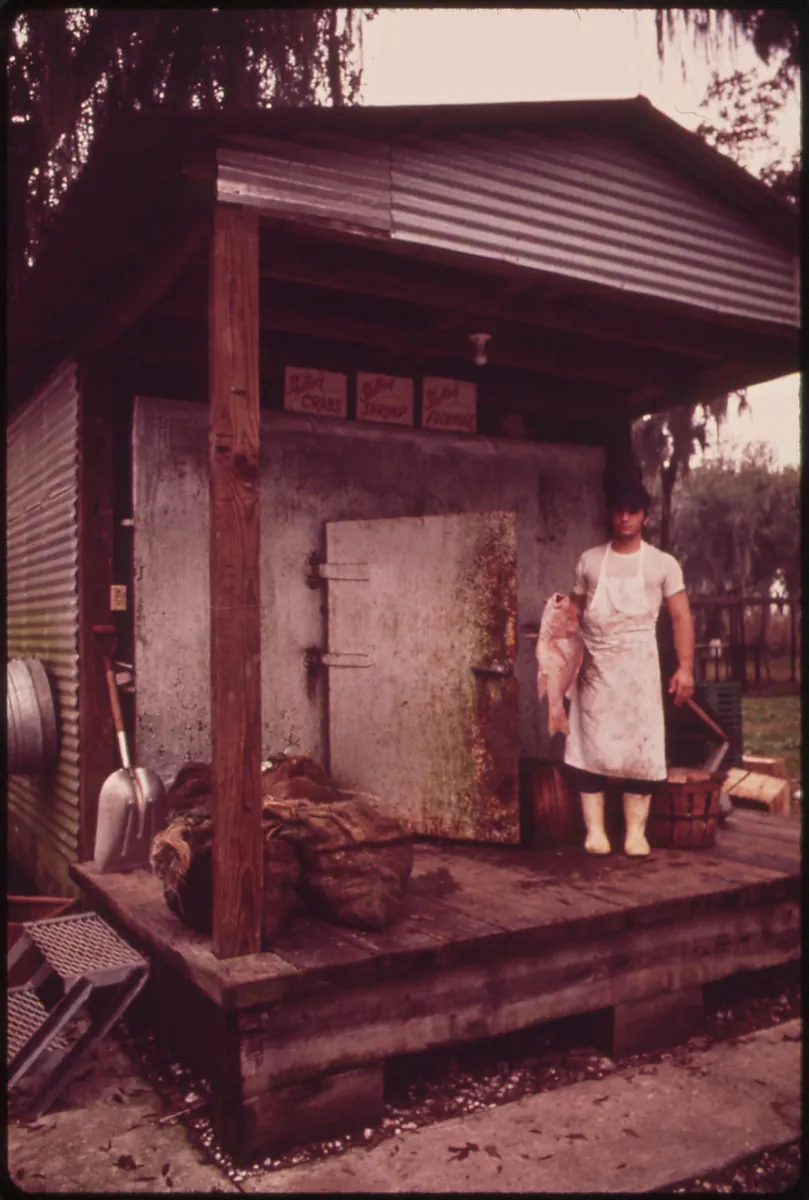
New Orleans sits at the convergence of three seafood ecosystems: the Gulf of Mexico, Lake Pontchartrain, and the bayou-marsh network that connects the city to the coast. The city eats more seafood per capita than any major American city. Louisiana produces more shrimp, crawfish, and oysters than any other U.S. state.
Vietnamese fishermen in eastern New Orleans, Croatian oyster families in Plaquemines Parish, and Cajun shrimpers from Barataria all feed the same market. The French Market on Decatur Street has sold Gulf seafood continuously since 1791.
The bayous themselves run through the city's formation. Bayou Bienvenue, 12.1 miles long, runs along the border between Orleans Parish and St. Bernard Parish. Archaeological digs have yielded evidence that indigenous peoples inhabited the area as far back as 400 A.D. The bayou gained its name during the initial French occupation: "bayou bienvenue" is French for "welcome bayou."
By the 1690s, French explorers and traders arrived in the area, making settlements amid Native American villages along the bayous. The French built a small fort at the mouth of Bayou St. John in 1701. New Orleans was founded in 1718 by the French under Louisiana governor Jean-Baptiste Le Moyne de Bienville, who selected the site partly because it was adjacent to the trading route and portage between the Mississippi and Lake Pontchartrain via Bayou St. John.
Bayou Bienvenue became home to a community of Maroons, self-described liberated enslaved people who lived in the wetlands. Liberated enslaved people, especially of African origin, would escape into the wetlands because of the similarity to the landscapes of their origins. Maroons lived alongside Indigenous communities, like the Chitimacha and Choctaw Tribes, and Acadians. These societies developed techniques for living in the wetland environment without damaging it, including raised housing, small watercraft like pirogues, and a cuisine of alligator and turtles.
- ·New Orleans sits at the convergence of three seafood ecosystems: the Gulf of Mexico, Lake Pontchartrain, and the bayou-marsh network.
- ·The city eats more seafood per capita than any major American city.
- ·Vietnamese fishermen in eastern New Orleans, Croatian oyster families in Plaquemines Parish, and Cajun shrimpers from Barataria all feed the same market.
- ·Louisiana produces more shrimp, crawfish, and oysters than any other U.S. state.
- ·The French Market on Decatur Street has sold Gulf seafood continuously since 1791.
Memories
Editorial content compiled with AI assistance. Place details verified against public records.