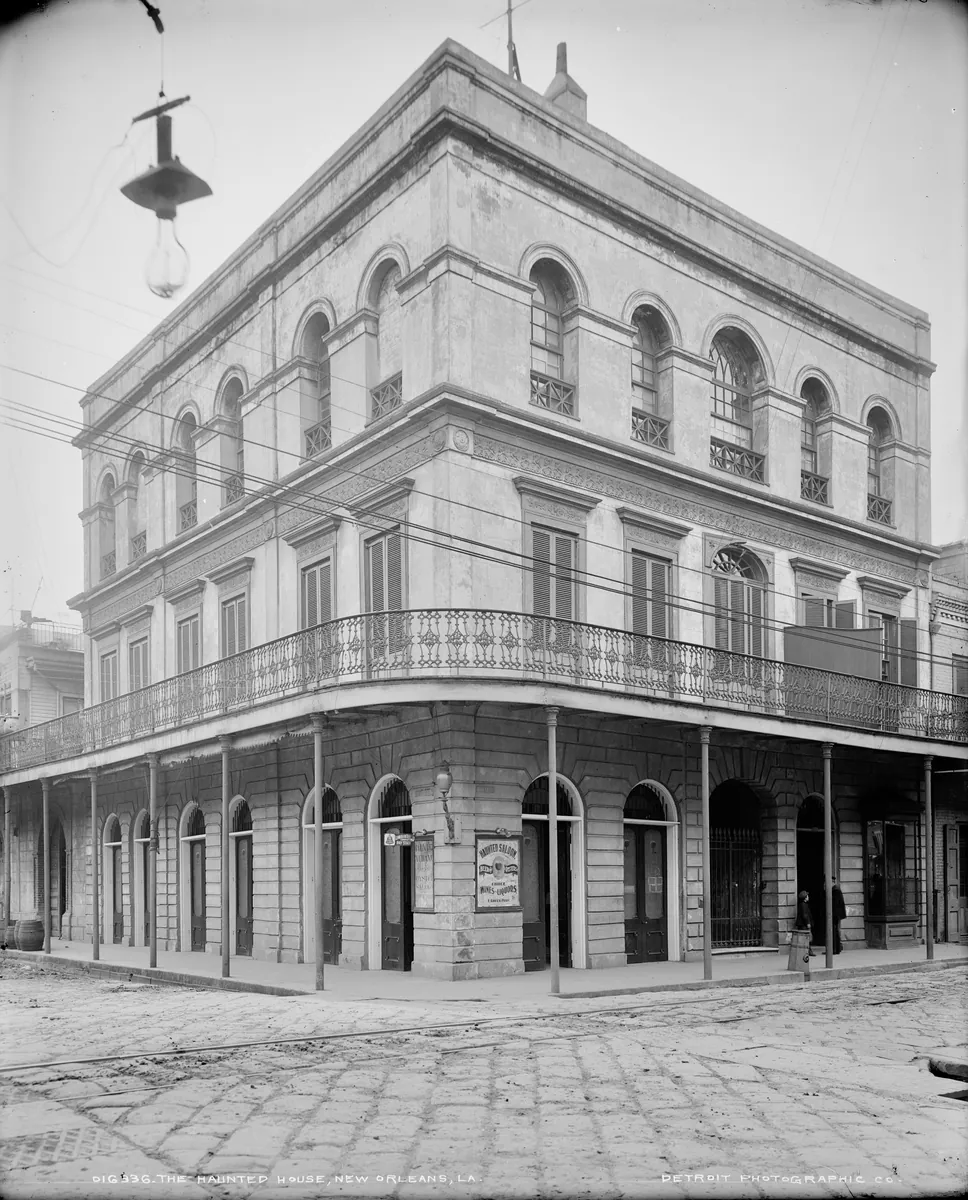
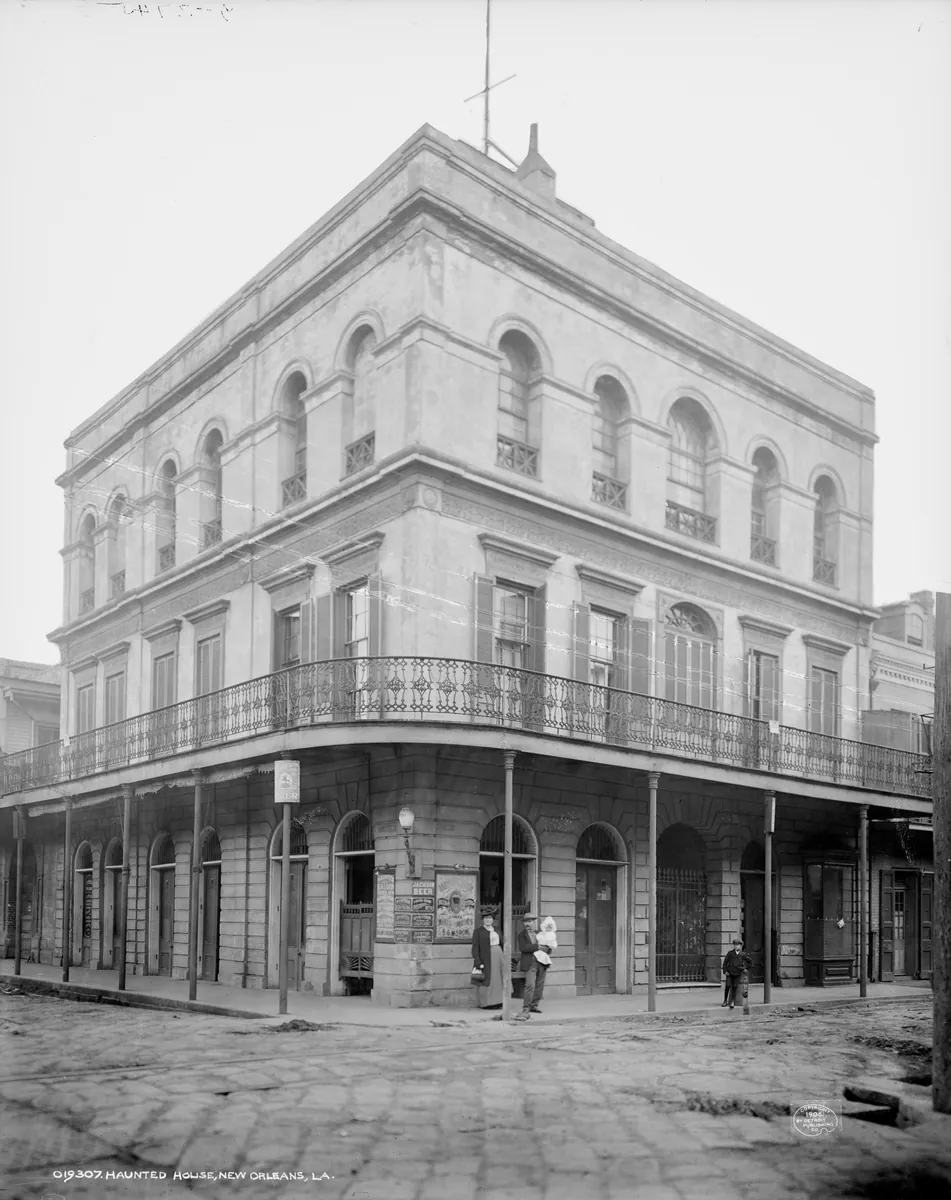
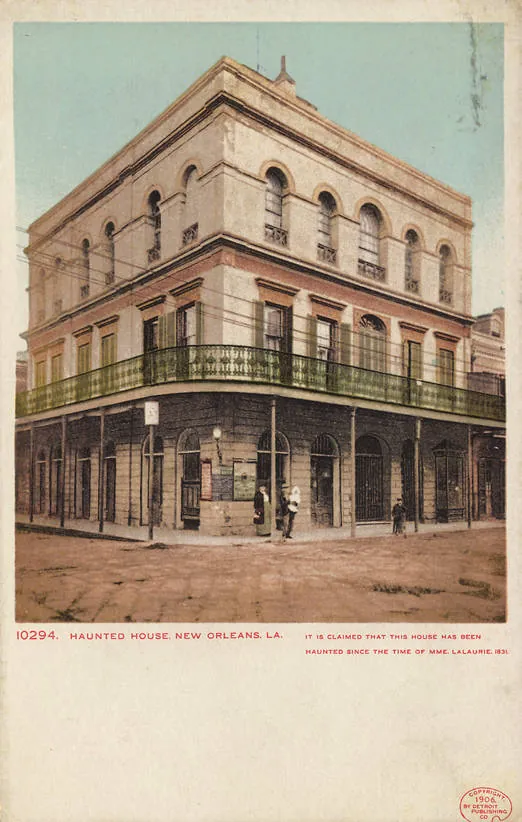
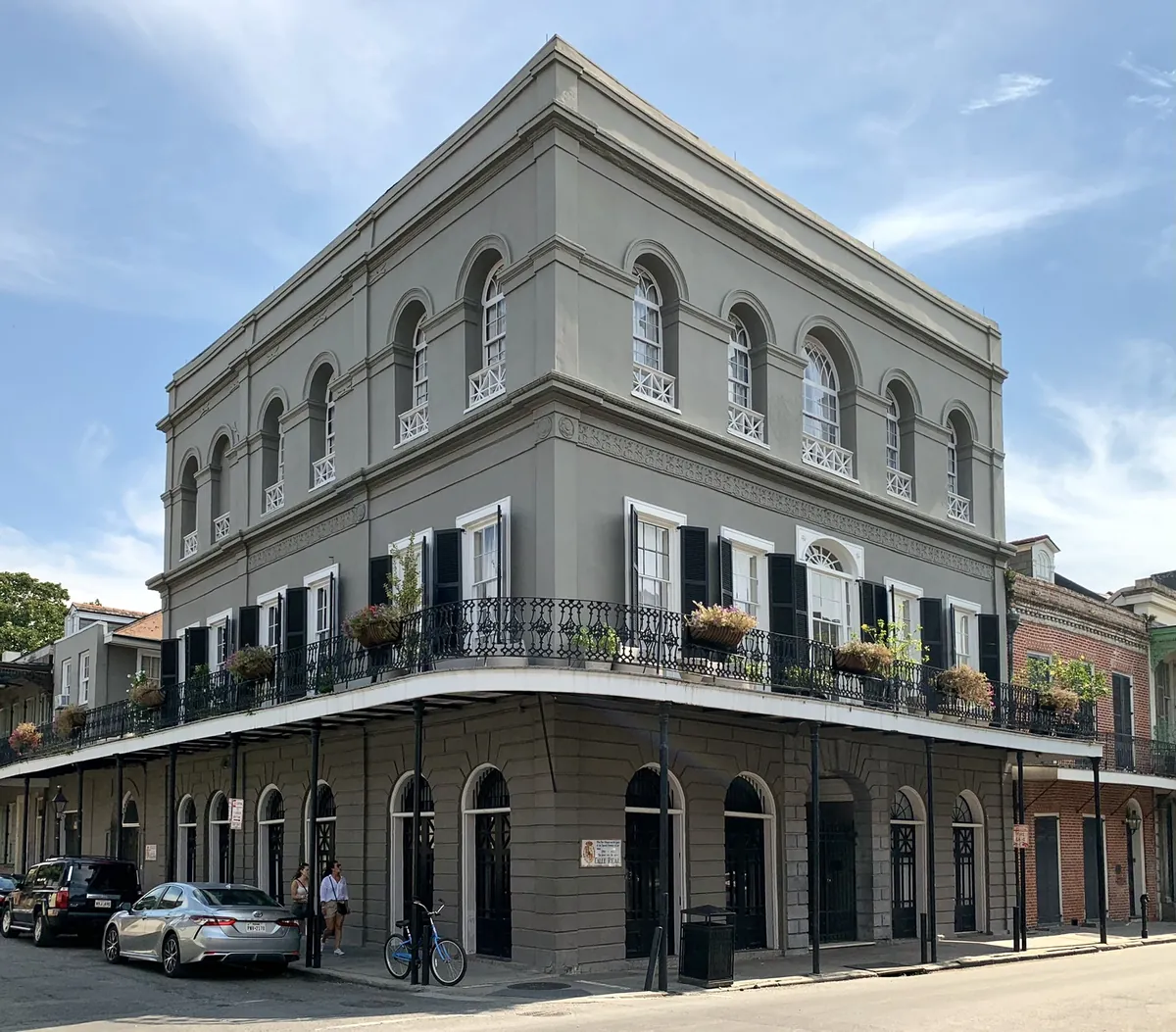
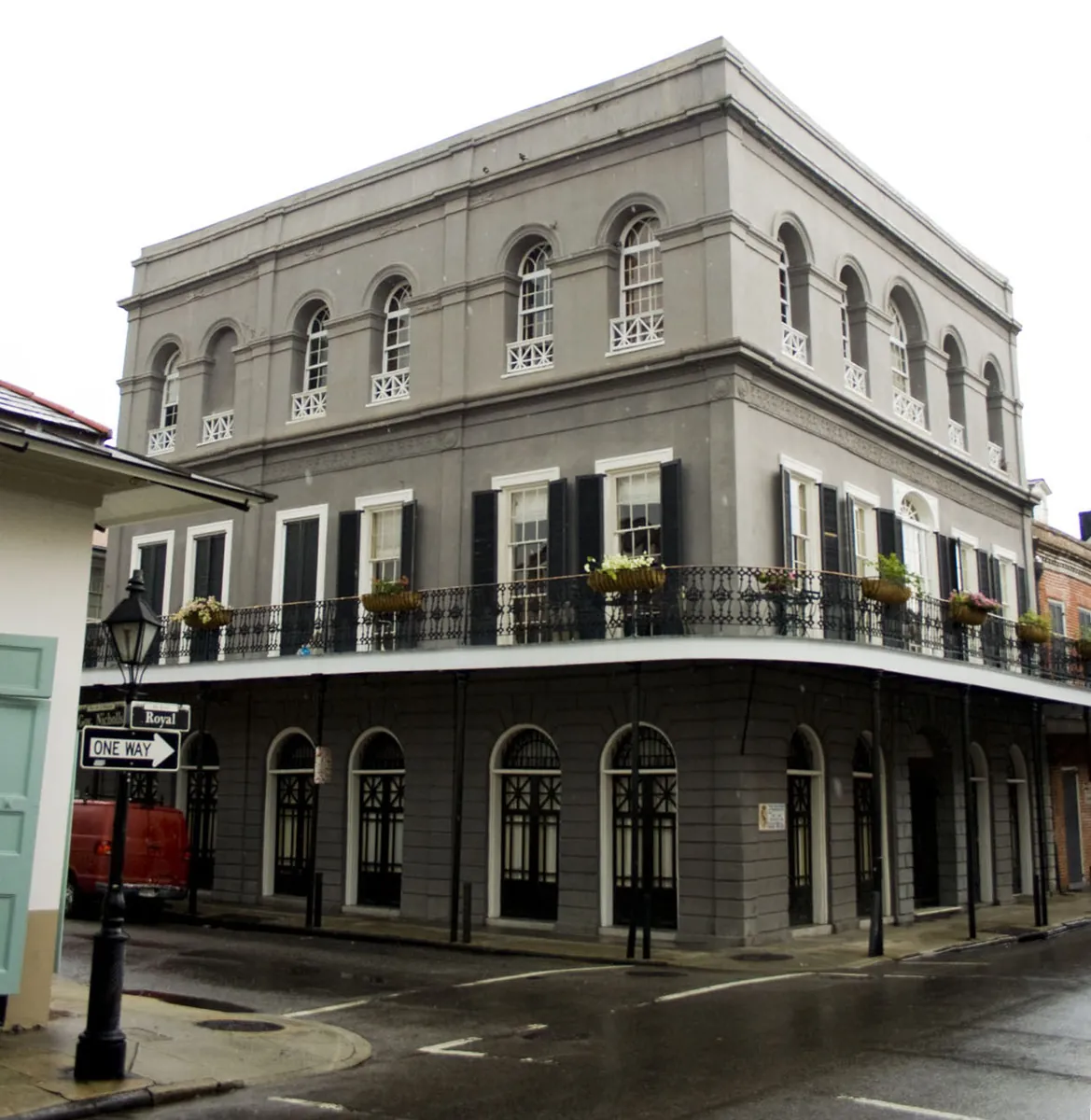
The mansion at 1140 Royal Street isn't the building where it happened. That one burned. On April 10, 1834, fire broke out in the kitchen of Delphine LaLaurie's Royal Street residence. When police and fire marshals arrived, they found a seventy-year-old cook chained to the stove by her ankle. She said she had set the fire as a suicide attempt because she feared punishment, stating that enslaved people taken to the uppermost room "never came back."
Bystanders tried to enter the slave quarters. When the LaLauries refused to hand over the keys, they broke down the doors. The *New Orleans Bee* reported what they found: "seven people, more or less horribly mutilated ... suspended by the neck, with their limbs apparently stretched and torn from one extremity to the other," who claimed to have been imprisoned there for months. Judge Jean François Canonge entered and found a woman wearing an iron collar, an old woman with a deep wound on her head too weak to walk. When he questioned LaLaurie's husband, he was told "some people had better stay at home rather than come to others' houses to dictate laws and meddle with other people's business."
When the discovery became known, a mob attacked the mansion, leaving scarcely anything but the walls. The survivors were taken to the local jail. By April 12, up to four thousand people had come to view them. LaLaurie fled by coach to the waterfront, then by schooner to Mobile, and on to Paris. She was never brought to justice. She died there on December 7, 1849.
Funeral registers document twelve enslaved people who died at the Royal Street residence between 1830 and 1834, causes unrecorded. The case became national news and remains one of the most documented examples of slaveholder brutality in American history. The horror isn't that LaLaurie was an outlier. According to Harriet Martineau's 1838 account, after neighbors reported cruelty and a court found the LaLauries guilty and ordered nine enslaved people forfeited, the family bought them back through an intermediary relative. The legal system made it possible.
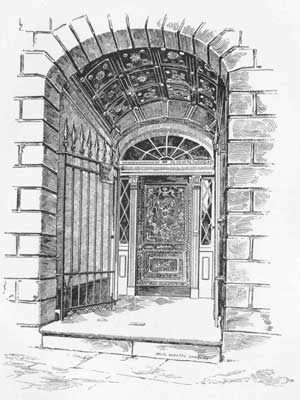
Pierre Trastour rebuilt the mansion after 1838. It has been a public high school, a conservatory of music, an apartment building, a furniture store, Nicolas Cage's house. Now a private residence. Ghost tours gather on the sidewalk, but the building that stands — iron grillwork at the entrance, door carved with Phoebus in his chariot, vestibule floored in black and white marble, mahogany-railed staircase curving three floors — was constructed after LaLaurie left. The real horror was the system that made her actions possible.
- ·In April 1834, a fire at this mansion revealed enslaved people chained and tortured in the attic by owner Delphine LaLaurie.
- ·A mob gathered at the house; LaLaurie fled to Paris and never returned to New Orleans.
- ·The case became national news and remains one of the most documented examples of slaveholder brutality in American history.
- ·The mansion has been a school, a conservatory, a tenement, and Nicolas Cage's house.
- ·Now a private residence. Not open to the public.
- ·Ghost tours gather on the sidewalk, but the real horror was the legal system that made LaLaurie's actions possible.
- ·Located at 1140 Royal Street. Exterior viewing only.
More archive
Memories
Editorial content compiled with AI assistance. Place details verified against public records.