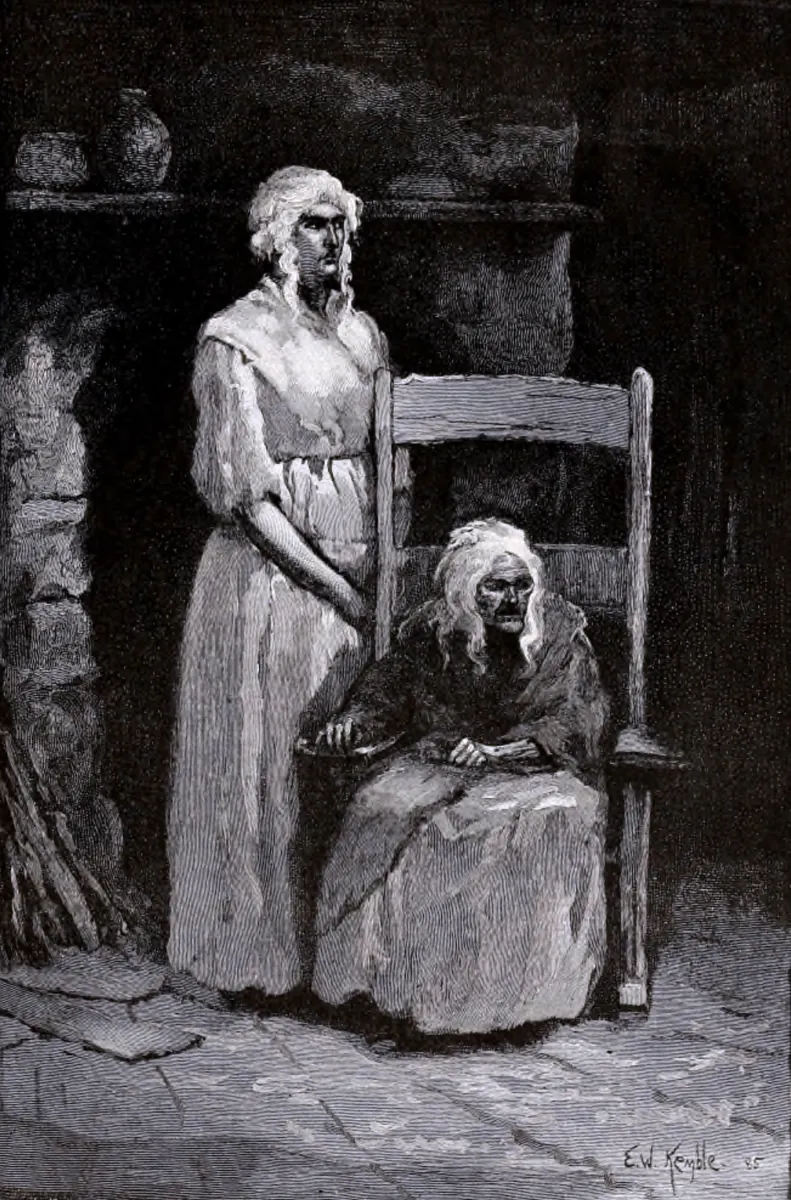
Marie Catherine Laveau was born free on September 10, 1801, in the French Quarter — daughter of Marguerite D'Arcantel, herself a free woman of African, European, and Native American ancestry. She married Jacques Paris, a carpenter and émigré from Saint-Domingue, in 1819; their marriage certificate remains in the Saint Louis Cathedral. Paris disappeared from city records in 1822 and is believed to have died in Baton Rouge the following year. She then entered a domestic partnership with Christophe Dominick Duminy de Glapion, a French nobleman, with whom she lived until his death in 1855. They had seven children; only two survived into adulthood.
Laveau ran a beauty parlor and worked as a hairdresser for wealthy Creole families. She listened to the women gossip and cultivated their servants — paying some, curing others of mysterious ailments — to gather intelligence. She used what she learned during Voodoo consultations to enhance her image as a clairvoyant and to give practical advice. She sold gris gris charms and performed services from her home on St. Ann Street, within Congo Square, and at Lake Pontchartrain. She was the third female leader of Voodoo in New Orleans — a voodoo queen, or priestess.
She attended to prisoners sentenced to death. Her daughter Philomène later confirmed that Laveau would prepare the men's last meal and pray with them, observing only Catholic traditions during these visits. She sought pardons or commutations for those she favored and was often successful. During the yellow fever epidemic of 1878, she provided herbal remedies and prayers for the sick.
Laveau died peacefully in her home on June 15, 1881, at seventy-nine. Her funeral was lavish and attended by members of the white elite. The New York Times, the Daily Picayune, and other sources described her as a woman of great beauty, intellect, and charisma — pious, charitable, and a skilled herbal healer.
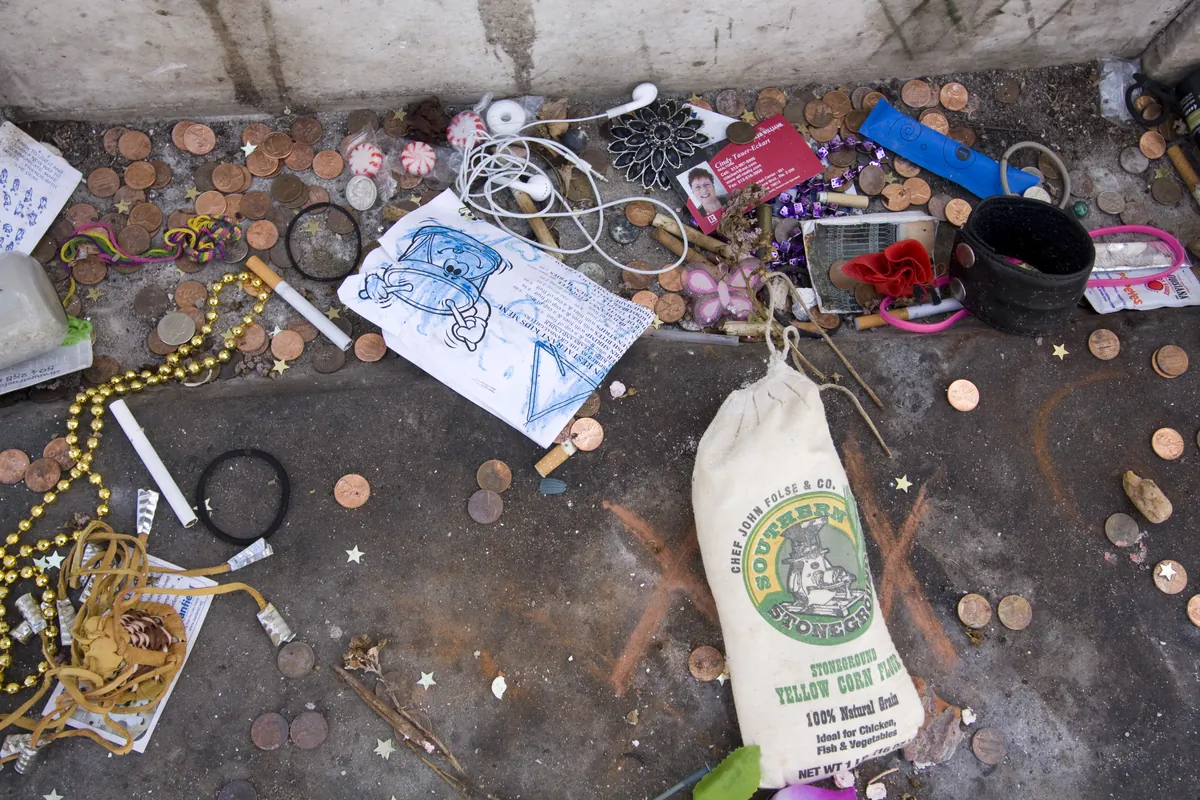
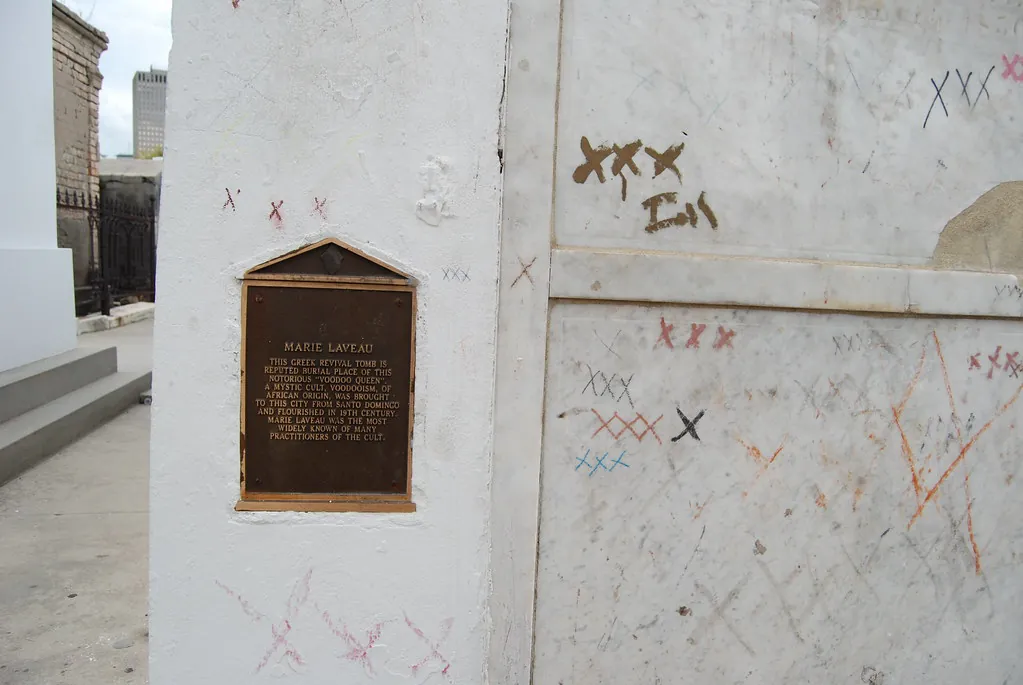
She is believed to have been buried in the Glapion family crypt in Saint Louis Cemetery No. 1. The tomb was vandalized with pink latex paint in December 2013. After restoration in 2014, visitors continued scratching X marks into the new plaster. As of March 2015, the cemetery requires entry with a licensed tour guide. Tours run daily.
- ·Born a free woman of color around 1801; worked as a hairdresser to wealthy Creole families, giving her access to the city's most closely held secrets.
- ·Held public Voodoo ceremonies on the banks of Bayou St. John and at Congo Square — events that drew hundreds of participants.
- ·Her power was as much informational as spiritual; clients paid for both hair and counsel.
- ·Her tomb in St. Louis Cemetery No. 1 is the most visited grave in New Orleans — now behind a locked gate due to vandalism.
- ·St. Louis Cemetery No. 1 requires a licensed tour guide for entry. Tours run daily.
More archive
Memories
Editorial content compiled with AI assistance. Place details verified against public records.