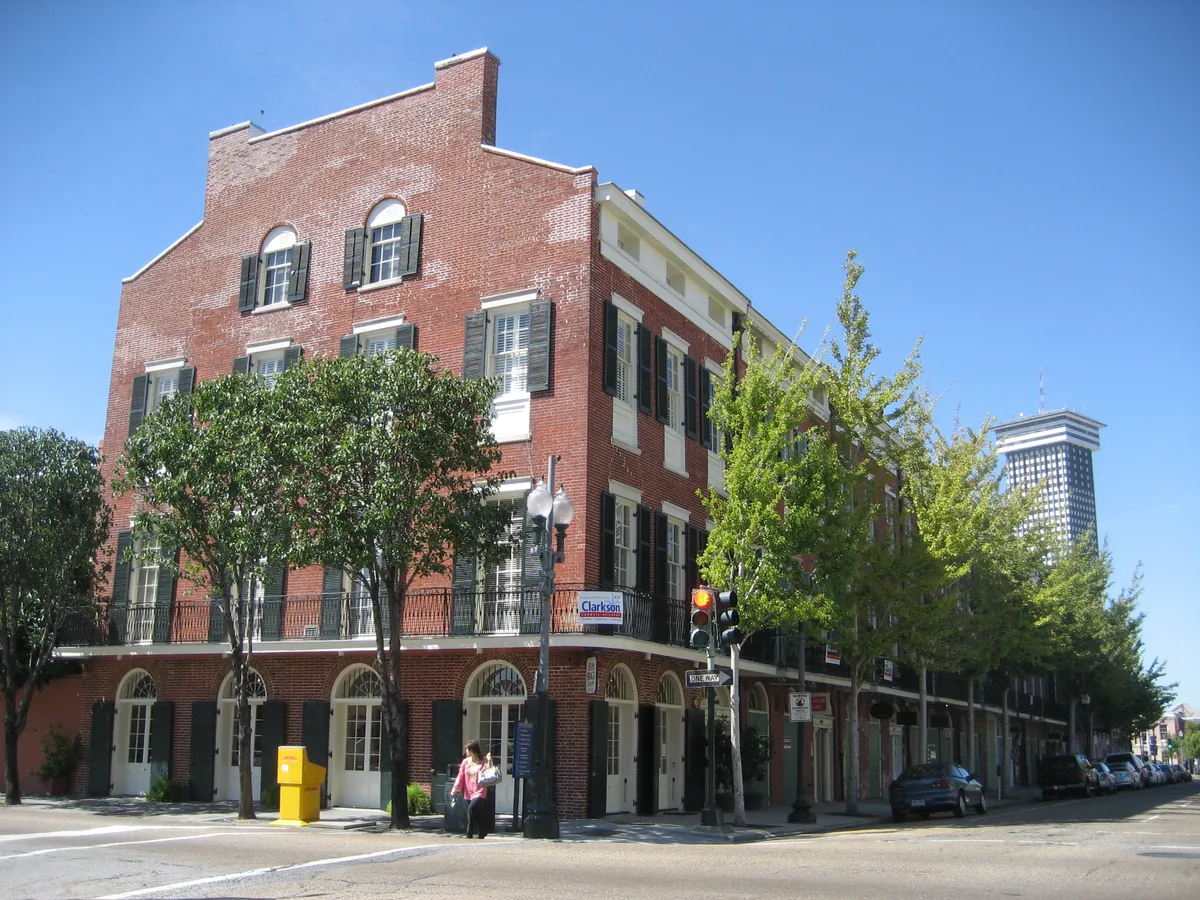
Thirteen identical red-brick row houses line Julia Street, built in 1833 — the only surviving Federal-style townhouse row in New Orleans. In a city where stucco was standard, this row used Philadelphia red brick. The material was a deliberate choice: speculative housing built for American merchants, designed to look Northern.
New Orleans became American property in the Louisiana Purchase of 1803. By the 1830s it was the largest port in the South, exporting most of the nation's cotton output to Western Europe and New England. The city that had been French, then Spanish, then briefly French again was now the commercial engine of the cotton economy. These thirteen houses were built in that moment — not for a single patron, but as investment property in a city where American capital was reshaping the waterfront.
They survived because the Warehouse District declined and nobody bothered to tear them down. What was once merchant housing on a profitable block became obsolete architecture in a neighborhood the city had moved past. The row endured through neglect.
Now the buildings hold galleries, restaurants, and shops. Julia Street is the center of New Orleans' contemporary art scene. The thirteen houses that were built to look like somewhere else have become, by persistence alone, part of what the city is.
- ·Thirteen identical red-brick row houses built in 1833 — the only surviving Federal-style townhouse row in New Orleans.
- ·Built as speculative housing for American merchants — deliberately Northern: Philadelphia red brick rather than New Orleans stucco.
- ·Survived because the Warehouse District declined and nobody bothered to tear them down.
- ·Now galleries, restaurants, and shops at the center of the city's contemporary art scene.
- ·Located on Julia Street in the Warehouse District.
Memories
Editorial content compiled with AI assistance. Place details verified against public records.