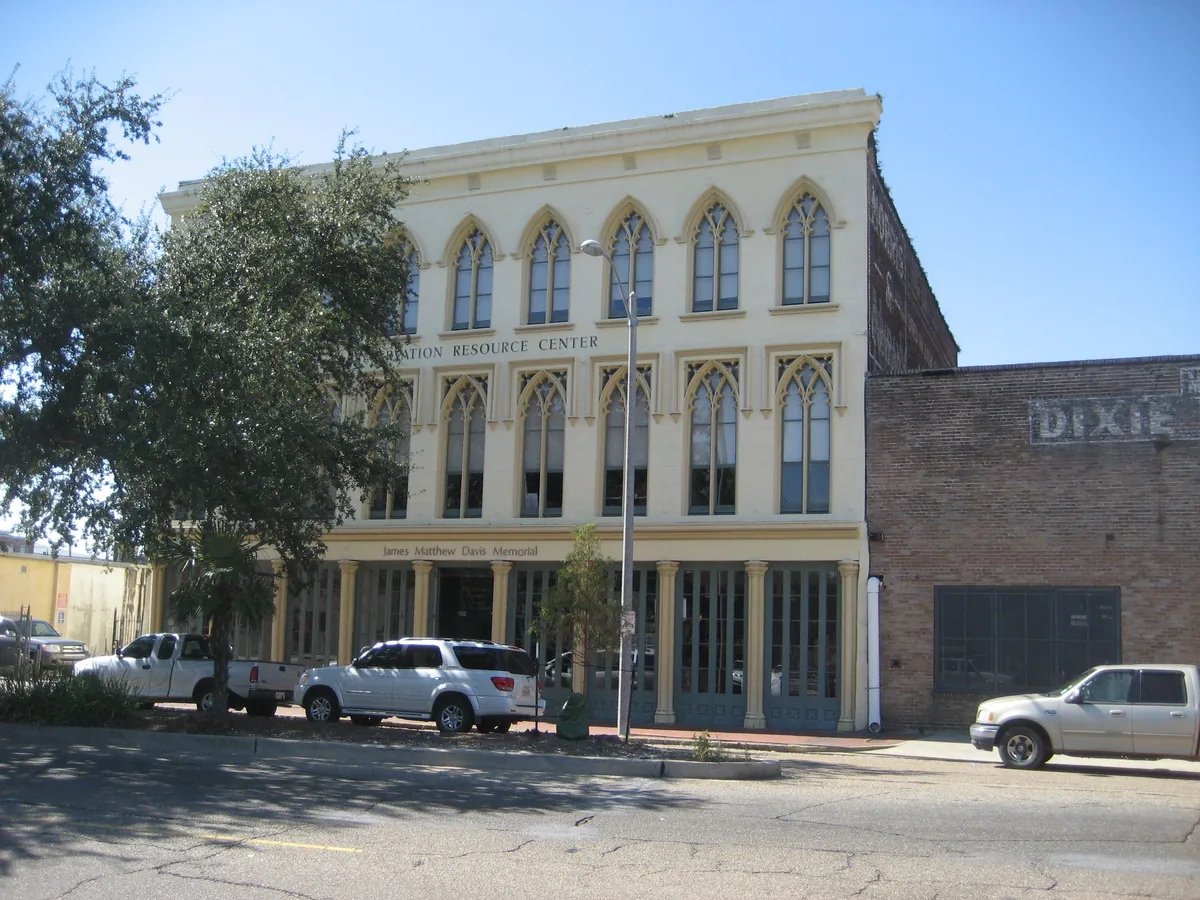
In 1974, when the wrecking ball was the city's preferred urban planning tool, a coalition formed to stop the demolition hollowing out New Orleans' historic neighborhoods. The Preservation Resource Center became the institutional counterweight to a decades-long strategy of clearing what the French had laid down in 1718 and what generations after had built on top of it. The work was — and remains — keeping standing what can be kept standing.
The organization runs the largest architectural salvage operation in the state. When a house can't be saved, crews pull what they can: doors, mantels, ironwork, hardware. What gets salvaged is what survives. The shop at 923 Tchoupitoulas Street in the Warehouse District is open to the public — a working inventory of what was nearly lost.
After Katrina flooded the city in 2005, the PRC became the primary organization coordinating neighborhood-level preservation citywide. Operation Comeback, the program launched in response, has helped rehabilitate more than 3,000 vacant historic properties. New Orleans lost much of its original population in the storm and its aftermath; the architecture is what stayed. The work here is making sure it continues to.
- ·Founded in 1974 to fight the demolition hollowing out New Orleans' historic neighborhoods.
- ·Runs the largest architectural salvage operation in the state — doors, mantels, ironwork, and hardware rescued from houses that couldn't be saved.
- ·After Katrina, the PRC became the primary organization coordinating neighborhood-level preservation citywide.
- ·Operation Comeback has helped rehabilitate more than 3,000 vacant historic properties.
- ·Operates from the Leeds-Davis Building in the Warehouse District.
- ·Located at 923 Tchoupitoulas St. The salvage shop is open to the public.
Memories
Editorial content compiled with AI assistance. Place details verified against public records.