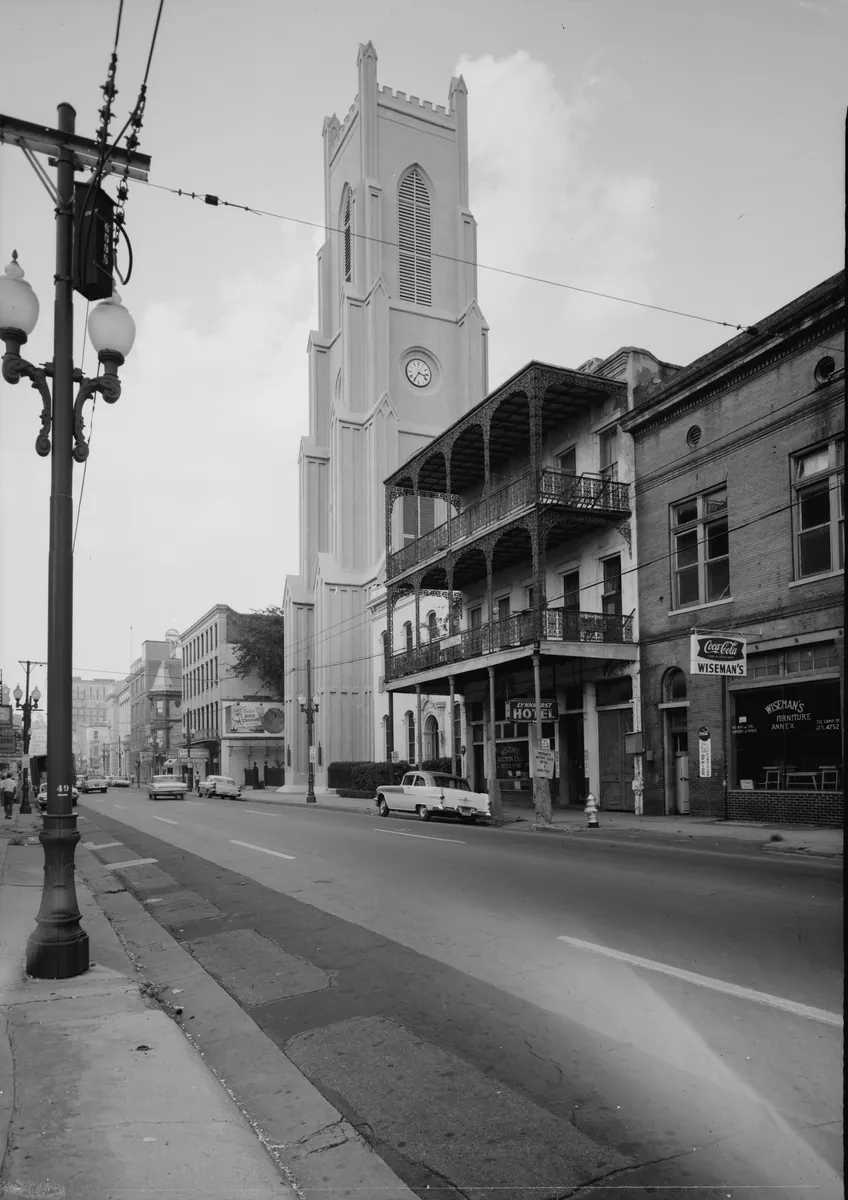
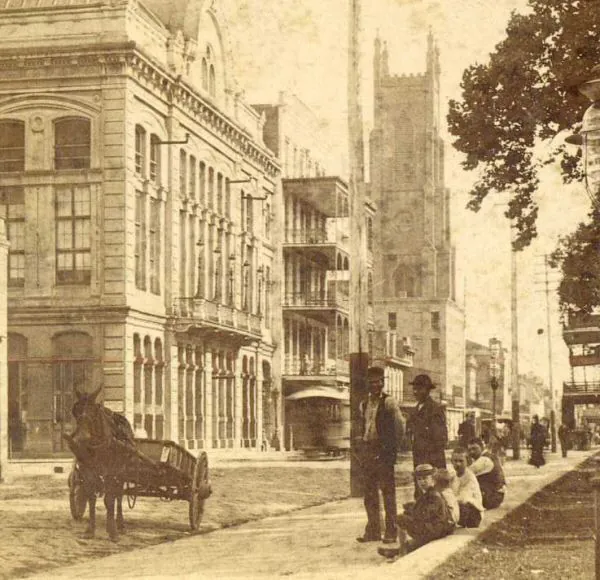
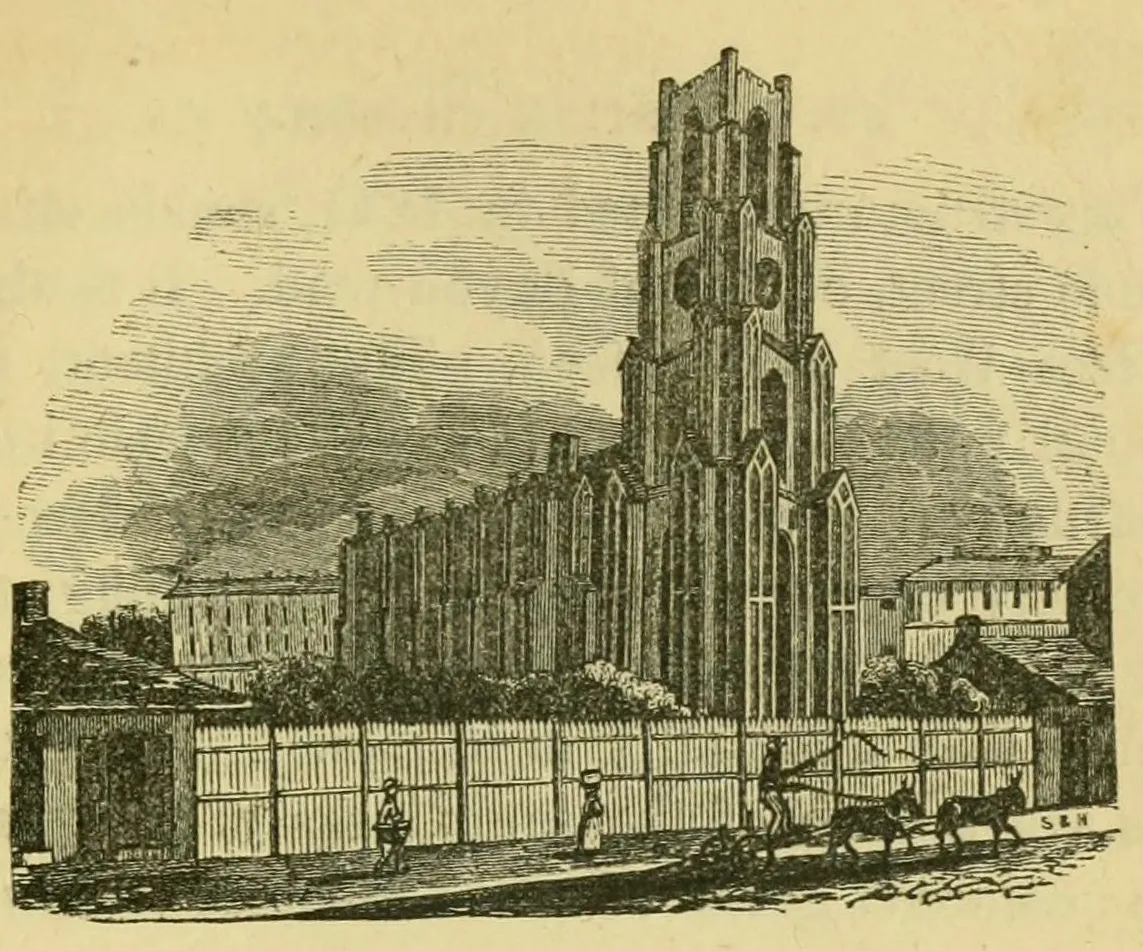
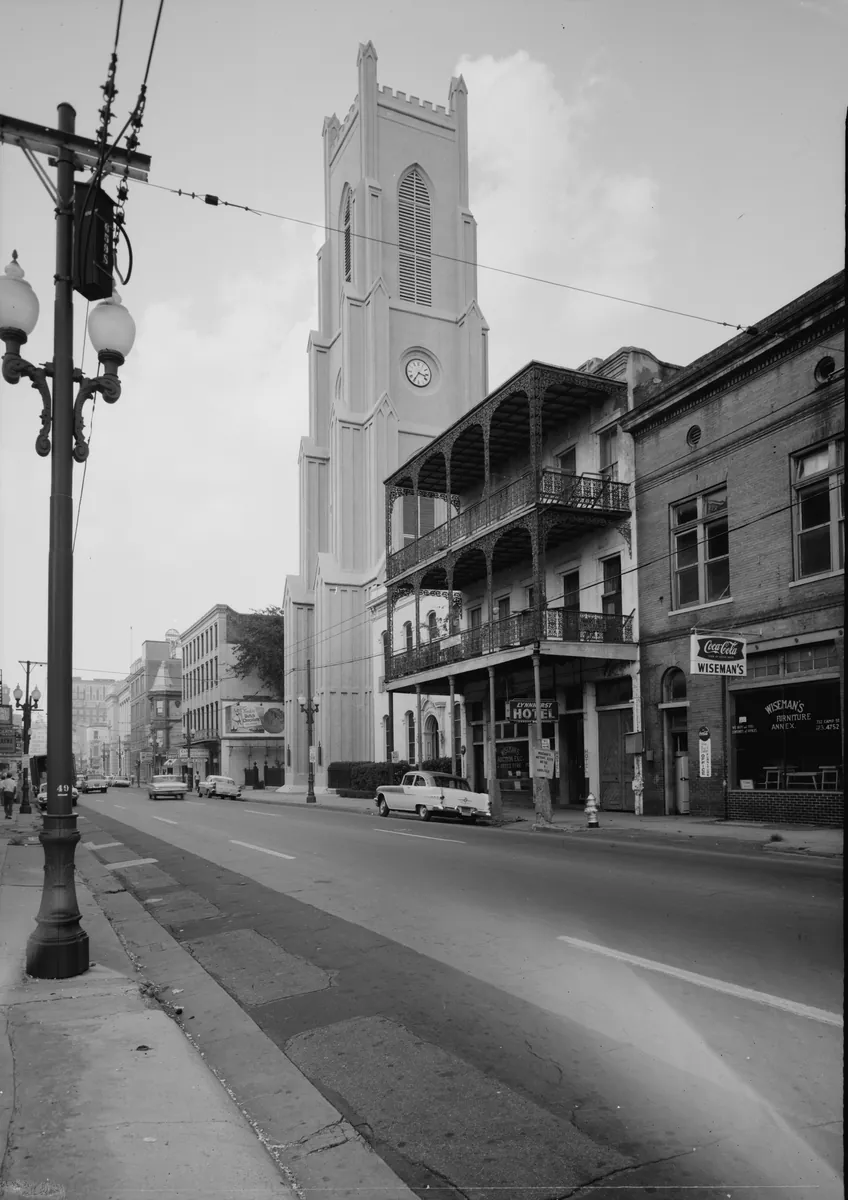
The Irish who dug New Orleans' canals and raised its levees built this in 1840 — not a chapel, but a cathedral-scale rebuke in the American sector, their own answer to the French St. Louis Cathedral across Canal Street. They were dying of yellow fever faster than almost anyone else in a city where everyone was dying, and they built anyway.
Leon Pomarede painted the Transfiguration across the interior walls — massive murals under an 85-foot vaulted ceiling that still holds the light from stained glass shipped from Europe. The scale announces what the Irish Channel wanted said: we are here, we built the infrastructure of this swamp city, and we will have our own sanctuary.
St. Patrick's remains an active parish. Daily Mass is still celebrated. You can walk in and see what immigrant labor bought when it spent its wages on something other than survival — a vault that high, that much imported glass, a painter's vision of the Transfiguration filling the walls. It's on Camp Street in the CBD, still doing what it was built to do.
- ·Built in 1840 as the Irish immigrant community's answer to St. Louis Cathedral.
- ·85-foot vaulted ceiling with massive murals by Leon Pomarede depicting the Transfiguration.
- ·Stained glass windows imported from Europe.
- ·The Irish Channel community built levees, dug canals, and died of yellow fever at rates higher than almost any other group.
- ·Still an active parish with daily Mass.
- ·Located in the CBD on Camp Street.
More archive

Memories
Editorial content compiled with AI assistance. Place details verified against public records.