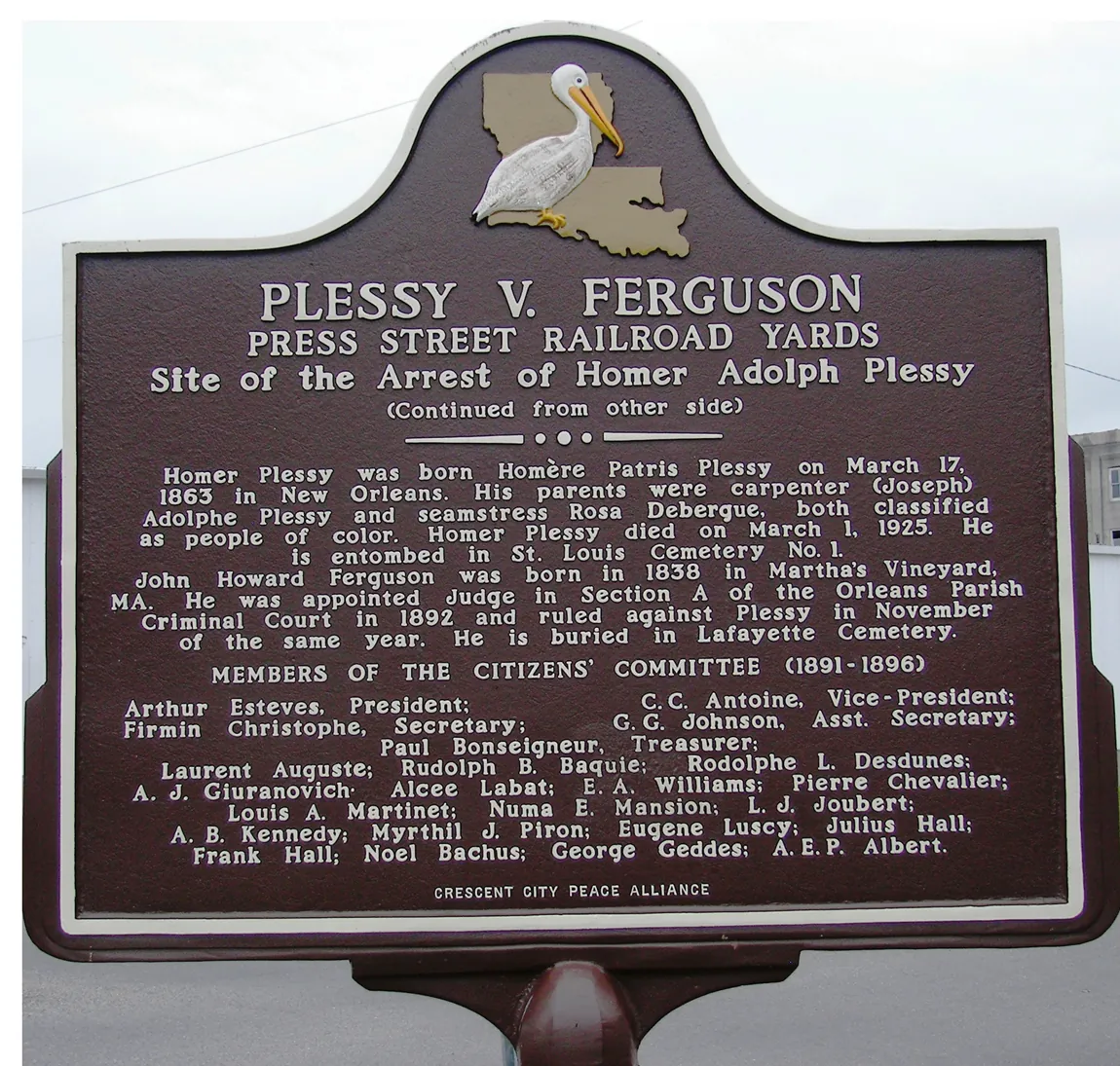
At Press and Royal streets in the Marigny, a bronze marker tells the story of a deliberate arrest. Homer Plessy was a Creole shoemaker from this neighborhood. In 1892, he boarded a whites-only railcar at this corner and got arrested on purpose—to become the test case that would challenge segregation in federal court.
New Orleans had been the largest city in the South at the start of the Civil War, the largest port in the Southern United States throughout the nineteenth century, exporting most of the nation's cotton to Western Europe and New England. This was a city that had passed through French hands, then Spanish, then briefly French again before the Louisiana Purchase brought it into the United States in 1803. What happened at this intersection in the Marigny became the law of the land. The Supreme Court decision in 1896 locked segregation into the legal code of the United States. It stood for 58 years before Brown v. Board overturned it.
The marker was installed in 2009. The railcar is long gone. The corner is quiet now. What remains is the record of what one man did, in his own neighborhood, by design.
- ·In 1892, Homer Plessy boarded a whites-only railcar at Press and Royal streets in the Marigny.
- ·He got arrested on purpose to become the test case that locked segregation into federal law in 1896.
- ·Plessy was a Creole shoemaker from this neighborhood.
- ·The Supreme Court decision stood for 58 years before Brown v. Board overturned it.
- ·Visitor tip: a bronze marker on the Press/Royal corner tells the story; it was installed in 2009.
Memories
Editorial content compiled with AI assistance. Place details verified against public records.