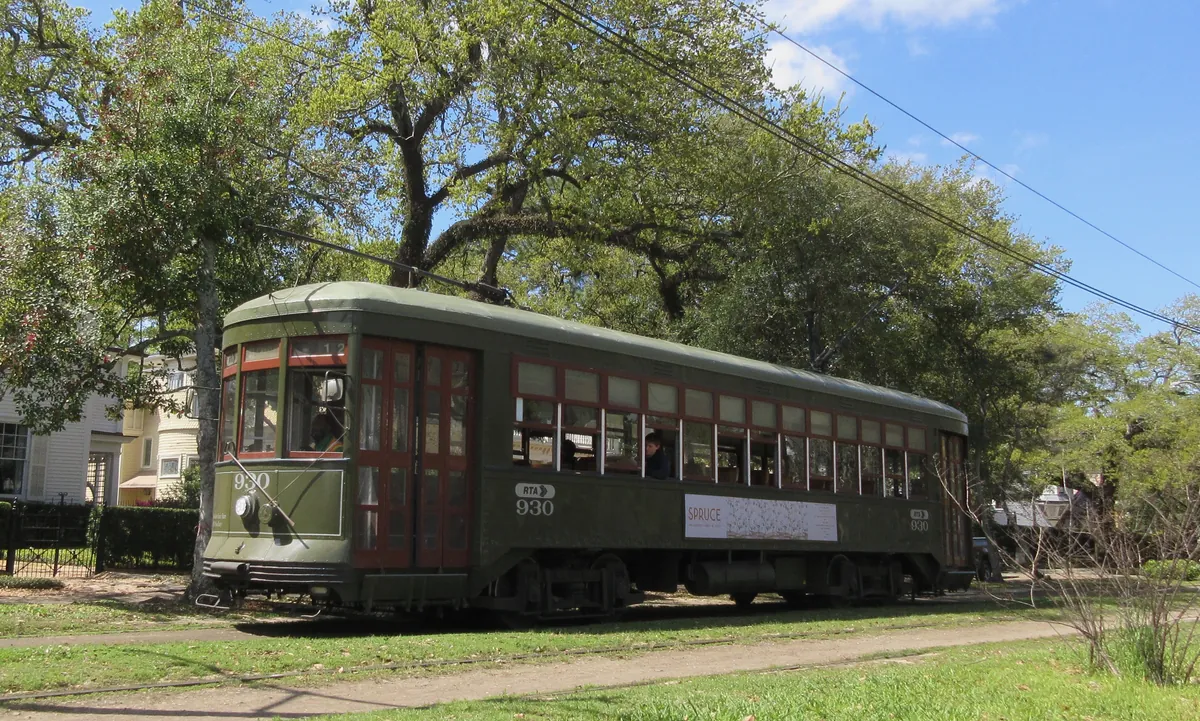
The Desire streetcar line ran from 1920 to 1948, connecting working-class Creole neighborhoods to Canal Street. Tennessee Williams rode it while living in the Quarter, and the route became the title for the most famous American play set in New Orleans.
The stage direction is real. When Blanche DuBois tells the audience to "take a streetcar named Desire, transfer to one called Cemeteries," both lines existed on the city's transit map. Williams wrote geography, not just metaphor. The line was replaced by a bus in 1948. Nothing of the original infrastructure remains.
New Orleans was the largest city in the South when the Civil War began, built as the nation's dominant cotton port, exporting most of the country's output to Western Europe and New England. The city had been founded by the French in 1718 on a sharp bend of the Mississippi, chosen for the natural levee and control of the entire river valley. For more than a century, the port connected the interior of the continent to the world. The streetcar connected the working neighborhoods to the commercial spine of a city that had always run on that tension between river and trade, labor and exchange.
Desire Street still cuts through the Bywater. The rails are gone, but the name remains—attached now only to asphalt and the play that made it permanent.
- ·The Desire streetcar line ran from 1920 to 1948, connecting working-class Creole neighborhoods to Canal Street.
- ·Tennessee Williams rode the line while living in the Quarter and used it as the title for the most famous American play set in New Orleans.
- ·Blanche DuBois's stage direction — 'take a streetcar named Desire, transfer to one called Cemeteries' — is geographically accurate; both lines existed.
- ·The line was replaced by a bus in 1948; nothing of the original route infrastructure remains.
- ·The Desire Street still exists in the Bywater neighborhood.
Memories
Editorial content compiled with AI assistance. Place details verified against public records.