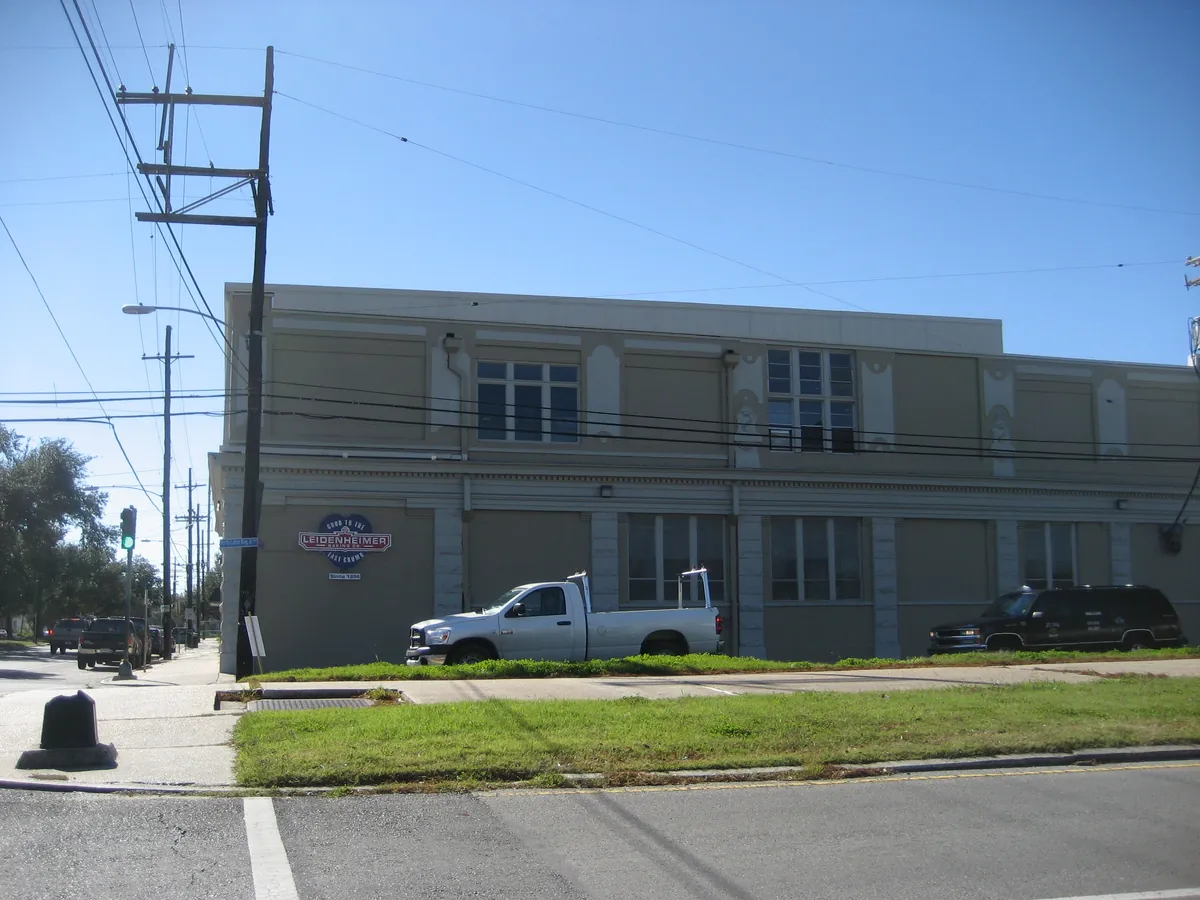
Leidenheimer has baked New Orleans french bread since 1896. Before dawn, brown paper delivery trucks drop long loaves at every po-boy shop in the city — Parkway, Domilise's, Parasol's, all of them. The bread is the entire architecture of the sandwich: shattering crust over pillow-soft interior. It can't be replicated outside South Louisiana because of the humidity, which is both the problem and the point. The air here does something to the dough that nowhere else manages.
No Leidenheimer, no po-boy. The equation is that simple. The bakery is not a retail shop — you don't go there to buy a loaf. You eat the bread at any po-boy counter in town, where it shows up every morning in those brown paper bundles, still warm, ready to be split and loaded with whatever the day's roast beef or fried shrimp or hot sausage happens to be. The bread arrived in 1896 and never left, which in a port city means it survived everything: the turn of the century, two world wars, Katrina, the long stretch of American time when people forgot that bread could taste like anything. It still tastes like something.
- ·Leidenheimer has baked New Orleans french bread since 1896.
- ·Brown paper delivery trucks drop long loaves at every po-boy shop in the city before dawn.
- ·The bread — shattering crust over pillow-soft interior — can't be replicated outside South Louisiana because of the humidity.
- ·No Leidenheimer, no po-boy.
- ·Visitor tip: the bakery is not a retail shop — eat the bread at any po-boy spot in town (Parkway, Domilise's, Parasol's).
Memories
Editorial content compiled with AI assistance. Place details verified against public records.