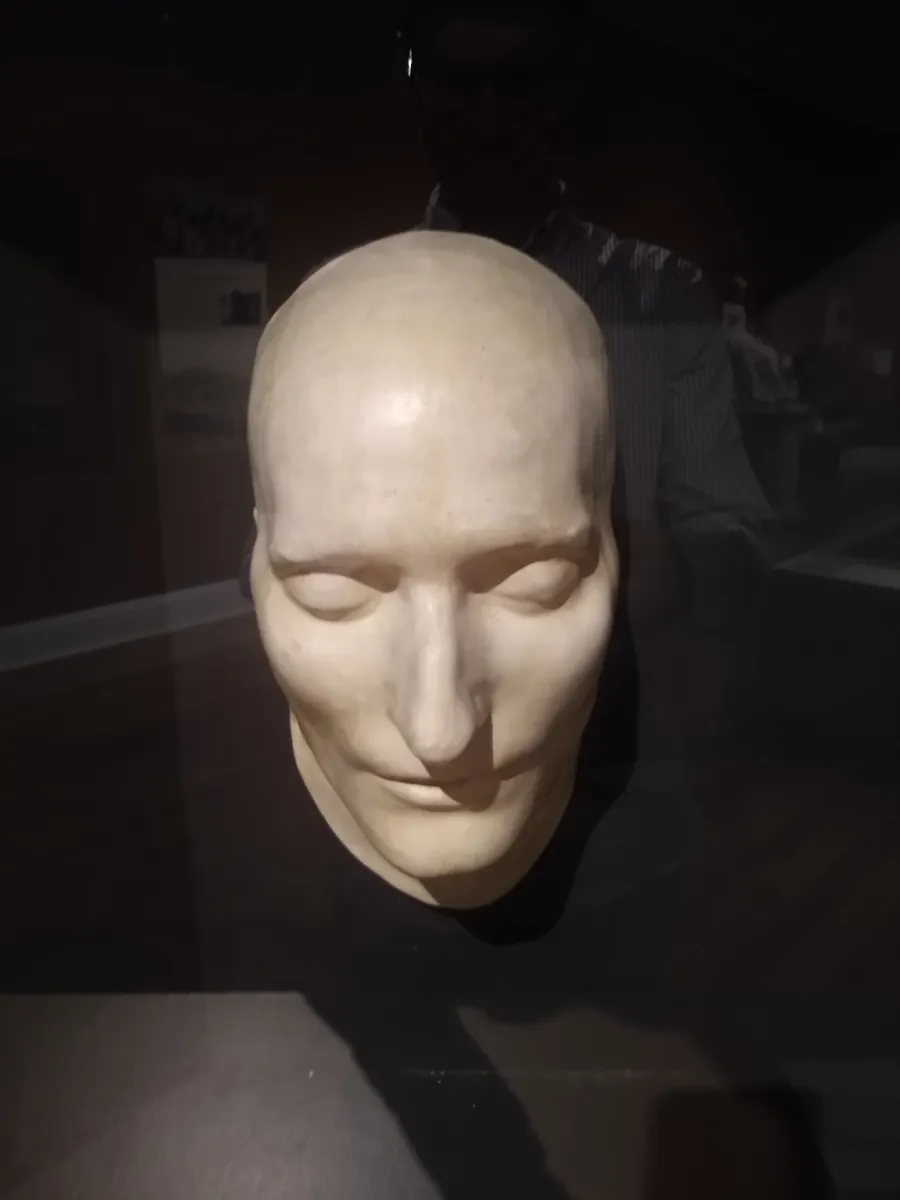
Napoleon's face arrived in New Orleans nineteen years after his empire ended and thirteen years after his death. One of only four known casts taken on St. Helena the day after he died on May 5, 1821, the plaster mask was acquired by the Louisiana State Museum in 1834 and placed in the Cabildo — the building on Jackson Square where the Louisiana Purchase transfer ceremonies were held in 1803. Two Napoleon connections in one room: the legal instrument that delivered Louisiana to the United States, and the physical record of the man who sold it.
The mask sits in a case on the second floor. The closed eyes and slack features show what plaster captured — not the general who crossed the Alps, but the body left behind on a British island in the South Atlantic. Napoleon never reached New Orleans, though his loyalists in the city organized a rescue plot that never launched. The treaty signed downstairs in 1803 made New Orleans American. The mask that arrived three decades later made Napoleon present anyway — a relic of the man whose decision to sell created the city's first major political break, the hinge that turned a French colonial outpost into an American port. The Cabildo opens daily. Admission charged.
- ·One of only four known death masks of Napoleon — cast on St. Helena the day after his death on May 5, 1821.
- ·Acquired by the Louisiana State Museum in 1834 and displayed in the Cabildo on Jackson Square.
- ·The Cabildo is also where the Louisiana Purchase was signed in 1803 — two Napoleon connections in one building.
- ·Napoleon never reached New Orleans despite a rescue plot organized by his loyalists in the city.
- ·The mask is on the second floor of the Cabildo. Admission charged.
Memories
Editorial content compiled with AI assistance. Place details verified against public records.