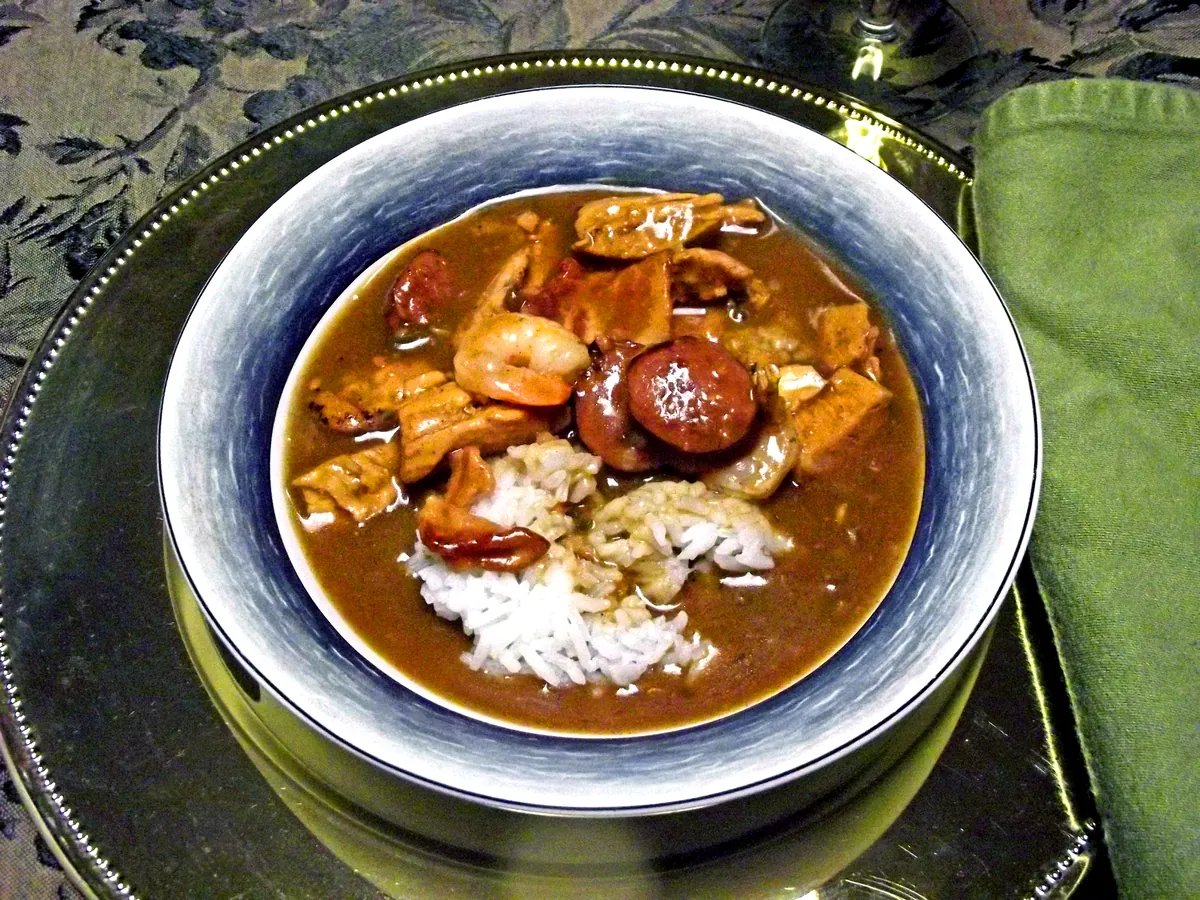
The word itself is West African—*ki ngombo*, Bantu for okra—and the dish honors that origin by putting three cultures in one pot. French roux thickens the base. West African okra or Choctaw filé powder does the work from there. Gulf Coast proteins—shrimp, crab, sausage, whatever the water or land gave—finish it. Gumbo is what happens when survival and taste memory meet in a place where no single tradition could stand alone.
There is no correct gumbo, only the version your grandmother made and the one you'll defend. The okra-versus-filé debate runs generational. Creole gumbo leans toward shellfish and tomato. Cajun gumbo builds on andouille sausage and a dark roux that takes patience at the stove. Both are right. Both matter.
Order a bowl at Dooky Chase's to taste the Creole line or Cochon for the Cajun one. You're not choosing a better gumbo. You're choosing which root you want to follow.
- ·The word 'gumbo' derives from 'ki ngombo,' the Bantu word for okra.
- ·The dish combines French roux, West African okra, Choctaw filé powder, and Gulf Coast proteins — each culture in one pot.
- ·There is no single correct gumbo; the debate between okra-thickened and filé-thickened versions is generational.
- ·Creole gumbo typically uses shellfish and tomato; Cajun gumbo favors andouille sausage and dark roux.
- ·Order a bowl at Dooky Chase's (Creole) or Cochon (Cajun) for two distinct traditions.
Memories
Editorial content compiled with AI assistance. Place details verified against public records.