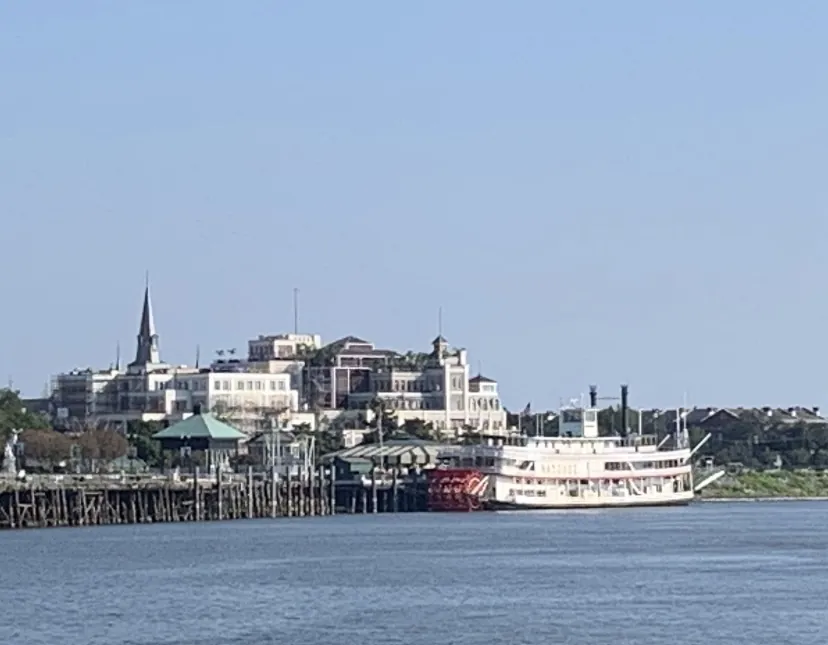
The Mississippi bends sharply a hundred miles upriver from the Gulf of Mexico, depositing silt that built the land and creating a natural levee. French colonists chose this spot in 1718 for the strategic advantage: control of the river valley, access to Lake Pontchartrain's trade route through Bayou St. John, safe distance from Spanish and English settlements. The port has operated continuously since then — over three hundred years of river commerce.
By the 1840s, the Port of New Orleans handled more tonnage than any other port in the United States. Cotton, sugar, and enslaved people moved through here. It was the largest slave market in North America. Throughout the nineteenth century, New Orleans was the largest port in the Southern United States, exporting most of the nation's cotton and other farm products to Western Europe and New England. The fortunes built on this commerce constructed the mansions of the Garden District and the warehouses of the CBD.
Today the port handles over a hundred million tons of cargo annually as Louisiana's only deep-water container port. It generates a hundred million dollars in revenue through cargo, rail, cruise operations, and industrial real estate. It receives zero tax dollars — a self-sustaining political subdivision of the state. New Orleans is the sixth largest cruise port in the United States; in 2019 it handled 1.2 million cruise passenger movements.
The Riverwalk and Spanish Plaza offer public riverfront access near the cruise terminal. Stand there and you're looking at the bend that made the city possible.
- ·Operating continuously since 1718 — over 300 years of river commerce.
- ·By the 1840s, the Port of New Orleans handled more tonnage than any other port in the United States.
- ·Cotton, sugar, and enslaved people moved through this port — it was both the engine of Southern wealth and the largest slave market in North America.
- ·The fortunes built on river commerce constructed the mansions of the Garden District and the warehouses of the CBD.
- ·Today the port handles over 100 million tons of cargo annually.
- ·The Riverwalk and Spanish Plaza offer public riverfront access near the cruise terminal.
Memories
Editorial content compiled with AI assistance. Place details verified against public records.