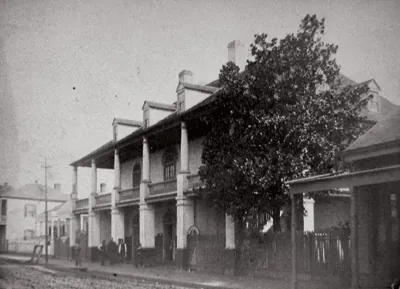
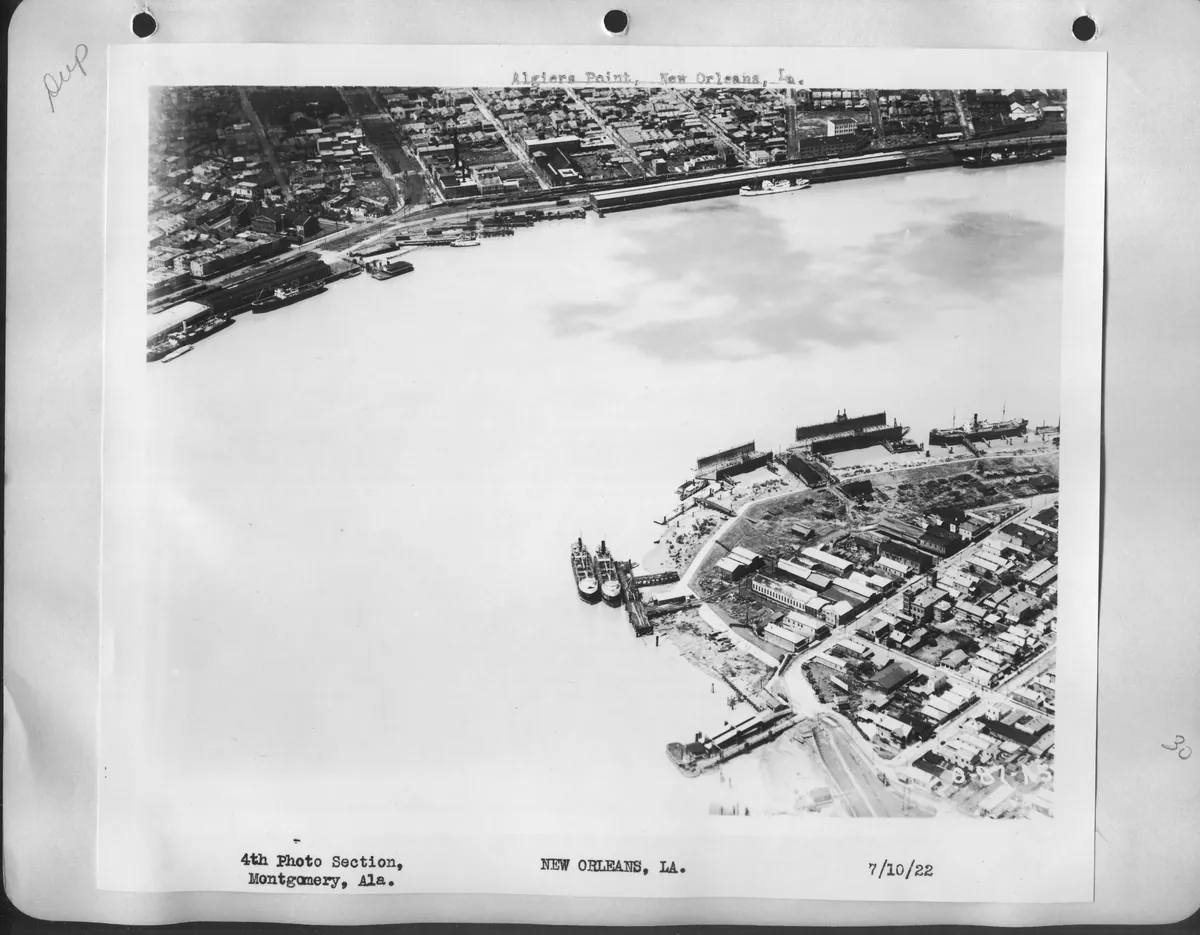
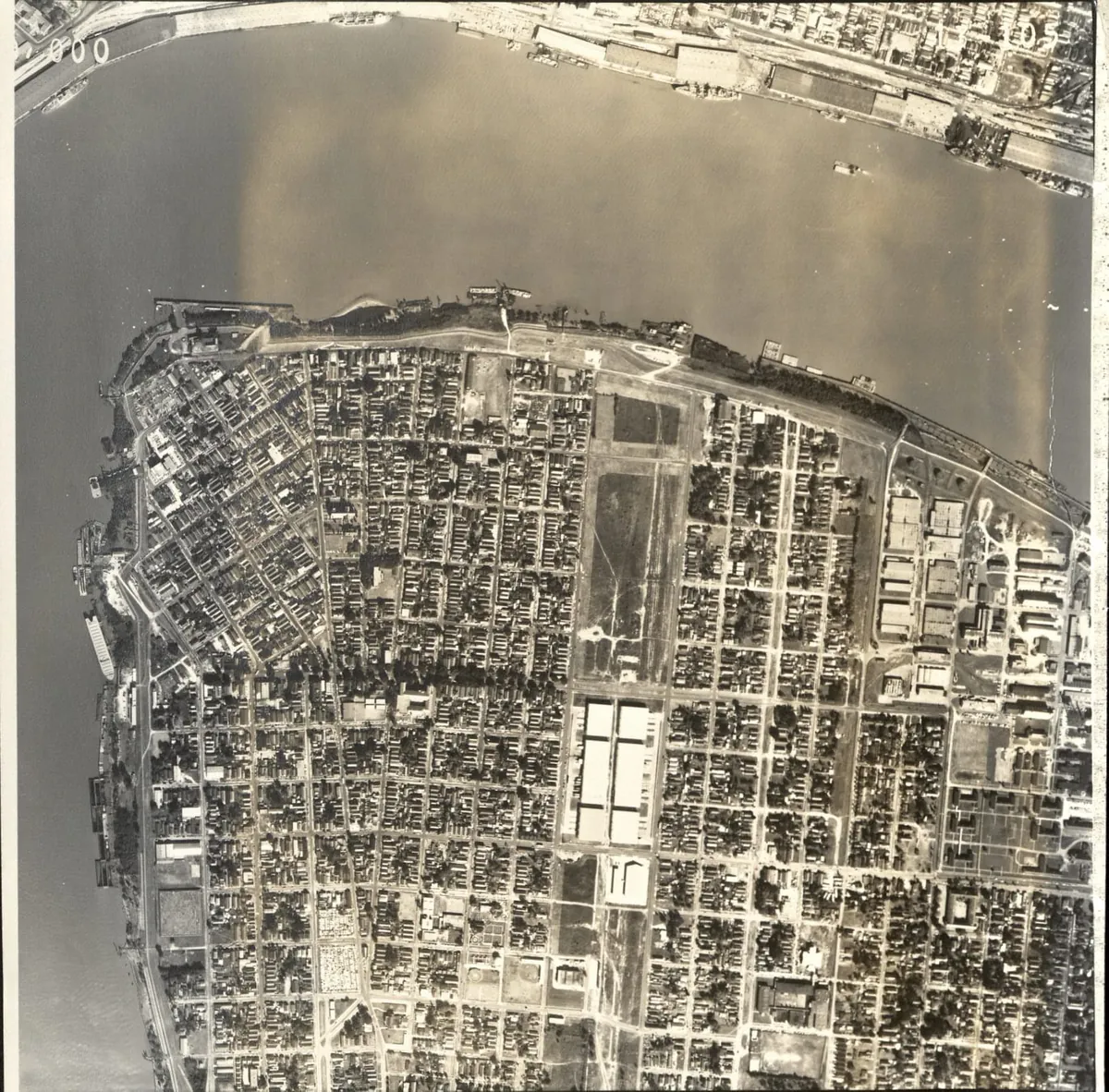
The ferry from Canal Street drops you in a 25-block historic district that didn't burn. Algiers Point — gingerbread Victorians, shotguns, cottages — went up starting in the 1850s. The 1895 fire leveled most of downtown Algiers. What you're walking is the rebuild: the best-preserved 19th-century residential neighborhood outside the Garden District.
New Orleans before the Civil War was the largest port in the Southern United States, exporting cotton and farm products to Western Europe and New England. The city sprawled on both sides of the river. Algiers Point was part of that expansion — and when the fire came, the neighborhood came back.
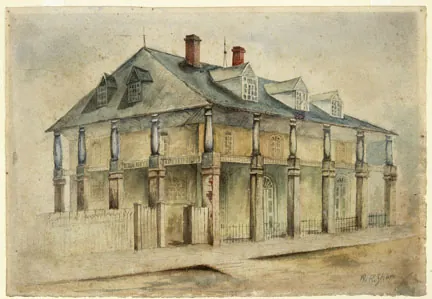
Walk Pelican, Morgan, and Olivier. The architecture is the same vocabulary as the Quarter — brackets, turned columns, iron lace, steep-pitched roofs — but the streets are quiet. You'll pass locals on porches, not bachelorette parties with daiquiris. Same building traditions. Far fewer tourists.
Start at the ferry terminal and loop. It's a walking neighborhood, built to a pedestrian scale. The houses survived because they were far enough from the commercial center, and because someone rebuilt them when the ashes cleared. You're here for the same reason the Garden District gets attention, but without the crowds: to see what 19th-century New Orleans looked like when people actually lived in it.
- ·Algiers Point is a 25-block historic district of gingerbread Victorians, shotguns, and cottages built starting in the 1850s.
- ·It's the best-preserved 19th-century residential neighborhood outside the Garden District.
- ·The 1895 fire leveled most of downtown Algiers, so what survives is the rebuild.
- ·Streets to walk: Pelican, Morgan, and Olivier.
- ·Visitor tip: start at the ferry terminal and loop — same architecture as the Quarter, far fewer tourists.
More archive
Memories
Editorial content compiled with AI assistance. Place details verified against public records.