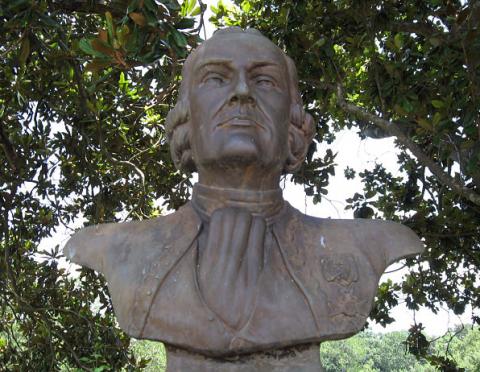
In 1714, a French Canadian nobleman paddled up the Red River with twenty-five men and talked his way into founding the oldest permanent settlement in the Louisiana Purchase. Within two years he'd been arrested by the Spanish, imprisoned at a frontier presidio, courted the commandant's granddaughter while under house arrest, married her, helped Spain establish six missions in Texas — and then switched sides back to France. His name was Louis Juchereau de St. Denis, and his story reads like a novel no publisher would believe.
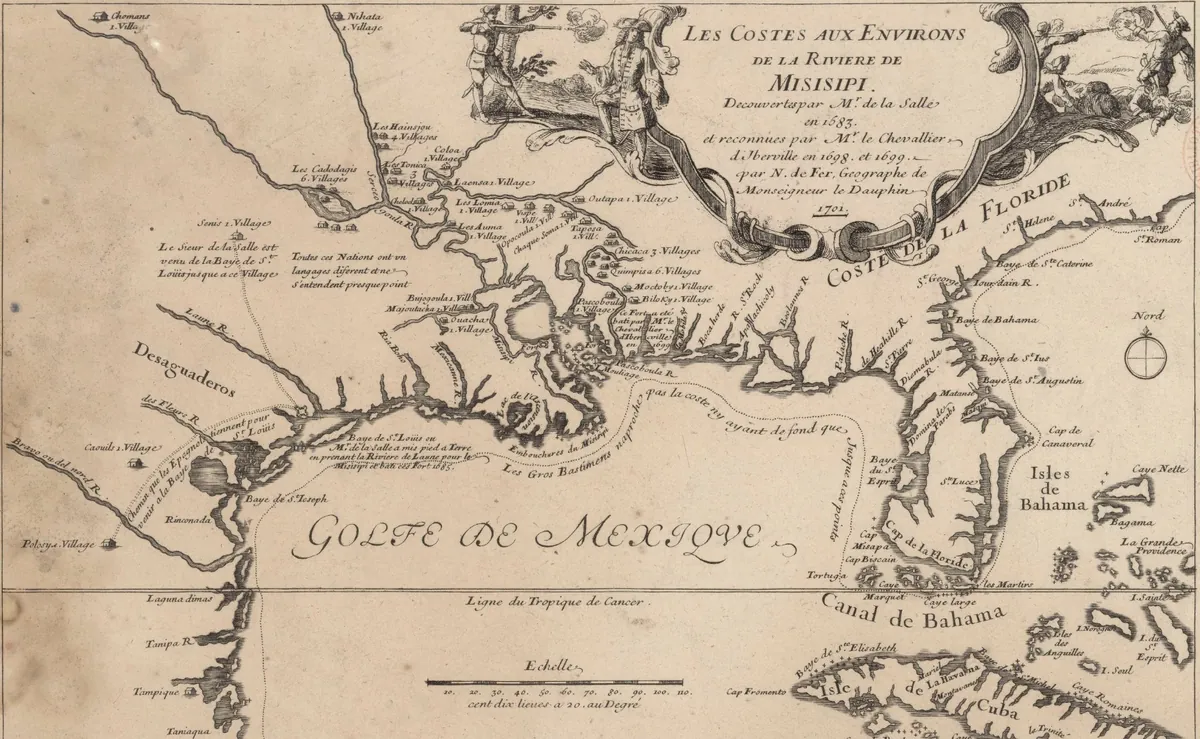
Born near Quebec in 1674, the eleventh of twelve children in one of New France's most prominent families, St. Denis arrived in Louisiana with Iberville's second expedition in 1699. He spent fifteen years learning the rivers, the trade routes, and — critically — the languages and customs of the Caddo, Natchitoches, and other nations who controlled the interior. The Caddo honored him with elaborate snake tattoos covering both legs. They called him Big Legs. He called them allies.
Around 1702, St. Denis got his first command: Fort de la Boulaye, the swamp outpost Iberville had thrown up on the lower Mississippi — eighteen leagues above the river's mouth — to keep the Spanish and English off the water. It was a hard, lonely post, ringed by swamp and held by a handful of men. By 1707 the surrounding nations had had enough of the soldiers and forced the garrison back to Biloxi. But they let St. Denis stay. The friend of the Caddo went on living in the abandoned fort, alone in the country the empire had written off. Fort de la Boulaye taught him what no order out of Mobile could: France would never hold this land with walls and garrisons. He'd spend the rest of his life proving the alternative — and build a city to make the point.
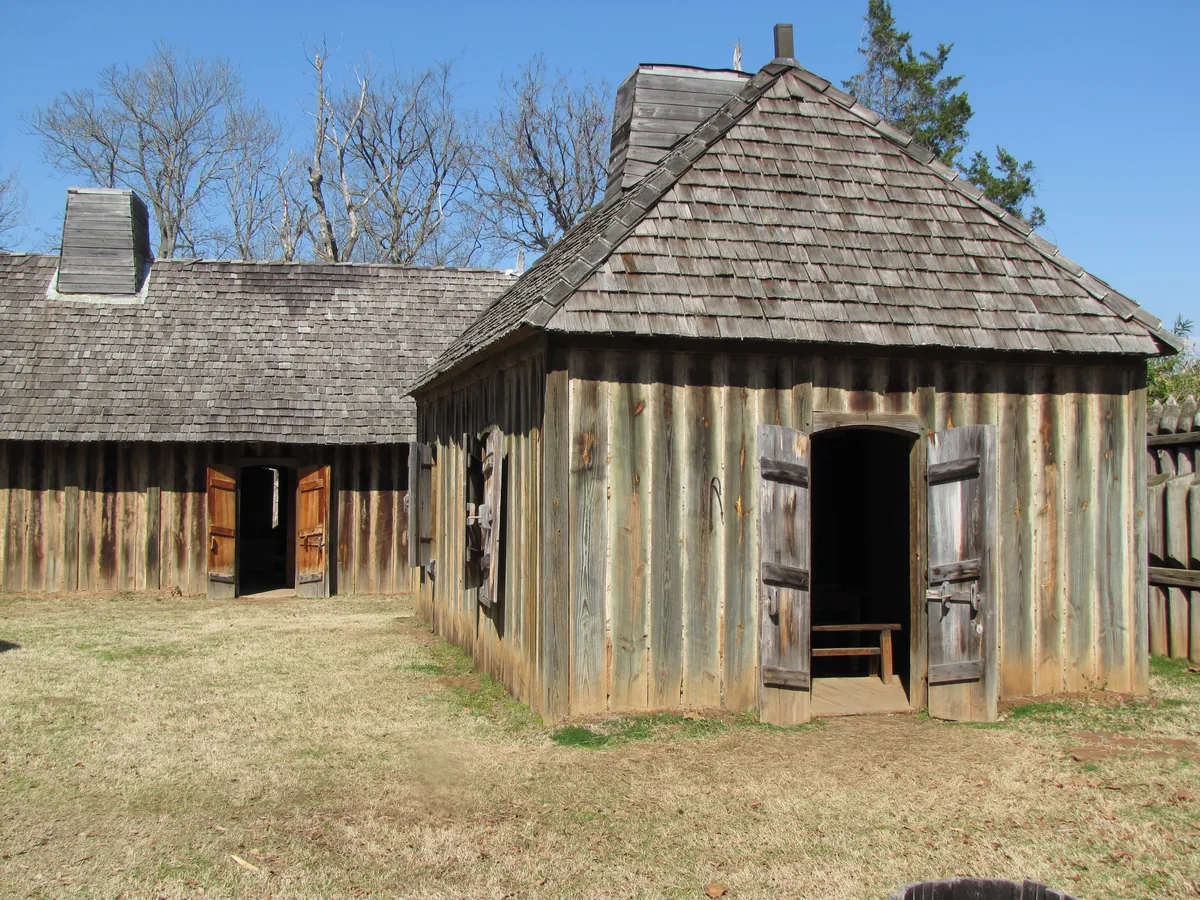
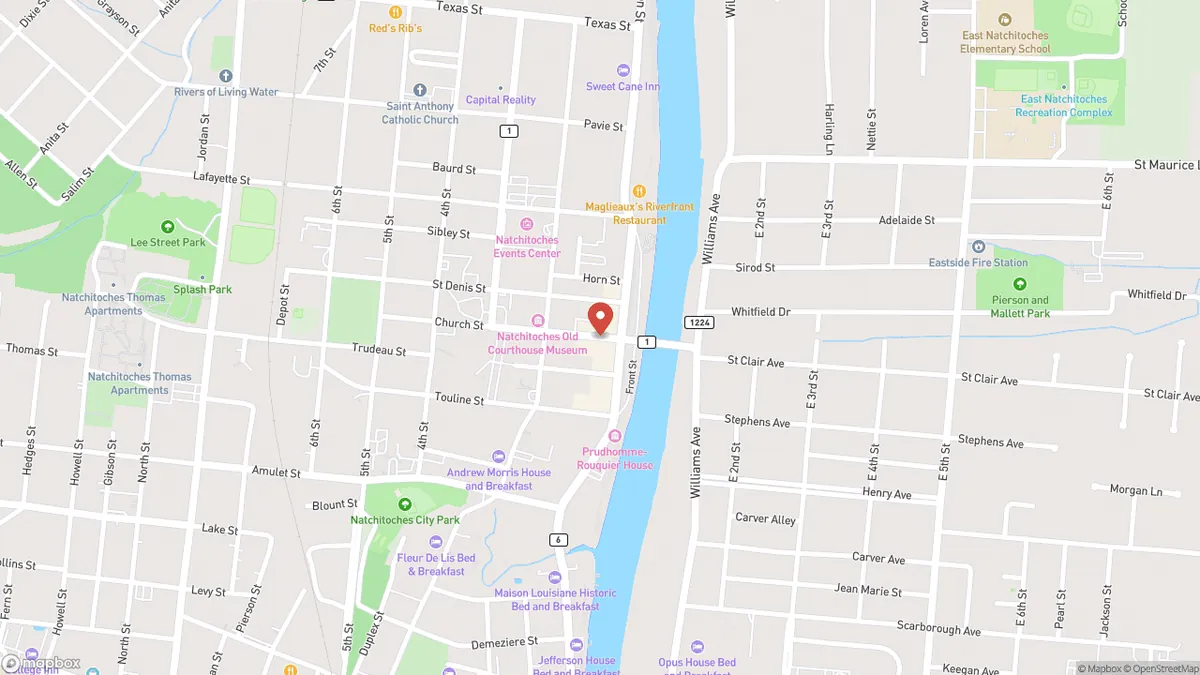
In the fall of 1713, Louisiana's governor Cadillac dispatched St. Denis westward from Mobile with a dual mission: establish a French outpost on the Red River and open trade with the Spanish settlements in Texas. St. Denis chose the Natchitoches village — a Caddo community strategically positioned near the impassable Great Raft, a centuries-old logjam that blocked navigation and made the site a natural portage. In November 1714, he built Fort St. Jean Baptiste on the riverbank. Natchitoches was born.
But St. Denis didn't stop there. He crossed into Spanish territory and walked straight into San Juan Bautista, the northernmost Spanish presidio on the Rio Grande — carrying French trade goods that were explicitly illegal under Spanish law. Commandant Diego Ramón arrested him, confiscated his merchandise, and sent word to Mexico City asking what to do with this charming, tattooed Frenchman who had just strolled across an international boundary with a pack train of contraband.
What happened next is the part nobody invents. While waiting months for Mexico City's verdict, St. Denis courted Manuela Sánchez Navarro, Ramón's step-granddaughter and a descendant of the conquistadors of Nueva Vizcaya. She agreed to marry him. The imprisoned smuggler became family to his jailers.
The Spanish, recognizing his knowledge of the frontier, appointed him commissary officer of the Domingo Ramón expedition — a Spanish military and missionary campaign into East Texas. Between 1716 and 1717, St. Denis helped found six missions and a presidio, effectively building Spain's presence in a territory France also claimed. He was simultaneously a French agent, a Spanish son-in-law, and the most useful man on the frontier.
It couldn't last. When he returned to San Juan Bautista in 1717 with another load of French merchandise, the political winds had shifted. Summoned to Mexico City a second time, St. Denis realized he'd be imprisoned for real — so he escaped. He fled overland, reached Natchitoches by February 1719, and resumed command of the fort he'd founded five years earlier. Manuela joined him in 1721, crossing the frontier with their children to live in French Louisiana permanently.
For the next twenty-three years, St. Denis served as commandant of Natchitoches, running the fort, managing French-Caddo relations, and building a contraband trade empire that made the border between French Louisiana and Spanish Texas more suggestion than law. He was ruthless when he needed to be — he once executed a Frenchman who murdered a Caddo ally, using a garrote as public warning. He was diplomatic when it served — his marriage to Manuela kept back-channel communication open with the Spanish even during formal hostilities.
He died at Natchitoches on June 11, 1744, at sixty-nine. His wife, his children, his fort, and his city survived him. Three centuries later, the settlement he built at the portage is still here — the oldest permanent community in the entire Louisiana Purchase, founded by a man who got arrested, fell in love, switched empires, and never looked back.