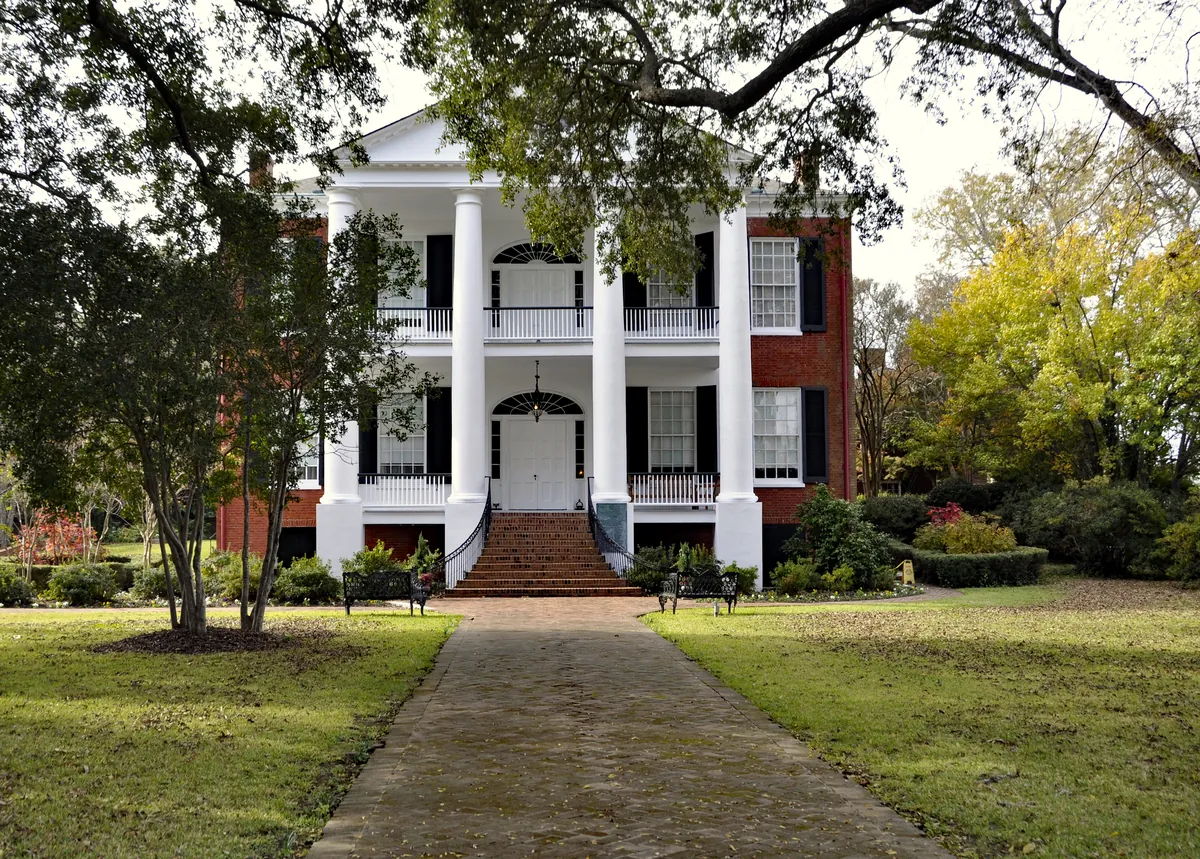
Peter Little, a cotton broker, built Rosalie in 1823 on a portion of the site of the 1729 Natchez revolt at Fort Rosalie. The mansion rises three stories of brick with a four-column Tuscan portico, commanding views over the Mississippi from the bluff. It became a major influence on Antebellum architecture in the greater region, inspiring many of Natchez's grand Greek Revival mansions.
On July 13, 1863, a week after the Siege of Vicksburg, Major General Ulysses S. Grant took possession of the mansion for use as Union headquarters. General Walter Q. Gresham assumed command of U.S. troops at Natchez on August 26, and his headquarters remained at Rosalie. Gresham had much of the owner's furnishings stored in the attic and put under guard to prevent theft or destruction. Army tents covered the grounds surrounding the mansion. Soldiers took positions in the widow's walk on the roof.
The Mississippi State Society Daughters of the American Revolution has owned, operated, and maintained Rosalie as a historic house museum for more than seventy years. It was designated a National Historic Landmark in 1989. The mansion is open for tours daily — check visitnatchez.org for seasonal hours and admission.
- ·Built 1823 on the site of Fort Rosalie (1716), the French fort that founded Natchez.
- ·Federal-style mansion with commanding bluff views over the Mississippi River.
- ·Served as Union headquarters during the Civil War after Natchez's 1863 surrender.
- ·Named after the French fort, which was named for the Duchess of Pontchartrain.
- ·Operated by the Daughters of the American Revolution since 1938.
- ·Open for tours daily. Check visitnatchez.org for seasonal hours and admission.
Memories
Editorial content compiled with AI assistance. Place details verified against public records.